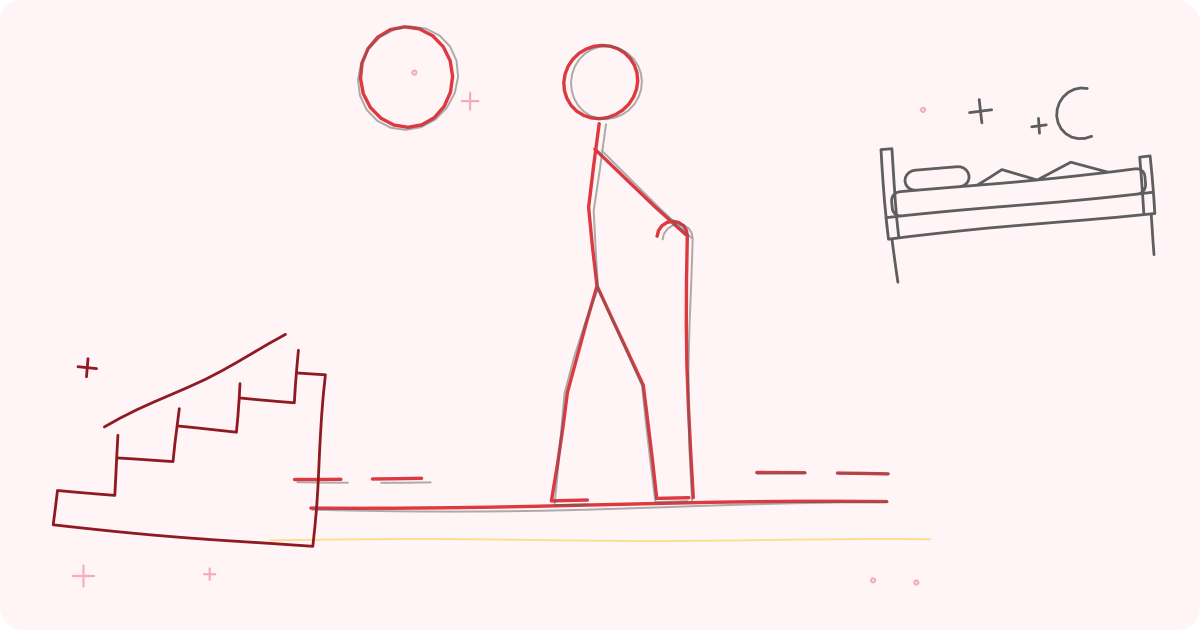
Begin with a night walk
Carry a torch and walk the route from bed to toilet, kitchen and front door at your parent's pace. Notice steps, thresholds, floor surfaces, light and clutter. Ask where they feel unsteady. See falls risk assessment at home, occupational therapy home assessment and ageing in place room by room.
Marble steps, thresholds and courtyards
- Anti-slip tape or coating on marble and stone steps, particularly on the edge of each tread; see anti-slip tape and coatings and stairs, steps and thresholds.
- Handrails beside steps and stairs, firm and at a comfortable height; see handrails and stair lifts.
- High thresholds: mark them in contrast, add a rail and fit a portable or fixed ramp for walkers and wheelchairs; see portable ramps for thresholds.
- Courtyards: level uneven paving, clear moss and puddles after the monsoon and light them at night; see garden, balcony and terrace safety.
- Light: bright, glare-free lights at every step and doorway; see lighting and contrast at home.
- Doors and gates: a gate that is easy to open from inside; see lock and door safety for seniors.
The bathroom
- Floors: ribbed, rubber-backed mats where feet land, anti-slip tape or coating on tile and stone, and a wiper to dry the floor; see non-slip bath mats guide and bathroom flooring for older people.
- Grab bars: by the toilet and at the shower, fixed into the wall with proper plugs. Stone and thick old walls need the right drill and anchors; see grab bar buying guide, where to fit grab bars and suction grab bars are not safe.
- Seating: a shower chair or bench and a handheld shower; see shower chair buying guide and handheld shower guide.
- Toilet: a raised seat or frame; see raised toilet seat guide and toilet frame guide; for Indian-style toilets see indian style toilet to western conversion.
- Water temperature: in winter, a warm bathroom and a safe water temperature; see hot water and scald safety for older skin.
- Dry skin: moisturise after bathing; see itchy, dry and fragile skin in older adults.
- Help: a door that opens from outside and a pendant worn while bathing; see bathroom emergency alerts and bathroom safety checklist for seniors.
The bedroom
- Bed height: feet flat, knees about level with hips; see bed height and getting out of bed.
- Hot nights: an older person may wake thirsty; keep water by the bed, use light cotton sheets and a fan or cooler that does not blow directly on them; ask the doctor about night fluids if heart or kidney disease limits intake; see night time toilet trips and falls.
- Chilly mornings: sit on the bed's edge for a minute before standing; keep warm socks or slippers with grip beside the bed; see dizziness when standing.
- Night route: a motion-activated night light from bed to toilet and a lamp within reach; see motion night lights for seniors and bedroom setup for night safety.
- Clear floors: remove loose rugs and cables; see flooring, rugs and trip hazards.
- Bedside commode or urinal where the toilet is far; see bedside commode and urinal routines.
- Dry air: keep the room ventilated, and moisturise skin and lips; see temperature and ventilation at home.
- Hospital bed: if needed, check doorways and thresholds, sockets and backup; see hospital bed at home guide and hospital bed electricity and power cuts.
Stairs
- Rails on both sides and tape on every tread; avoid polished stone without grip.
- Light at top and bottom with switches at both ends.
- Clear steps, with nothing stored on them.
- A rest point, such as a chair on a landing.
- Gates for a person with memory loss; see wandering and dementia safety.
- Move life downstairs if stairs are risky; see ground floor vs upper floor living.
- Technique: a physiotherapist can teach safe stair use with a stick; see using a walking stick on stairs and slopes.
- Apartments: check the lift's reliability and backup; see lifts and apartment living for seniors.
Heaters and safe warmth in winter
Winter mornings are chilly, and families often use heaters in small rooms. - Use a heater with a tip-over cut-off, and place it on a stable surface, away from bedding, curtains and the walking route. - Never use charcoal, wood or coal fires in a closed room; they release carbon monoxide, which is invisible and deadly. - Ensure ventilation, and do not sleep with a heater running in a sealed room unless it is designed for it. - Do not dry clothes on a heater or leave it unattended. - Keep a safe distance and avoid trailing cables. - Hot water bottles and heating pads can burn numb or fragile skin; see hot pack safety for older skin. - Layers and warm bedding are safer than overheating the room; see cold weather health risks for seniors, safe use of heaters and geysers and smoke and gas safety for older adults.
Alone at home
A parent alone needs a way to call and a way for help to enter: a pendant or watch, a key safe for a neighbour and a phone routine; see home safety for seniors living alone, panic pendant buying guide and key safe guide.
Common mistakes
- Marble steps with no tape or rail.
- High thresholds left unmarked.
- Loose rugs on polished stone.
- A heater left on in a closed room overnight.
- Grab bars fixed with plastic plugs into stone.
- A single weak bulb on the staircase.
A weekend checklist
1. Night walk with a torch; list the hazards. 2. Tape and rails on steps and stairs; mark thresholds. 3. Mats and tape in the bathroom; grab bars at toilet and shower. 4. A night light from bed to toilet. 5. Check heaters, cables and ventilation. 6. Test the pendant; write emergency numbers by the door.
For budget ideas, see home modification budget india.
A worked example: a winter morning in a family home
A seventy-eight-year-old woman wakes before dawn on a chilly January morning, steps from the bed onto cold marble in socks and walks towards the bathroom through a dim passage with a raised threshold. Now imagine the same morning with grippy slippers beside the bed, a habit of sitting for a minute before standing, a motion light along the passage, a contrast mark and a small ramp at the threshold, tape on the marble and a grab bar by the toilet. Nothing dramatic has changed, but the chance of a fall has fallen. Use this as a model for your own home, adapted to your parent's habits and health.
Kitchen and living areas
Check the route from bedroom to kitchen and dining area. Floors near the sink get wet, low cupboards force bending and a stove that is hard to reach is a hazard. Keep daily items at waist height and a firm chair with arms near the table; see kitchen setup for seniors, kitchen safety for older adults and choosing a chair for an older person. Use an auto-off kettle where memory is a concern; see auto-off kettle and stove safety.
When to ask a professional
Ask an occupational therapist for a home assessment. Ask a builder or tradesperson to fit rails, ramps and grab bars into stone and old walls. Ask a physiotherapist about balance and stairs. Call 112 after a fall with injury, head blow or inability to get up, or for suspected carbon monoxide poisoning.
Equipment mentioned in this guide
Frequently asked questions
How do we make marble steps safer?
Anti-slip tape on each tread, rails, good light and grippy footwear.
Is a charcoal heater acceptable in winter?
Not in a closed room. It produces carbon monoxide. Use a safe, ventilated alternative.
Can grab bars go on old stone walls?
Often, with the right drill and anchors fitted by a competent tradesperson.
How do we deal with high thresholds?
Mark them, add a rail and use a ramp where a walker or wheelchair is needed.
Sources and further reading
- National Institute for Health and Care Excellence, NG249 Falls: assessment and prevention in older people
- World Health Organization, global report on falls prevention in older age
- National Disaster Management Authority, India, guidelines on cold wave
- Royal College of Occupational Therapists, guidance on home adaptations
Tags: Jaipurhome safetymarble stepsthresholdsbathroomstairshaveliGear for your cityBathroom and toilet safetyHealthy ageing
This article is for general education and is not medical advice. Speak to your doctor before changing your exercise, diet or medicines.