Why plan night toileting
- Falls. Many falls in older adults happen on the way to or from the toilet at night. See night-time toilet trips and falls.
- Sleep. A person who is anxious about reaching the toilet sleeps badly; a carer who is woken many times gets exhausted.
- Skin. Wet pads and sheets left for hours cause rashes and sores; see incontinence-associated dermatitis.
- Dignity. Having a choice and control over toileting protects self-respect.
- Health. Holding urine or stool, or avoiding drinks to avoid trips, can cause infections, constipation and dehydration.
Before building routines, ask whether the cause of night urination can be treated. See the medical checks in night-time toilet trips and falls, prostate problems and urinary symptoms and urinary tract infections in older adults.
The options
Walking to the toilet. Best when the person is steady, the toilet is close, the route is lit and clear, and a night light and support are in place. Keep it as long as it is safe. See bedroom setup for night safety and bathroom safety checklist.
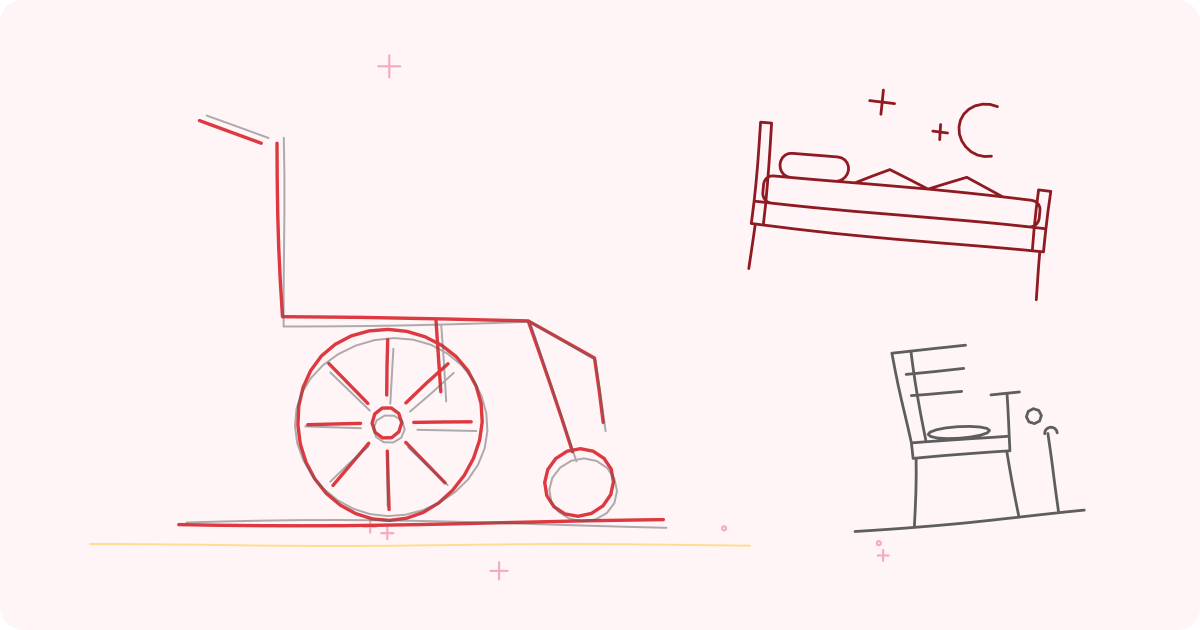
Bedside commode. A chair with a toilet seat and removable pot, placed beside the bed. It suits a person who can stand and pivot or take a few steps with help, but who cannot walk to the toilet safely. It allows a normal sitting position for urine and stool. See commode chair guide and commode chair hygiene.
Urinal. A container, usually plastic, with a neck shaped to fit the body, used while lying or sitting on the bed edge. Men's urinals have a narrow neck; women's urinals are wider and shaped to fit. Many men find a urinal easy to use, and it avoids standing at night. Women often find it harder and may prefer a commode or a special female urinal with a wide funnel; some need practice and privacy. See urinal guide for men and women.
Bed pan. A flat, shallow pan placed under the buttocks of a person who cannot get out of bed. It is for those who cannot sit up or stand, such as after surgery or severe illness. Many people find it uncomfortable; use with care to avoid skin damage. See bed pan guide.
Absorbent products. Pads or pull-ups, with underpads on the bed, for people who cannot reach or use any toileting device in time. They have a role, particularly overnight for some people, but they are not a replacement for toileting where the person can use a commode or urinal; see pull-ups vs briefs, managing incontinence at night and choosing incontinence products by situation.
Catheter. A tube inserted into the bladder, in specific medical situations, placed and managed by a nurse or doctor; see catheter care basics for families. Not a convenience.
A mix is common: for example, a urinal for urine at night, a commode for stool, a pad as a precaution on bad nights, and the toilet by day.
Matching equipment to the person
Think about:
1. Mobility. Can they stand, pivot, step? Do they need a carer or belt? See bed transfer techniques. 2. Sitting balance. A commode needs good sitting balance; a person who slumps may need a commode with a back and arms, or a bed pan. 3. Hand function. Can they hold a urinal and place it? Is the lid easy to handle? Do they have tremor, weak grip or poor sight? An occupational therapist can advise. 4. Cognition. A person with dementia may not recognise a urinal or commode; a commode that looks like a chair may be mistaken; use simple prompts, and supervision. 5. Gender and anatomy. Men may find urinals easier; women often need a commode or a wide-mouth female urinal; some women use a funnel device with tubing, as taught by a nurse. 6. Continence pattern. Frequent small amounts, urgency, difficulty starting or leaks. 7. Pain and surgery. After hip or spine surgery, special positioning is needed; see bathroom setup after hip replacement. 8. Room size. A commode needs floor space; a urinal does not. 9. Preferences. Ask what the person finds acceptable. Dignity matters.
Setting up the bedside
- Commode position. On the side the person exits the bed, close enough for one or two steps, with brakes or non-slip feet, on a level floor. A screen or curtain for privacy. Lock wheels if any. Lower the bed to the right height, and place a light nearby; see motion-sensor night lights.
- Urinal position. Within reach of the person's dominant hand, on a stable surface, or hooked on the bed frame or a holder. Place a second one if needed. Keep it upright when not in use, to avoid spills; some have lids and flip-over designs, but check the closure.
- Bed pan position. Within reach of the carer, with a slide sheet or aid.
- Supplies. Wipes, toilet paper, a small waste bag, hand sanitiser, gloves for the carer, a towel, a spare pad or sheet, and a cover for the commode. See wipes and perineal hygiene.
- Call device. A bell or call button, within reach.
- Waterproofing. An underpad or waterproof sheet under the person, which is changed if wet; see washable underpads care and mattress protector guide.
- Lighting and temperature. A night light, and a warm room.
- Clear path. For the person and the carer.
Using a urinal
For men:
1. Sit on the edge of the bed, or lie on the side or back with knees bent. 2. Hold the urinal by the handle with the neck close to the body; place the penis in the neck, and tilt the urinal slightly downward so urine flows into it. 3. After use, take care to avoid spilling, put the lid on, and place on a stable surface. 4. Wipe, wash hands and empty the urinal promptly into the toilet; rinse and wash.
For women, the process uses a wide-mouth urinal, with practice, positioned between the thighs; a nurse can demonstrate. Consider a commode if this is difficult.
Do not leave a full urinal by the bed overnight; empty as soon as convenient to avoid odour and spills.
Using a commode safely
- Lock the brakes and check the chair is stable.
- The person stands, turns and sits as taught by a therapist, using the arms; a carer stands by.
- After use, the person wipes or is helped, and stands slowly with a pause.
- Cover the pot and take it to the toilet to empty; rinse, wash and dry.
- Clean the seat and handles; see commode chair hygiene.
Privacy and dignity
- Close the door, draw the curtain or use a screen.
- Give the person time and, if safe, leave them alone within hearing.
- Speak calmly and matter-of-factly, without comment on smell or mess.
- Use a cover over the commode, and a covered bin.
- Offer a warm, dry towel and a wash.
- Respect the person's cultural preferences, including washing with water; see dignity in intimate care and caring with religion and culture in mind.
- Do not rush, and do not make the person feel a burden.
Timing and routines
A regular schedule reduces urgency and accidents.
- Before bed: a toilet visit or a use of the urinal or commode.
- If the person wakes: offer the toilet rather than waiting for a call.
- Early morning: a visit on waking.
- Fluids: drink well during the day, less in the last two hours before bed, but do not restrict heavily without the doctor's advice; see hydration for older adults.
- Evening medicines: ask the doctor about the timing of water tablets and others that raise urination.
- Caffeine and alcohol: avoid in the evening.
- Constipation: keep bowels regular; see constipation in older adults.
- Timed toileting: offer the toilet at set intervals if the person has dementia or cannot signal the need; see bladder training and timed toileting.
- Record a simple chart of times and amounts for a few days to find the pattern, and share with the doctor; see care diary and handover notes.
Skin care and hygiene
- Wash hands before and after every episode.
- Wash or wipe the skin gently, and dry well, particularly in folds.
- Use barrier cream if the nurse advises; see barrier cream and skin care.
- Change wet pads and sheets at once.
- Check the skin each day for redness or sores; see preventing bedsores at home.
- Wash urinals, pots and commode daily; do not mix cleaning cloths with kitchen items.
- See disposal, laundry and odour control and infection control for home caregivers.
Common problems
- Does not use the commode or urinal. Check position, comfort, privacy and understanding; try a different device; ask a therapist.
- Spills. Choose a urinal with a secure lid or a holder; place a towel or pad underneath.
- Odour. Empty and clean promptly; ventilate.
- Constipation or straining. See the doctor.
- Embarrassment. Talk openly and gently; see talking about incontinence with a parent.
When to ask a professional
See a doctor for blood in the urine or stool, burning or pain on passing urine, a sudden increase in frequency, inability to pass urine, a swollen lower abdomen, fever, new confusion, severe constipation or diarrhoea, or a fall. A continence nurse can advise on devices and routines. An occupational therapist can assess transfers and equipment. A physiotherapist can advise on pelvic floor and mobility; see pelvic floor exercises for older adults. For when to seek care, see when to see a doctor about bladder or bowel changes.
Equipment mentioned in this guide
Frequently asked questions
Is a urinal or a commode better for night use?
A urinal is simple for men who can lie or sit up, while a commode suits people who can stand and pivot and need to pass stool. Many people use both. A therapist can advise.
Can women use urinals?
Special female urinals with wide mouths exist, but they need practice and privacy. Many women find a commode easier. A nurse can show you.
Should my parent wear pads at night instead?
Pads can be a safety net, but they do not replace toileting where the person can use a device. Wet pads can harm the skin, and may lower the person's sense of dignity.
How do I keep the room from smelling?
Empty and rinse devices promptly, keep lids on, clean daily, change wet linen, and ventilate. A sudden strong smell may signal infection; tell the doctor.
Sources and further reading
- NICE guideline NG123, Urinary incontinence and pelvic organ prolapse in women: management
- NICE guideline NG249, Falls: prevention, assessment and management in older adults and adults at higher risk
- World Health Organization, World report on ageing and health (2015)
- Royal College of Nursing, guidance on continence care and infection prevention
Tags: night toiletingurinal for menbedside commodebed pannight time urinationtoileting routine elderlyBeds, mattresses and restPortable urinalIncontinence and hygieneBathroom and toilet safety
This article is for general education and is not medical advice. Speak to your doctor before changing your exercise, diet or medicines.