Why light matters at night
The eye of an older person takes longer to adjust from darkness to light, and needs more light than a young eye to see the same detail. Cataracts, glaucoma, macular degeneration and diabetic eye disease reduce vision further. In the dark, a rug edge, a slipper, a threshold or a wet patch becomes invisible. A bright light, on the other hand, may cause glare and a brief period of poor vision after it is switched on.
Falls at night are particularly dangerous. The person may be drowsy, may have taken sleeping tablets or other medicines that cause dizziness, and may be alone in the house. A gentle, automatic light removes the need to find a switch and lets the person see the route and hazards. See also night-time toilet trips and falls for a full plan, and bedroom setup for night safety.
How a motion-sensor night light works
A small sensor, usually a passive infrared (PIR) type, detects the movement of a warm body in front of it. When it senses motion, the LED switches on for a set time, often 15 to 60 seconds, and then switches off. Many also have a light sensor, so they stay off in daylight and only come on in the dark, which saves power.
Types include:
- Plug-in lights. Plug into a wall socket and need no batteries. They are bright and reliable, but only as good as the supply. They can be placed only where sockets exist, and are limited by the socket's height, usually low, which suits floor-level lighting.
- Battery-powered lights. Small units with AA or AAA batteries, or a rechargeable battery. They can be stuck on a wall, under a bed frame or in a cupboard. Useful for places without sockets and during power cuts.
- Rechargeable lights. They charge by USB and can be moved from place to place.
- LED strip lights with a motion sensor. A long strip fitted under a bed frame, along a skirting board or on the edge of stairs. They light a long stretch of floor.
- Sensor light bulbs and fittings. A bulb or fixture that switches on in response to motion, to replace an existing bathroom light. Useful if you do not want extra plug-ins.
- Solar lights. For outside paths or a balcony, not usually for inside.
What to look for
Colour of the light. A warm white or amber light is best at night. Blue-white light is harsher, may wake the person and can disturb sleep patterns. Red or amber light has less effect on the body clock and on night vision. Choose a light described as warm, soft or amber.
Brightness. Bright enough to see the floor and obstacles, not so bright that it dazzles or wakes the person. A glow of a few lumens to a few dozen lumens at floor level is often enough, but needs vary. If your parent has poor vision, they may need more. Avoid lights that give a sudden glare.
Sensor range and angle. A wider field of view and a range of 3 to 5 metres suit a bedroom. A narrow beam may not catch someone walking past at an angle. Check that the sensor does not trigger from the movement of a fan, a curtain or a pet unless you want that.
Duration. A light that stays on for a minute or two after movement stops is better than one that switches off in ten seconds, because an older person is slow. Some lights have adjustable timers.
Light sensor (dusk-to-dawn). Make sure it works in your room's lighting, such as street lamps outside the window.
Brightness adjustment. Useful, as you can tune it to the person and the room.
Quality and safety. Look for good build and secure plugs, and do not use damaged lights. Do not place plug-in units in the bathroom where water may reach them, unless they are rated for it. Keep electrical items away from taps and sinks.
Where to put them
Think about the route: bed, bedroom door, corridor, bathroom door, toilet. Light each step of it.
- Beside the bed. A light near the floor on the side your parent gets out of, so the feet land on a visible floor. Avoid shining directly into the face.
- Under the bed frame. A strip light or a sensor light under the edge of the bed that lights the floor on getting up.
- In the corridor. One or two lights, low on the wall at about 30 to 45 cm from the floor, spaced so there are no dark patches.
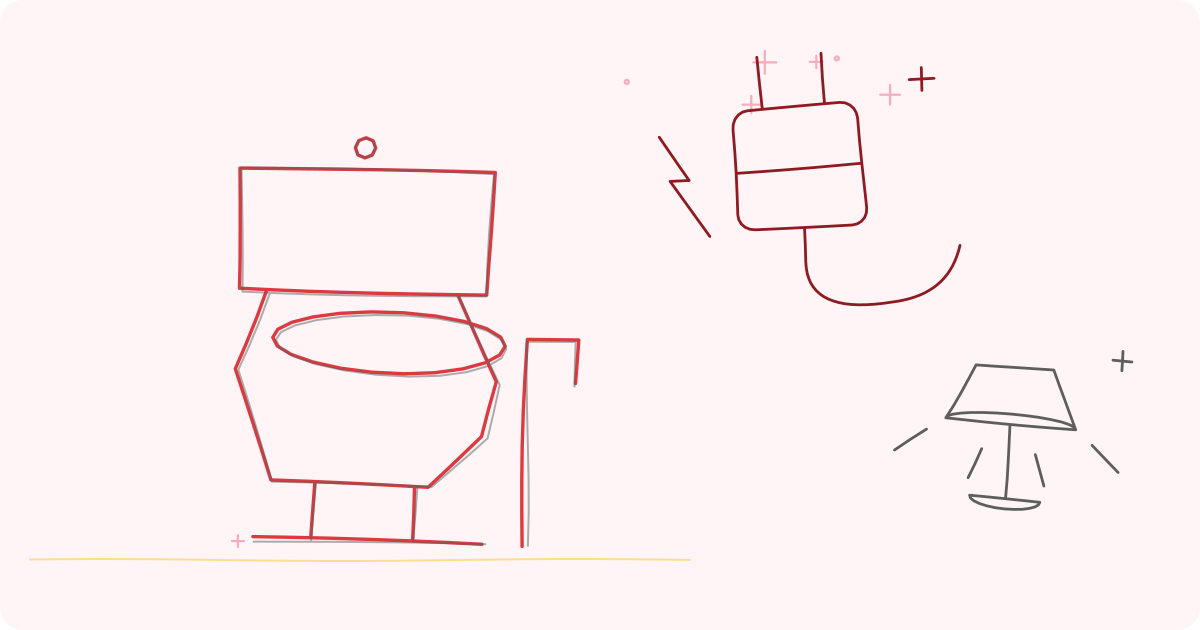
- At the bathroom door and inside. A light that switches on as the door opens, and lights the toilet and the floor. The bathroom light should be soft too.
- Toilet bowl. A small light under the seat can help guide the eye but is not essential.
- Threshold or step edges. A light that makes the edge visible helps; see portable ramps for thresholds and stairs, steps and thresholds.
- Avoid. Placing a light where it shines into a bed partner's eyes or creates a bright spot that casts a dark shadow nearby.
Lights low on the wall light the floor directly and cast fewer glare problems than lights on the ceiling. Combine night lights with good lighting and contrast at home in the day, such as a contrasting colour on the toilet seat and a light switch plate that stands out.
Power cuts and Indian home realities
Many cities have frequent power cuts, particularly in the monsoon and summer. A plug-in light goes out when the supply fails, leaving your parent in the dark at the worst time.
- Choose a rechargeable or battery light for at least one unit on the route, or use plug-in units with a rechargeable backup.
- Keep a torch by the bed, charged and tested. A small head torch or a touch light helps.
- Inverters. If the home has an inverter, check which circuits it powers, and add a light to one of them.
- Check batteries every month. Put a date on the batteries and replace them regularly.
- Heat. Lights that stay on may heat up in a small space. Keep them away from curtains and fabrics.
- Mosquito and insect attraction. Some lights attract insects. Keep the bathroom clean and screened. See pest, damp and mould at home.
- Dust and humidity. Wipe sensors regularly so dust does not block them.
For a parent who lives alone or sleeps in a joint family home, see night safety for a parent alone.
Dementia and confusion
For a person with dementia, a night light has an extra benefit: it reduces confusion and fear on waking in the dark. A light in the bathroom, left on at a low level all night, helps them recognise the room as a toilet and find it. Others may be disturbed by moving shadows or by lights that flick on and off. Try a steady, low light and watch the response. Close curtains that create mirror-like reflections on the window glass at night, which can be frightening. See dementia-friendly bathroom and dementia home setup.
Common mistakes
- Choosing a blue-white light that is harsh and wakes the person fully.
- Fitting only one light, leaving the corridor dark.
- Placing it too high, so it does not light the floor.
- Relying on plug-in lights in a home with power cuts.
- Letting batteries run out.
- Putting a plug-in unit near water.
- Not testing it by walking the route in the dark.
Test your set-up: turn off all other lights, wait a couple of minutes for your eyes to adapt, and walk the route from bed to toilet as your parent would. Notice where it is too dark and add lights.
When to ask a professional
If your parent is up many times a night, is confused, has a new need to pass urine often or has dizziness, ask a doctor to look at causes such as prostate problems, infections, diabetes, blood pressure, medicines or sleep disorders. An optometrist or ophthalmologist can check eyesight. An occupational therapist can assess the home route and lighting. A physiotherapist can help with balance and strength.
Equipment mentioned in this guide
Frequently asked questions
What colour night light is best for older adults?
A warm white or amber light is usually best. It is gentle on night vision and less likely to wake the person fully. Avoid cold blue-white light.
How bright should a night light be?
Bright enough to see the floor and obstacles, not so bright that it dazzles. Placing it low on the wall lights the floor without glare. Adjust until your parent feels comfortable.
Are motion-sensor lights better than lights that stay on?
Motion lights come on exactly when needed and save power, but can fail to trigger or switch off too soon. Some people prefer a steady low light. A person with dementia may need a steady one.
What if there is a power cut?
Use rechargeable or battery-powered lights on the route, and keep a charged torch by the bed. Check batteries monthly.
Sources and further reading
- World Health Organization, Global report on falls prevention in older age (2007)
- NICE guideline NG249, Falls: prevention, assessment and management in older adults and adults at higher risk
- Royal College of Occupational Therapists, guidance on living safely at home
- Alzheimer's Society (UK), guidance on lighting and the home environment for people with dementia
Tags: motion sensor night lightnight light for elderlybathroom night lightpath lightingbattery night lightfalls at nightBathroom and toilet safetyHealthy ageingElder care
This article is for general education and is not medical advice. Speak to your doctor before changing your exercise, diet or medicines.