How dementia changes what a person sees and understands
Dementia can affect memory, recognition, judgement, vision processing and mood. In a bathroom:
- Recognition. A person may not recognise a toilet if it blends with the floor and walls, and may use the wrong object, such as a bin or a sink.
- Depth perception. Shiny floors may look wet, and dark patches may look like holes. A person may refuse to step on a glossy floor or a dark mat.
- Sequencing. The steps for washing or toileting may be forgotten partway.
- Reduced sense of thirst, temperature and pain. A person may not notice scalding water.
- Mirrors and reflections. A person may think a reflection is another person, or may not recognise themselves.
- Sound and sensory overload. Echoes, running water, fans and bright lights can feel overwhelming.
- Anxiety and loss of dignity. Being undressed can feel frightening or humiliating.
- Eyesight changes. Many people with dementia also have cataracts or other eye problems.
These effects vary from person to person and over time, so watch what your parent finds difficult and adapt. See dementia home setup for the rest of the home.
Make the toilet easy to find and recognise
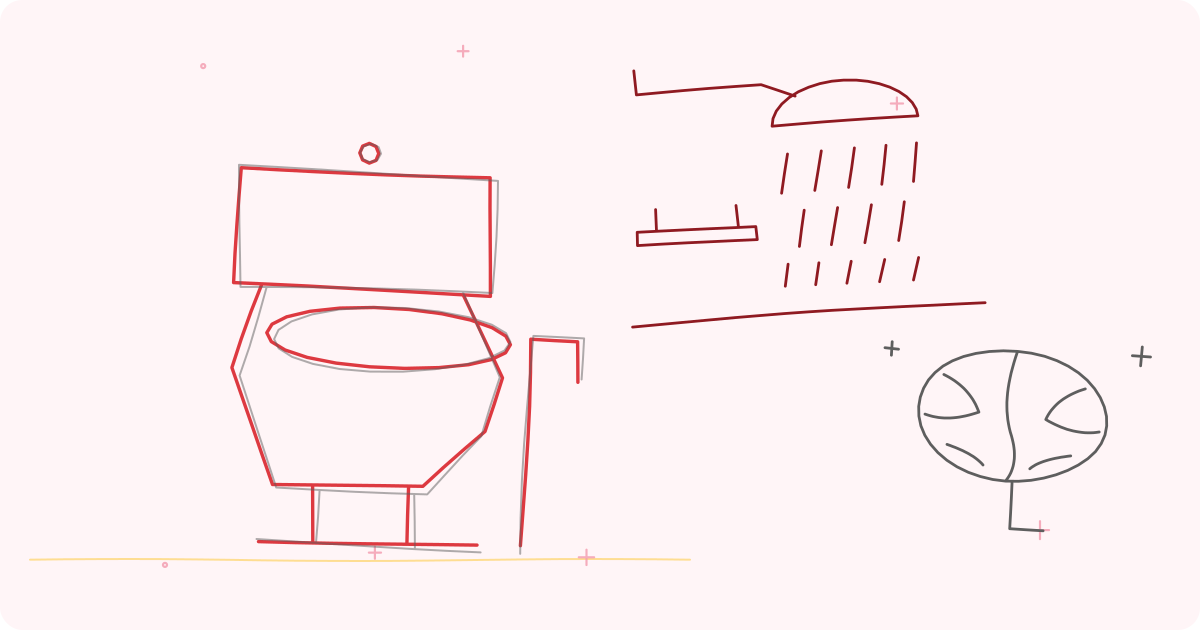
- Contrasting toilet seat. A seat in a colour that contrasts with the pan, wall and floor, such as a bright blue or red seat on a white toilet, makes it stand out. Studies and care guidance suggest strong contrast helps people with dementia find and use the toilet. Choose a colour your parent likes, and check that the pan is visible against the floor.
- Contrast with the wall and floor. If the toilet, floor and wall are all white or all cream, the toilet disappears. Paint the wall behind the toilet a contrasting colour, or use a coloured splashback.
- Open the door. If the bathroom door is kept open, with the toilet visible from the bedroom or corridor, a person can see where to go. A glimpse of the toilet may prompt use.
- Signs and pictures. A clear sign on the door, with a large picture of a toilet beside simple text in your parent's language, can help. Place it at eye level, which for many is lower than average, around 120 to 150 cm. Avoid small or abstract symbols.
- Light on. A visible light in the toilet, in a warm colour, can signal the room. See motion-sensor night lights.
- Route. A clear, well-lit path from the bedroom, with no clutter or confusing doors. Close the doors of rooms that are not meant to be entered.
- A matching door colour. Painting the bathroom door a distinct colour, different from other doors, helps, and so does a symbol or a photograph.
Colour, contrast and pattern
- Grab bars and rails in a colour that contrasts with the wall, so that they are easy to see and reach. See grab bar buying guide.
- Toilet paper holder, flush and handles in contrast colours.
- Floor. Choose a plain, matt floor in a mid tone, without a bold pattern, which can look like steps or holes. Avoid dark mats and borders that look like gaps. A pattern that looks like objects may prompt picking at the floor. Avoid sparkle and gloss. See bathroom flooring and wet-floor safety.
- Walls. A calm, plain wall in a warm colour is better than busy patterns.
- Towels in a colour that contrasts with the wall, so that they stand out.
- Avoid white-on-white everywhere, such as a white shower seat in a white shower.
- Sensible use of bright colours. Very bright reds and yellows can be agitating for some people; test and observe.
Lighting
- Even, bright, glare-free light so shadows do not look like objects. Avoid a single harsh spotlight.
- Natural light where possible, with a frosted window for privacy.
- Night light in the bathroom, left on or on a sensor, so that a person waking at night can find the room. Warm light is best; see lighting and contrast at home.
- Switch that is easy to see, in a contrasting plate, or consider a sensor so the light comes on without a switch.
- No flickering or buzzing lights.
Mirrors, windows and reflections
Mirrors can cause distress. A person with dementia may not recognise their reflection, and believe an intruder is in the room, or that someone is watching. Ask yourself whether your parent is troubled by the mirror, and if so:
- Cover or remove the mirror, or use a mirror that can be turned or covered with a cloth when not needed.
- Place the mirror where it does not reflect the toilet or the doorway.
- In the evening, curtains or blinds reduce reflection in windows.
- Do not argue about the reflection; reassure them.
If the mirror is not a problem, leave it, as it helps with personal grooming.
Safety adaptations
- Water temperature. Set the geyser to a safe level, and fit a thermostatic mixer if possible. A person with dementia may not understand heat. See hot water and scald safety.
- Grab bars, shower seat and non-slip mats as for any older person, in contrasting colours and with simple operation; see shower chair buying guide and non-slip bath mats.
- Taps that are clearly labelled, with a lever design, and hot and cold marked in red and blue.
- Lock. A lock that can be opened from outside; consider removing locks. A person may lock themselves in and panic.
- Cleaning products and medicines in a locked cupboard, high up, since a person may drink or swallow them.
- Razors, scissors and hairdryers out of reach, or electric shavers only, with supervision.
- Electrical items away from water.
- Plug the sink only with supervision; a person may flood the floor.
- Door. An outward-opening door or a door that can be opened in both directions.
- Falls. Remove clutter, use a raised seat if standing is hard; see raised toilet seat guide.
Toileting routines and cues
- Prompt regularly. Many people with dementia will not ask. Offer a visit after waking, before and after meals, mid-morning, mid-afternoon and before bed. Use a gentle, friendly voice and avoid saying "Do you need the toilet?" in front of others; try "Shall we go and wash our hands?" or "Let's freshen up".
- Watch for signs such as restlessness, pulling at clothes, standing by a door or wandering. These may mean a need to go.
- Simple clothing. Elastic waistbands, Velcro, or loose clothes, avoiding zips and belts. Underwear that is easy to pull down.
- Give one instruction at a time, such as "Sit down", then "Wipe", then "Stand up". Show with gestures.
- Keep dignity. Close the door, stand outside if it is safe and use a calm tone. Do not rush.
- Accidents will happen. Respond calmly, and do not scold. Keep spare clothes, wipes and pads at hand. See incontinence and dementia and dignity in intimate care.
- Check for causes if there are sudden accidents, such as infection, constipation or new medicines.
Bathing with less fear
Bathing is often a point of conflict. Ideas:
- Timing. Choose the time of day when your parent is calmest, and keep a regular pattern. Do not bathe at a time when they are tired or agitated.
- Warm the room and the towels.
- Explain what you are doing in short steps.
- Allow some control, such as holding the flannel or choosing the soap.
- Cover with a towel to preserve dignity, and wash one part at a time.
- Consider alternatives: a wash at the sink, a partial wash, or a bed bath on days of high distress. A full shower may not be needed every day.
- Handheld shower rather than a fixed head, with water kept away from the face; see handheld shower guide.
- Stay calm. If your parent resists, stop, wait and try again later. See bathing a parent who resists and dementia challenging behaviours.
When to ask a professional
Ask the doctor or a memory clinic if bathroom difficulties are new, accidents increase suddenly, your parent is very distressed or you suspect infection, constipation, pain or a medicine side effect. An occupational therapist can visit and suggest changes to the bathroom and routines, and a nurse can advise on continence and skin care. Dementia charities and support groups can offer advice and practical tips for carers. If caring is overwhelming, it is reasonable to ask for help; see caring for a parent with dementia at home.
Equipment mentioned in this guide
Frequently asked questions
What colour toilet seat helps a person with dementia?
A seat that clearly contrasts with the pan, floor and wall, such as a bright blue or red on a white toilet, can help the person recognise it. Choose a colour they like and check the whole toilet area is clear.
Should I remove the bathroom mirror?
Only if it upsets your parent. Some people are frightened by their reflection. Cover or move it, and keep calm. If it causes no distress, leave it.
Should the bathroom door be kept open?
Keeping it open, with the toilet visible and lit, can help people find it. Balance this with privacy, and close the door once the person is in the room if they prefer.
What if my parent refuses to bathe?
Try a different time, a calmer approach or a partial wash, and avoid arguing. If refusal is persistent or your parent is distressed, speak to a doctor or an occupational therapist.
Sources and further reading
- Alzheimer's Society (UK), guidance on washing and bathing, and on the dementia-friendly home
- NICE guideline NG97, Dementia: assessment, management and support for people living with dementia and their carers
- University of Stirling Dementia Services Development Centre, resources on dementia-friendly environments
- World Health Organization, Global action plan on the public health response to dementia 2017 to 2025
Tags: dementia bathroomdementia friendly toiletcolour contrast bathroomalzheimer bathroom safetybathing dementiatoilet signsBathroom and toilet safetyMotion-sensor night lightHealthy ageingElder care
This article is for general education and is not medical advice. Speak to your doctor before changing your exercise, diet or medicines.