First: look for treatable causes
Bladder training will not work well if something else is driving the symptoms. Before starting, see a doctor to exclude or treat:
- Urinary infection; see urinary tract infections in older adults: atypical signs.
- Constipation, which presses on the bladder; see constipation in older adults.
- Medicines that increase urine or affect control, such as water tablets, sedatives, some blood pressure and psychiatric medicines. Do not stop any yourself; the doctor can review.
- Diabetes with high sugar.
- Prostate enlargement or a bladder that does not empty, which needs a different approach; see prostate problems and urinary symptoms in older men.
- Heart or kidney problems causing night urine; see managing incontinence at night.
- Prolapse, menopause changes or stress incontinence, which need pelvic floor work; see pelvic floor exercises for older adults.
- Mobility, vision or environmental barriers.
See incontinence in older adults: causes and types and when to see a doctor about bladder or bowel changes.
Step 1: the bladder diary
A diary is the foundation. Keep it for three days (some doctors ask for up to a week), including a weekday and a weekend if routines differ.
Record:
- Time and amount of each drink, and the type (water, tea, coffee, fizzy drinks, alcohol).
- Time of each toilet visit and an estimate of the amount of urine (small, medium, large, or measured in a jug).
- Time of each leak, how much (a few drops, damp, soaked), and what was happening (coughing, rushing, waking).
- Urgency: a sudden strong need, rated if possible.
- Pad changes and the number of pads.
- Night waking to pass urine.
- Bowel movements.
- Medicines and times.
- Symptoms such as burning, pain or fever.
A simple table with columns for time, drink, toilet, leak and notes will do. Fill it in as events occur, or by the carer at regular check-ins. Bring it to the doctor.
What the diary shows: - Typical interval between visits, such as every two hours. - Whether accidents cluster at certain times, such as after tea, on waking, after meals or late in the day. - How much is passed each time; very small amounts often suggest urgency without full bladders, or incomplete emptying. - Whether drinks, especially caffeine, trigger urgency. - Night-time volume, which suggests causes.
Step 2: choose the approach
### Timed toileting (scheduled voiding)
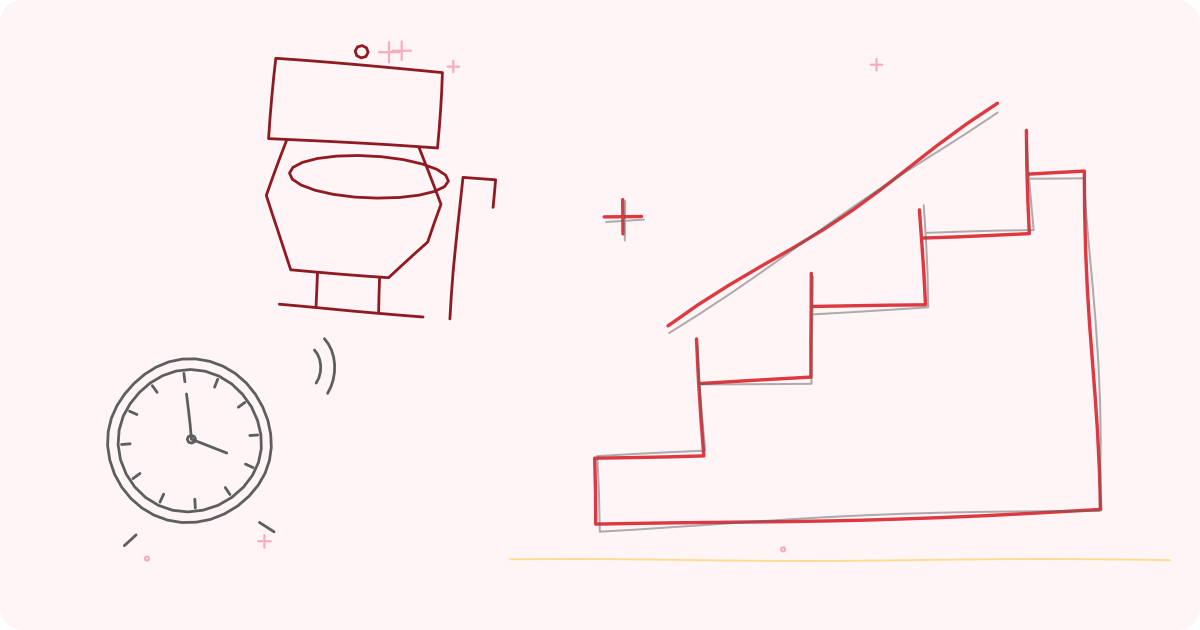
Suitable for people who cannot manage independently because of dementia, mobility problems or reduced awareness, and in whom the bladder works but the person does not get there. The carer takes or prompts the person to the toilet at fixed times, whether or not they feel the need, so that the bladder is emptied before an accident.
- Set the interval from the diary: often every two hours in the day, adjusted to the pattern (for example, shortened to every 90 minutes if accidents come earlier). Start with an interval shorter than the usual gap between accidents.
- Add key times: on waking, after meals and drinks, before leaving the house, before and after naps, and at bedtime.
- Be consistent for several weeks, and review.
- Adjust if the person is dry for several days: lengthen by about 30 minutes; if accidents increase, shorten.
- Use a commode or urinal if the toilet is far; see commode chair guide and urinals for men and women: bedside use.
### Prompted voiding (for people with dementia)
A form of timed toileting in which the carer asks the person whether they need the toilet, prompts and praises, at regular times (often every two hours), and takes them if they say yes or if the time has come. The person is given positive feedback when dry or successful. Evidence suggests that prompted voiding can reduce wetness in some older adults in care. See incontinence and dementia: routines and reassurance.
### Bladder training (for urgency and frequency)
Suitable for alert, cooperative people with urge incontinence or an overactive bladder, who pass urine very often and cannot hold. The goal is to gradually stretch the interval between visits and teach the bladder to wait.
1. Use the diary to find the current shortest comfortable interval, such as 60 minutes. 2. Set a timetable: go to the toilet at fixed times, not in response to every urge, starting at that interval. 3. When an urge comes before the time, do not rush. Pause, sit or stand still, squeeze the pelvic floor muscles (see pelvic floor exercises for older adults) for a few seconds, breathe slowly, and distract the mind (count backwards, think of something else). When the urge subsides, walk calmly to the toilet at the scheduled time. This is called urge suppression. 4. Gradually lengthen the interval, by about 15 minutes every week or so, or as tolerated, aiming for three to four hours between visits. 5. Keep up for at least six weeks, as the benefits build slowly. NICE guidance for women with urge incontinence recommends bladder training for a minimum period of six weeks as a first-line approach. 6. Combine with fluid and caffeine adjustments and pelvic floor exercises. 7. Keep a diary to track progress. 8. Do not "just in case" go too often, which trains the bladder to hold less.
This approach needs motivation and support. It may not suit people with significant cognitive impairment or those with overflow or neurological bladder problems. Ask the doctor.
Fluids and diet
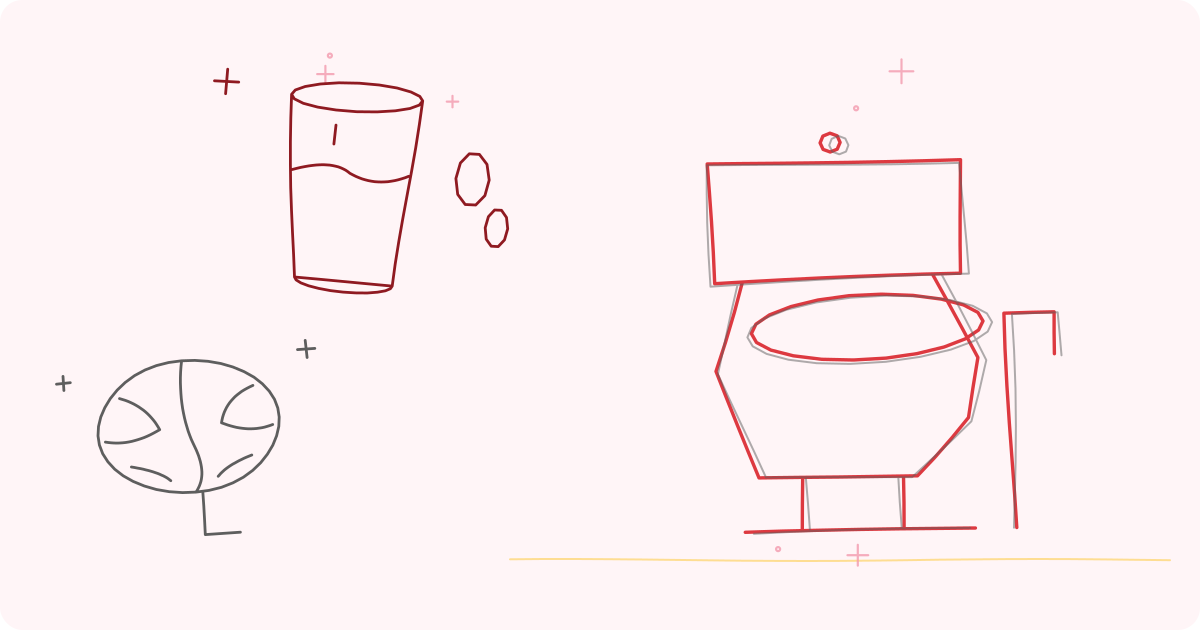
- Do not cut down drinks to avoid accidents. Too little fluid concentrates urine, irritates the bladder, causes infections and constipation, and may cause dizziness and confusion. Aim for regular drinks through the day, about 1.5 to 2 litres in total unless the doctor has advised otherwise (for example in heart or kidney failure); see hydration for older adults.
- Spread drinks evenly through the day, with fewer in the two to three hours before bed if night urination is an issue and the doctor agrees.
- Reduce bladder irritants: caffeine (tea, coffee, cola), alcohol and fizzy drinks, sugary drinks and, for some people, spicy foods or artificial sweeteners. Reduce gradually.
- Prevent constipation with fibre, fluids and exercise.
- Maintain a healthy weight, since extra weight pressures the bladder.
- Stop smoking, which irritates the bladder and causes coughing, worsening stress leaks.
Making the toilet easy
- Clear, well-lit path; night lights; see motion night lights for seniors.
- Nearby toilet or commode; see raised toilet seat guide.
- Easy clothing with elastic waists and few fasteners.
- Grab bars and a stable seat; see bathroom safety checklist for seniors.
- Signs and cues with pictures for people with dementia; see a dementia-friendly bathroom.
- Privacy and time, without hurry.
- Position: sit with feet flat or on a stool, leaning forward slightly, to empty fully. Wait a moment and try again ("double voiding") if the bladder does not empty fully, if advised.
Dignity and attitude
Present timed toileting as a routine and not a test. Use positive language ("let us stretch our legs and visit the bathroom"), thank the person and avoid scolding after accidents. Keep changes private; see dignity in intimate care: words, privacy and consent. Pad use can continue as backup; see choosing incontinence products by situation.
What results to expect
- Many people improve within a few weeks, though improvement varies. People with dementia may do better with prompting than with training.
- Benefits can be partial: fewer accidents rather than none.
- If there is no improvement after a trial, return to the doctor, who may consider other treatments, including medicines for overactive bladder (with care in older adults, since some can worsen confusion and constipation), pelvic floor physiotherapy, treatment of prostate or prolapse, or catheters in selected cases.
- Keep products for safety.
Safety and limits
- Do not rush a frail person to the toilet; falls are a major risk; see falls risk assessment at home.
- Do not force a reluctant person.
- Do not restrict fluids to hold longer.
- Stop and seek advice if there is pain, blood in the urine, inability to pass urine, fever or increasing confusion.
- Not suitable as a sole approach for overflow incontinence or retention; see a doctor.
When to ask a professional
Ask a continence nurse, physiotherapist or doctor to review the diary, check for causes and tailor a plan. Ask a pharmacist about medicines. See a doctor urgently if your parent cannot pass urine, has severe lower abdominal pain, burning, fever, blood in urine or sudden confusion; call 112 for severe symptoms.
Equipment mentioned in this guide
Frequently asked questions
How often should an older adult go to the toilet?
Many people pass urine every three to four hours in the day and up to once at night, but it varies. For timed toileting, every two hours is a common start.
Does bladder training work for older adults?
It helps many people with urgency who can take part, often over six weeks or more. Prompted toileting suits people with dementia.
Should my father drink less in the evening?
A modest reduction in the two to three hours before bed may help night urination, if the doctor agrees. Do not cut fluids overall.
What if my mother says she does not need to go?
In timed toileting, offer anyway at the set time, gently and without pressure. Many people with dementia do not recognise the urge.
When will we see results?
Some people improve in days, others over weeks. Keep the diary and review with the nurse.
Sources and further reading
- National Institute for Health and Care Excellence, CG171 Urinary incontinence and pelvic organ prolapse in women: management
- National Institute for Health and Care Excellence, CG97 Lower urinary tract symptoms in men: management
- Cochrane review, timed voiding, patterned voiding and prompted voiding for urinary incontinence in adults
- International Continence Society, guidance on behavioural therapy for lower urinary tract symptoms
Tags: bladder trainingtimed toiletingprompted voidingbladder diaryoveractive bladderurgencytoileting routineIncontinence and hygieneBathroom and toilet safetyHealthy ageing
This article is for general education and is not medical advice. Speak to your doctor before changing your exercise, diet or medicines.