What an older person needs from a chair
A good chair for later life:
- Makes sitting down and standing up easy. This is the first test. A person should be able to rise without heaving.
- Supports the back, hips and thighs so posture stays good and pressure is spread.
- Is stable, with no rocking, tilting or sliding.
- Is safe, with no sharp edges, trapped fingers or slippery fabric.
- Is comfortable for the length of time the person sits.
- Is easy to clean and fits the room.
Seat height
The most important measurement. For most older adults:
- The seat height should be about 45 to 50 cm (18 to 20 inches) from the floor to the top of the seat, measured when compressed.
- When seated, the knees should be level with or slightly lower than the hips, with feet flat on the floor.
- Very short people may need a lower seat, and very tall people a higher one.
To check, ask your parent to sit and stand a few times. If they push hard on the arms, rock back and forth, or sit with the knees well above the hips, the chair is too low. If their feet dangle, it is too high. A low chair can be raised with a firm cushion or blocks; see seat cushions for older adults. A chair that is too high can be dangerous to climb on to.
Measure the person: from the back of the knee to the floor, with feet flat in normal shoes. The seat should be at or just below that measurement.
Seat depth and width
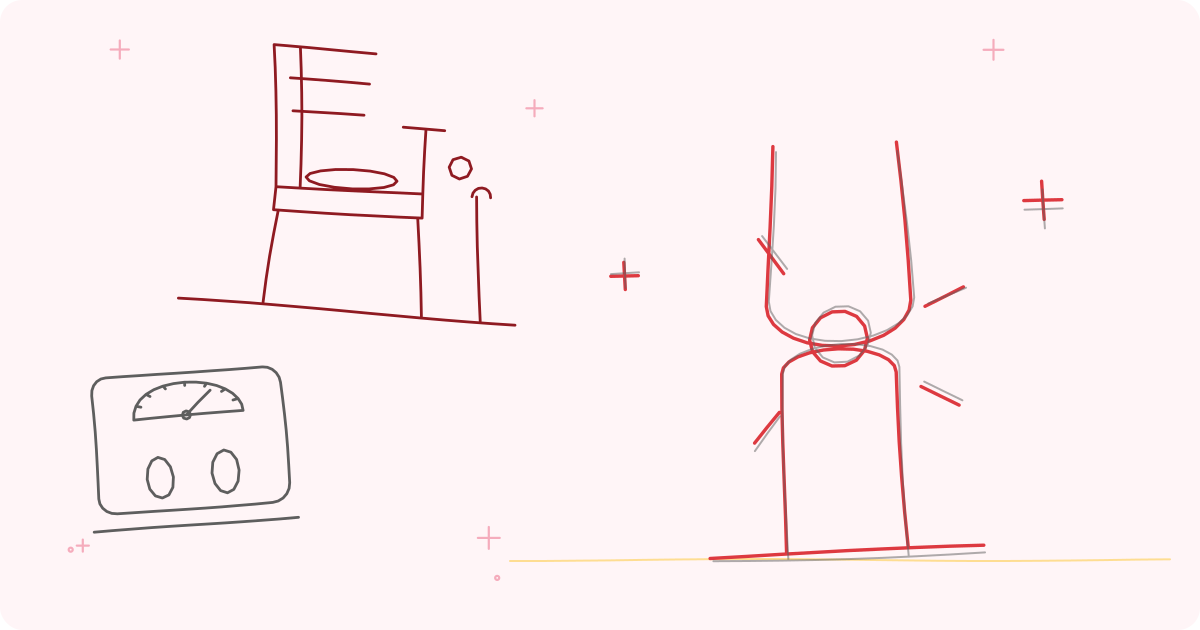
- Depth. From the back of the seat to the front edge, about 40 to 45 cm. Measure the person's thigh length, from the buttock to the back of the knee, and choose a seat about 2.5 cm shorter, so the front edge does not press behind the knee. A seat that is too deep makes the person slide forward or slump.
- Width. A comfortable width allows room for the hips and clothing without being so wide that the person leans. Typically 45 to 50 cm between the arms.
Arms
Arms are essential for most older adults.
- Height. About 20 to 25 cm above the seat, so the elbows rest comfortably, shoulders are relaxed and the hands can push down.
- Position. The arms should extend near the front of the seat, so that the person can push up from there, not from the middle.
- Strength. Solid and secure, not wobbly. Test by pushing down.
- Shape. Rounded, padded and without sharp edges. A firm grip surface helps.
- Spacing. Not so close that they squeeze the hips.
Chairs without arms, such as dining stools and low sofas, are difficult for people who need to push up with their hands.
Seat firmness
A seat that is too soft sinks, making rising a struggle and encouraging poor posture. A seat that is too hard is uncomfortable. Look for a firm but cushioned seat that does not sink more than a few centimetres. High-resilience foam, rather than loose-filled cushions, is best. Sit on the chair for several minutes and then try standing.
The back
- Height. A back that reaches at least to the shoulder blades gives support; a high back that supports the head helps those who tire or doze.
- Angle. Slightly reclined, about 100 to 110 degrees, is comfortable and not hard to get out of. A deeply reclined chair is harder to leave.
- Lumbar support. A gentle curve to support the lower back; see lumbar cushions.
- Firmness. Firm enough to support; not so soft that the person sinks.
- Headrest. Useful for people who sit for long periods, or those who nap.
Stability and base
- The chair should not rock, tip or slide, even when pushed.
- A broad base and a non-slip floor help.
- A chair on castors is unsafe for most older people unless the wheels lock.
- Place the chair against a wall when transferring.
- Check that the legs are even and that the floor is level.
Fabric and finish
- Breathable fabric, such as cotton blends, which is cooler in hot weather than vinyl.
- Easy to clean: removable washable covers, or wipeable material for those with incontinence risk.
- Not slippery: smooth leather or polished fabric can make a person slide.
- Flame-resistant upholstery, where available.
- Colour and contrast. A chair that contrasts with the floor and wall is easier to see for people with poor vision or dementia; see low vision home safety.
- Avoid sharp edges, protruding bolts and gaps that can trap fingers.
Rise-and-recline (lift) chairs
An electric rise-and-recline chair has a motor that tilts the seat forward and up, helping the person to stand, and reclines to a comfortable position. It can restore independence for people who cannot rise from a standard chair, and it is a comfortable place to rest.
Consider one if your parent cannot stand without help even from a suitable chair, but:
- It is expensive and heavy.
- It needs a power point, and a safe place for the cable.
- The person must be able to use the controls.
- It is not a substitute for strength and mobility; used too early, it may encourage inactivity.
- A therapist should advise on type, size and use.
- Check the weight limit, the seat dimensions and the safety features, such as a battery back-up and an emergency stop.
Special needs
Frail or very thin people: a well-padded seat and a pressure-relieving cushion. See gel cushions for pressure relief.
Dementia: a familiar chair, firm, with clear arms and a stable base, near a window.
Breathlessness: a chair that allows upright sitting with arms to lean on, and perhaps a footstool.
Swollen legs: a chair with an adjustable leg rest; see leg elevation pillows.
After hip surgery: a raised chair with arms and a firm seat; see cushions after hip replacement.
After a stroke: a chair with firm arms on both sides, perhaps with extra padding to support the weak arm.
For toileting needs: a commode chair; see commode chairs.
For the dining table: a sturdy chair with arms, at the right height for the table.
Where to place the chair
- Near the room's centre of activity, with a view and good light.
- Away from heaters and draughts.
- With enough space to stand and turn, and walkers to pass.
- Not in a place where it blocks the path to the toilet.
- With a small table within reach for a drink, glasses and the remote.
Testing in a shop
Take your parent if possible. Ask them to:
1. Sit down and stand up three times. 2. Sit for ten minutes and note the comfort. 3. Check the feet reach the floor and the knees are not above the hips. 4. Push down on the arms and check stability. 5. Lean back and forward and check support.
Check that you can get a walker or wheelchair close to the chair.
Common mistakes
- Buying a deep, low sofa because it looks comfortable.
- Soft, sinking cushions.
- No arms.
- A chair on wheels.
- Ignoring the person's height.
- Too many cushions, making the chair unstable.
- Slippery fabric.
- Buying a lift chair too early, or for a person who cannot use the controls.
When to ask a professional
An occupational therapist can assess seating needs and recommend a chair, measurements and aids. Ask for help if your parent cannot stand without help, has pain on sitting or rising, has a pressure-sore risk or has a condition that affects posture. See helping an elderly parent stand from a chair. Our care advisors can help choose seating.
Equipment mentioned in this guide
Frequently asked questions
What is the best chair height for an older person?
About 45 to 50 cm from the floor to the seat, so that the knees are level with or slightly below the hips and feet rest flat. Adjust for the person's height.
Do older people need chairs with arms?
Usually yes. Arms give something to push down on when standing up and to lower on when sitting.
Is a recliner or lift chair a good idea?
A rise-and-recline chair can help someone who cannot stand from a normal chair, but it is costly and should be recommended by a therapist.
How firm should the seat be?
Firm enough that the person does not sink more than a few centimetres, but cushioned for comfort. A soft sofa is hard to rise from.
Can I raise a chair that is too low?
Yes, with a firm cushion or by fitting blocks or raisers under the legs, if the chair stays stable. Make sure the feet still reach the floor.
Sources and further reading
- College of Occupational Therapists, guidance on seating and chair selection for older people
- Disabled Living Foundation (UK), information on choosing a chair
- NICE guideline NG249, Falls: prevention, assessment and management in older adults and adults at higher risk
- World Health Organization, World report on ageing and health (2015)
Tags: chair for elderlyarmchair for seniorsseat heighthigh seat chairrise and recline chairsitting comfortCushions, pillows and comfortOrthopaedic seat cushionBeds, mattresses and restMobility and walking aids
This article is for general education and is not medical advice. Speak to your doctor before changing your exercise, diet or medicines.