Why standing up gets harder with age
To stand, the body must shift its weight forward over the feet, then push up with the thigh and hip muscles. Several things change with age:
- Muscle loss. Thigh and hip muscles shrink and weaken, especially in people who sit a lot.
- Joint stiffness and pain. Arthritis in knees and hips makes pushing up painful.
- Slower reflexes and weaker balance. The body is slower to correct a wobble.
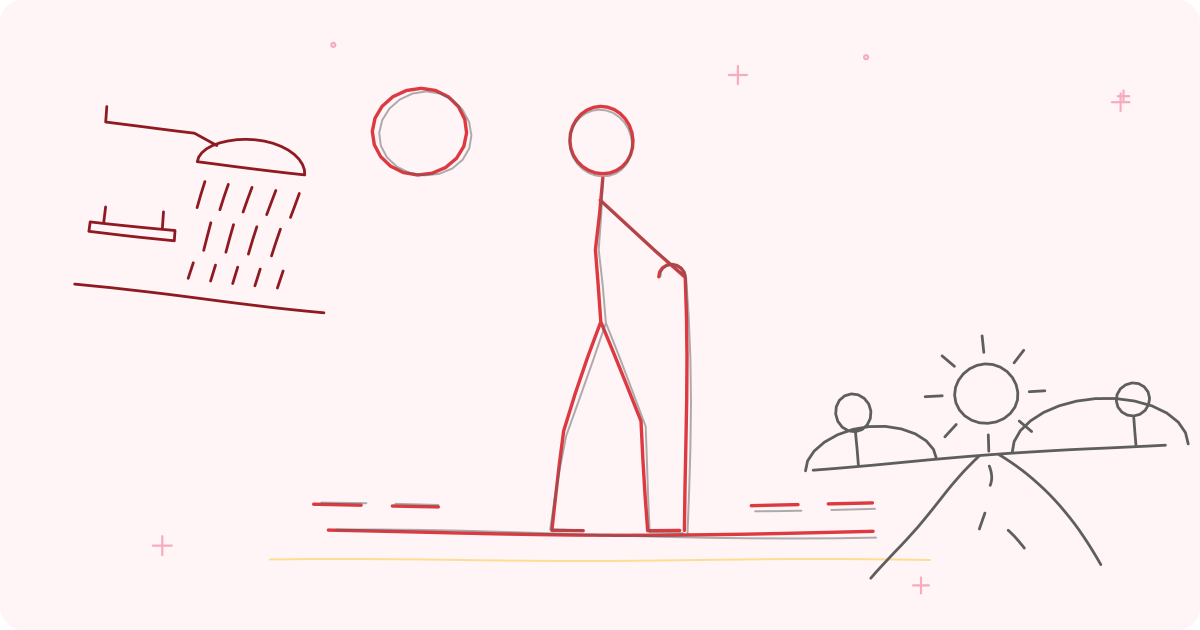
- Blood pressure changes. When we stand, blood pools in the legs, and a healthy system adjusts within seconds. In many older adults, or those on certain medicines, it adjusts too slowly, causing dizziness; see dizziness when standing.
- Fear and habit. After a fall or a scare, people may rush or avoid standing.
- Poor chairs. Low, soft or armless seats make rising harder.
Because it is a daily movement, repeated many times, even a small improvement in technique or chair makes life easier. Doing five repeated rises with good technique is also one of the simplest leg-strengthening exercises.
The chair matters more than you think
A good chair for an older person has:
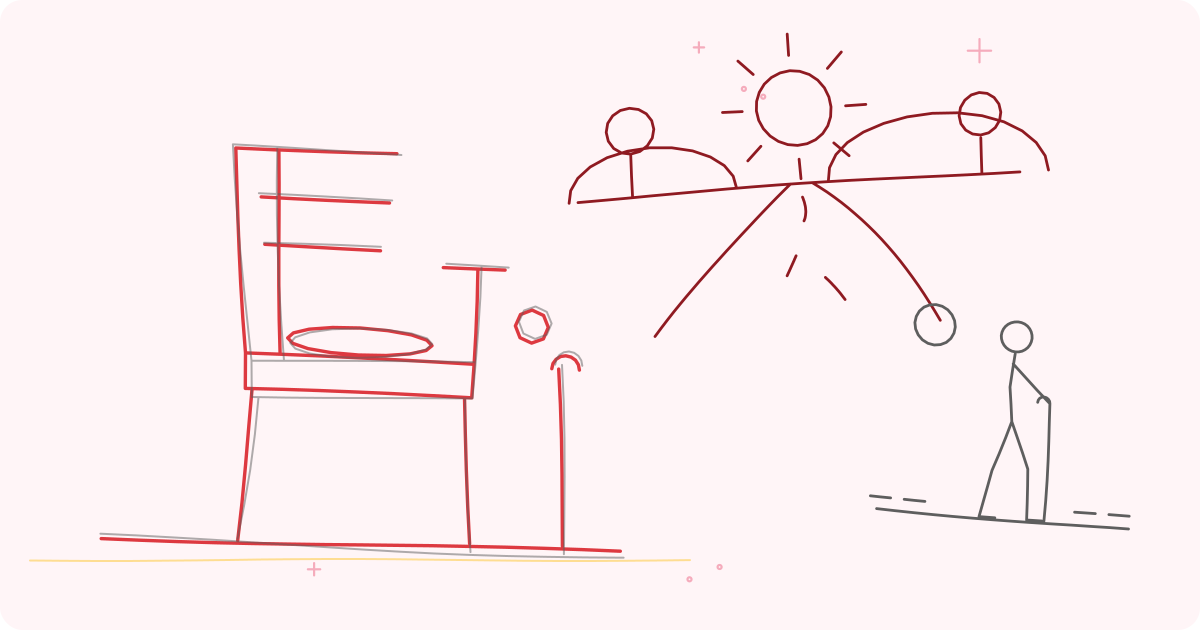
- A seat height of about 45 to 50 cm (18 to 20 inches) from the floor, with hips slightly above the knees when seated. Low sofas and deep armchairs are difficult.
- A firm seat that does not sink. A soft cushion or sagging seat takes effort to push out of.
- Armrests at a height where the hands rest naturally, so the person can push down on them.
- A stable base, with no wobble, and a floor that is not slippery.
- A backrest with an upright angle, not a deeply reclined one.
If the chair is too low, a firm seat cushion or a raised seat can add height; see seat cushions for older adults and choosing a chair for an older person. Place the chair against a wall or heavy furniture so it cannot slide.
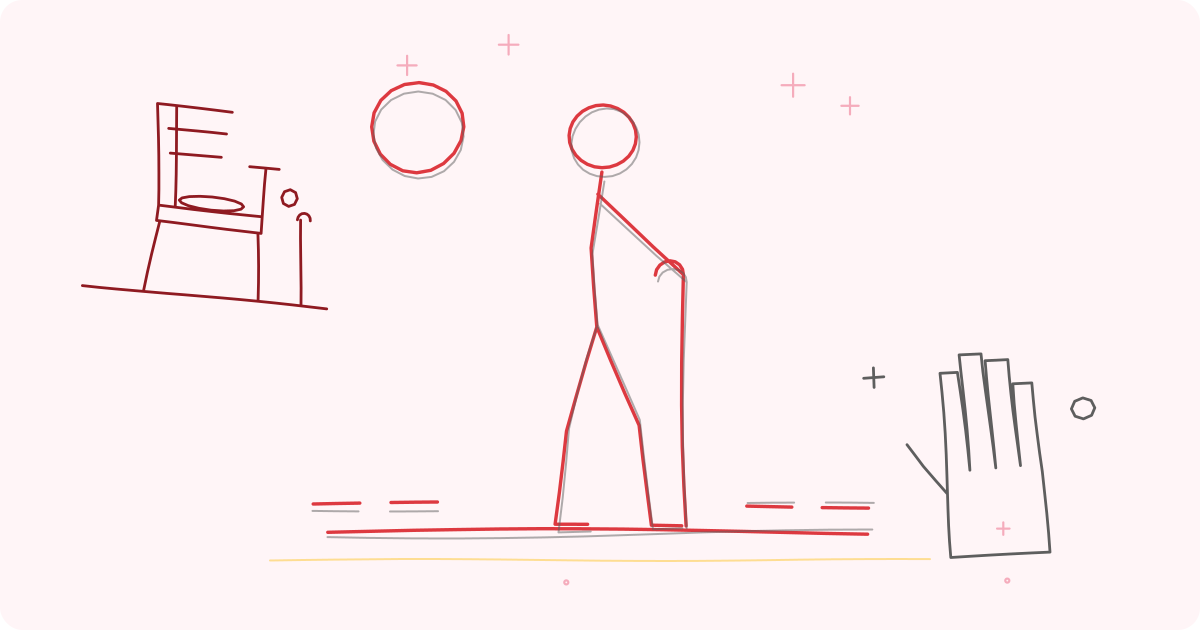
The sit-to-stand technique
This is the method a physiotherapist teaches. Practise it with your parent.
1. Scoot forward. Slide to the front of the seat, so that the hips are near the edge. 2. Feet back and apart. Place the feet flat, shoulder-width apart, and slide them back so they are under or slightly behind the knees. This is the key step: feet too far forward make standing very hard. 3. Hands on the arms. Put the hands on the chair arms or on the seat edge on each side, not on a walker or a stick, which can slide. 4. Lean forward. Bend from the hips and bring the nose over the toes. This shifts weight over the feet. 5. Push and stand. Push down through the hands and legs, and straighten the knees and hips together, on a count of three. 6. Pause. Stand for a few seconds to let the blood pressure and balance settle before taking hold of a walking aid or moving.
For sitting down, reverse it: walk to the chair, turn, back up until the legs touch it, reach for the arms, lean forward slightly and lower slowly. Do not drop.
How to help without hurting
Ask before helping, and ask how they like to be helped. Many people prefer to do it themselves with supervision.
Do not pull on the arm or hand. It can injure the shoulder and the fragile skin, and it does not help the person's own muscles do the work.
Stand in front or to the weaker side, with a wide, stable stance, knees bent and back straight.
Offer a stable hold. Options are:
- your hands on their forearms, with them holding yours;
- a transfer belt around the waist, held with both hands; see how to use a transfer belt; or
- a hand at the hips for steadying, if they prefer.
Count and move together. "One, two, three, stand" keeps you in step.
Guide, do not lift. Let your parent's muscles work. Your role is to steady, nudge and catch.
Keep your own back safe. Bend the knees, keep close and do not twist.
Block the knees if needed. If your parent's knees buckle, place your knees against the front of theirs to stop them from giving way, as taught by a therapist.
Stay until steady. After standing, wait before letting go.
Making it easier
- Raise the seat. A firm cushion, a chair with blocks under the legs or a taller chair.
- Use arms. Choose chairs with sturdy arms, or fit a grab handle beside a favourite chair.
- Consider a lift chair. An electric riser recliner tilts forward and raises the seat. It is useful for people who cannot stand without help, but is expensive and takes space, so consult a therapist.
- Fix the floor. Non-slip flooring and shoes prevent the feet from sliding.
- Check shoes. See walking aids and footwear.
- Strengthen the legs. Sit-to-stand exercises, done daily, build the muscles; see chair exercises for seniors.
- Review medicines and blood pressure. If your parent often feels dizzy on standing, ask a doctor.
- Allow time. Do not hurry the person, since rushing increases the risk of a fall.
Using walking aids at the same time
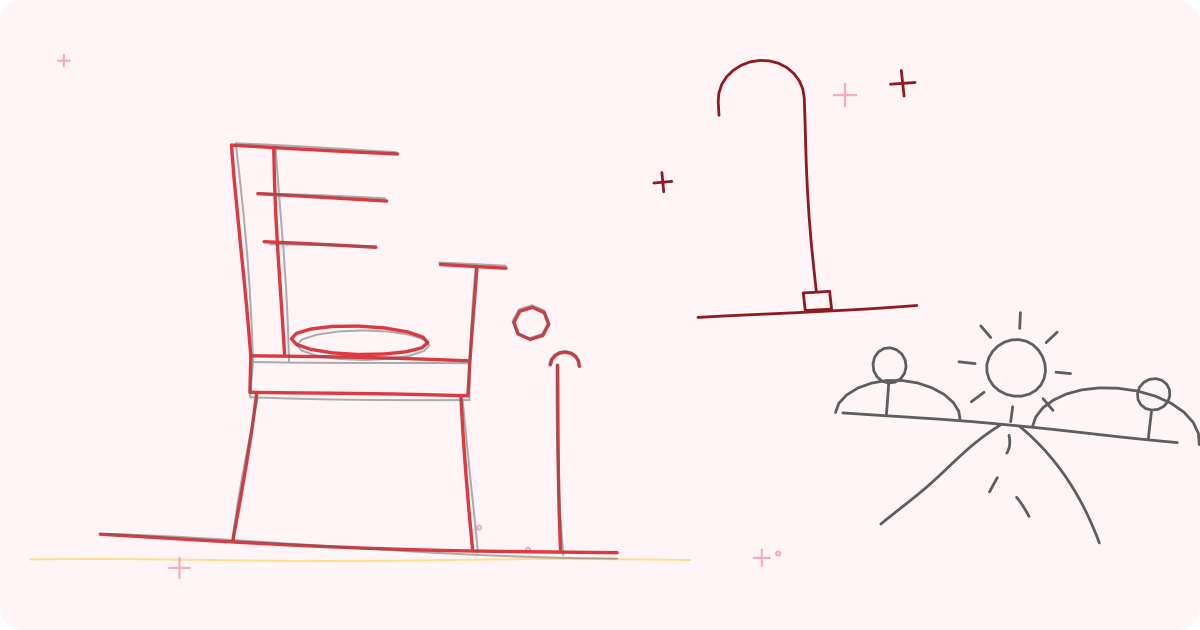
The aid should be placed in front or to the side before standing, within reach but not in the way. Do not use a walker or a stick to pull up, because they can slide or tip. Stand first, steady yourself, and then take the grips. If the aid has brakes, such as a rollator, lock them first. See rollator brakes and seat safety and how to use a walking frame correctly.
Special situations
After a stroke. Use the stronger side and block the weaker knee if needed, following the therapist's training; see walking aids after a stroke.
After hip replacement. The surgeon may restrict hip bending, so use a raised seat and follow precautions strictly.
Parkinson's disease. Rising can be slow and freezing can occur. Use cues such as counting aloud and rocking forward and back before standing; see walking aids for Parkinson's.
Dementia. Give short, calm instructions, one step at a time, and allow extra time.
Very heavy or very frail people. Do not attempt alone. Ask for a second helper or a professional.
From the floor. After a fall, see how to get up after a fall and what to do after a fall.
Mistakes to avoid
- Pulling on the arms.
- Standing too fast and moving at once. Pause for dizziness.
- Feet too far forward.
- Soft, low seats.
- A chair that slides.
- Twisting your back.
- Trying to lift a heavy person alone.
- Using a walker to push up.
- Skipping the pause.
When to ask a professional
Ask a physiotherapist if your parent cannot stand without heavy help, has fallen when standing, feels dizzy or faint, has pain on rising or is losing strength. A therapist can assess, teach technique and suggest equipment. See a doctor if standing causes chest pain, severe breathlessness, fainting or new weakness.
Equipment mentioned in this guide
Frequently asked questions
How can I help my elderly parent stand up from a chair?
Place the feet back, hands on the arms, lean forward and push up on a count of three. Stand in front, knees bent, offer a steady hold or a transfer belt and guide, do not pull or lift.
How high should a chair be for an older person?
About 45 to 50 cm from the floor, firm, with sturdy arms. Low or soft seats make rising harder, and a firm cushion can add height.
Why does my parent feel dizzy when standing?
Blood pressure may drop for a few seconds on standing, which is common in older adults and with some medicines. Stand slowly, pause and see a doctor if it is frequent.
Should I buy a lift chair?
Consider one if your parent cannot stand even with the best technique and chair. Ask a physiotherapist or occupational therapist first, because it is costly and needs space.
What if my parent is too heavy for me to help?
Do not try alone. Get a second person, a hoist or professional help to protect both of you.
Sources and further reading
- Health and Safety Executive (UK), guidance on moving and handling in health and social care
- Chartered Society of Physiotherapy, patient information on getting up from a chair
- NICE guideline NG249, Falls: prevention, assessment and management in older adults and adults at higher risk
- World Health Organization, World report on ageing and health (2015)
Tags: standing up from a chairsit to standhelping elderly standchair height for seniorscaregiver back safetyfalls preventionWalking and mobility aidsTransfer belt for carersMobility and walking aidsCushions, pillows and comfort
This article is for general education and is not medical advice. Speak to your doctor before changing your exercise, diet or medicines.