Why footwear matters for balance
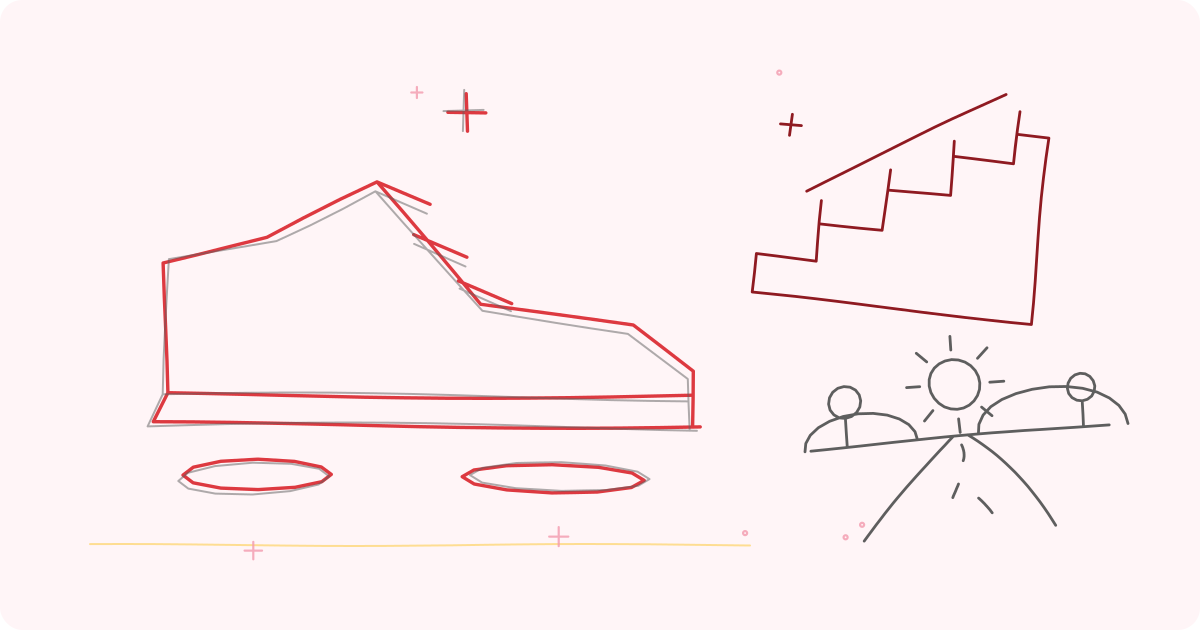
The foot is full of sensors that tell the brain where the body is in space. A thin, flexible, well-fitting sole lets those sensors work and gives a good grip; a thick, soft or loose shoe dulls the signal and can feel unstable. At the same time, a shoe must protect the foot, support its arch, cushion the heel and grip the floor. These needs pull in different directions, which is why the right shoe is a balance.
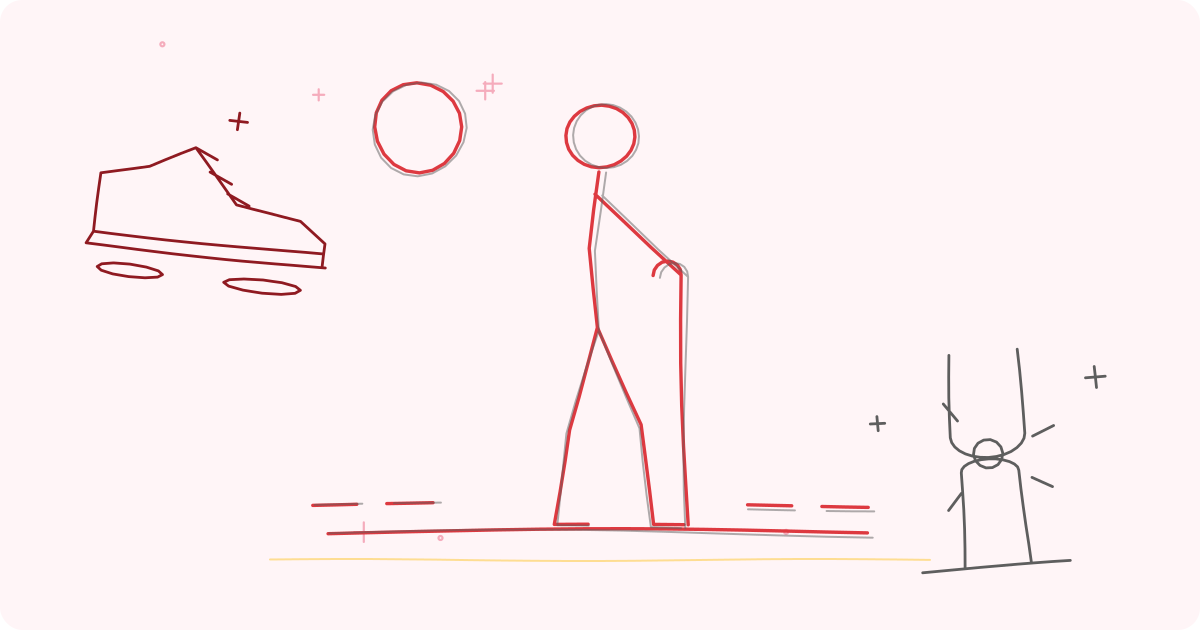
Walking aids add a second point. A stick or walker is placed on the floor ahead of the body, and the foot follows. If the shoe slips or the foot catches as it moves forward, the aid cannot help. Good shoes and good aids work together.
What to look for in a shoe
A firm, non-slip sole. The sole should have a tread pattern with a good rubber compound that grips tiles, marble and wet roads. Avoid smooth leather soles and hard plastic soles. Press the sole with your thumb: it should be firm but not rock hard.
A low, broad heel. A heel of about 2 to 3 cm, wide and stable, helps balance. High heels and thin heels are unsafe. Completely flat soles with no heel can also feel unstable for some people; a small broad heel is usually best.
A snug, secure fit. The shoe should hold the heel firmly so it does not slip. A heel counter that is stiff and cups the back of the foot helps. Fastenings such as laces, Velcro straps or buckles keep the shoe on. Slip-on shoes need a snug fit.
Enough room in the toe box. There should be a thumb's width of space beyond the longest toe, and the shoe should be wide enough that the toes can spread. Cramped shoes cause corns, bunions and pain.
A supportive arch and cushioned insole. Support reduces strain on the foot, ankle and knee. Removable insoles allow a custom orthotic if needed; see insoles and orthotics for foot pain.
Light weight. Heavy shoes tire legs and encourage dragging. Choose a light material.
Breathable upper. Soft leather, mesh or cotton lets the foot breathe, which matters in hot, humid cities and for people with diabetes.
Easy to put on. For those with arthritis or weak hands, Velcro straps, elastic laces or a zip are easier than laces. A long shoehorn helps.
What to avoid
- Bare feet and socks alone on smooth floors. They offer no grip. If your parent likes to be barefoot at home, use non-slip socks with rubber grips.
- Loose slippers and flip-flops. They slide off, catch on rugs and offer no support. They are among the most common footwear in falls.
- Backless sandals and mules. The heel is not secured.
- High heels, including those with a "chunky" heel.
- Worn-out shoes. Check the sole for smooth patches and the upper for splits.
- Shoes that are too big. They move on the foot and cause tripping.
- Smooth leather soles on polished floors.
- Shoes that squeeze. They cause pain and change gait.
Footwear for the home
Many falls happen indoors, so home footwear matters as much as street shoes. Options include:
- Closed, supportive indoor shoes with a non-slip sole, worn all day.
- Slippers with a firm heel, a rubber sole and a closed back, if slippers are preferred.
- Non-slip socks with rubber dots for bedtime or bathroom trips.
If your parent removes shoes at the door, as is customary in many Indian homes, provide a place to sit while changing, with a chair, and keep indoor shoes by the door. Walking barefoot indoors on polished floors is risky; non-slip socks are a better compromise. Do not use socks alone on tiles.
Footwear for different aids
With a stick. A closed shoe with a good grip lets the stick and foot move together. Re-check stick height when you change shoes; see how to measure and set the height of a walking stick.
With a walker or rollator. The user steps into the frame, so the toes must not catch on the front bar. Choose shoes with a low profile.
With a wheelchair. Shoes must be firm enough to sit on the footplate without slipping. Check that the feet do not hang or drag.
Foot problems and shoes
Swollen feet. Choose shoes with adjustable fastenings such as Velcro, wide fit and soft uppers, and try them on in the afternoon, when feet are largest. See swollen legs in older adults.
Diabetes. Feet can be numb and wounds slow to heal, so shoes must have no seams or rough areas inside, a roomy toe box, a cushioned insole and a firm sole. Check inside shoes before wearing, and never go barefoot. See diabetic foot care at home.
Bunions and hammer toes. Choose wide, deep toe boxes in soft material; see bunion correctors.
Arthritis in the feet. Cushioned soles, a rocker sole that eases roll-off and easy fastenings help.
Plantar fasciitis and heel pain. A cushioned heel and a supportive arch; see heel pain and plantar fasciitis after 60.
Neuropathy. Numbness means injuries go unnoticed. Check feet daily and wear protective shoes. See numb feet and neuropathy.
Foot drop or weak ankles. An ankle support or brace may help; see ankle supports. Ask a physiotherapist.
How to buy shoes for an older person
- Shop in the afternoon, when feet are at their largest.
- Measure both feet each time, since foot size changes with age; one foot is often larger.
- Wear the socks you normally wear and bring any insoles.
- Try on both shoes and walk around the shop.
- Check the fit: the heel should not slip; the toes should have room; no rubbing or pressure.
- Check the sole by bending the shoe: it should flex at the ball of the foot, not in the middle.
- Test the grip on a smooth floor if you can.
- Avoid relying on size alone, since sizes vary by brand.
- Do not buy shoes to "break in." They should be comfortable from the start.
Care and replacement
Check shoes weekly for worn tread, loose soles, cracked uppers and torn linings. Replace shoes as soon as the sole is smooth or worn on one side, which can tilt the foot. For regular daily use, a pair may need replacing every year or less. Keep two pairs and alternate them, so each dries fully. Clean and dry shoes after rain.
Socks and hosiery
Socks should fit without wrinkles, be made of soft, breathable fibre and have no tight bands. For swollen legs, ask a doctor about compression stockings; see compression stockings guide. Avoid slippery nylon socks on smooth floors.
When to ask a professional
See a doctor or podiatrist if your parent has foot pain, sores, colour change, swelling, numbness, or a change in the shape of the foot. A physiotherapist can advise on shoes and aids and test balance. If your parent has diabetes, a foot check at every visit is advisable.
Equipment mentioned in this guide
Frequently asked questions
Are slippers safe for older people?
Loose, backless or smooth-soled slippers are unsafe. If slippers are preferred, choose a closed back, a firm heel and a non-slip rubber sole, or use non-slip socks instead.
Is it safe to walk barefoot at home?
On smooth floors it is risky, because there is no grip or protection. Non-slip socks or supportive indoor shoes are better, particularly for people with diabetes or neuropathy.
What kind of shoes are best for people using a walker?
Closed, low-profile, non-slip shoes with a firm heel and a secure fastening such as Velcro, so the toes do not catch on the frame.
How often should an older person replace shoes?
When the tread is smooth, the heel is worn to one side or the shoe loses support. Daily-wear shoes often need replacing every year or less.
Do I need special shoes for swollen feet?
Choose wide, soft, adjustable shoes with Velcro or elastic fastenings, and buy them in the afternoon. Ask a doctor about the cause of the swelling.
Sources and further reading
- NICE guideline NG249, Falls: prevention, assessment and management in older adults and adults at higher risk
- World Health Organization, WHO global report on falls prevention in older age (2007)
- Chartered Society of Chiropodists and Podiatrists, advice on footwear for older people
- American Podiatric Medical Association, guidance on choosing footwear
Tags: shoes for elderlyfootwear for walking aidsnon-slip shoesfalls preventionfootwear for seniorsinsolesWalking and mobility aidsAdjustable walking stickMobility and walking aidsJoint and pain support
This article is for general education and is not medical advice. Speak to your doctor before changing your exercise, diet or medicines.