
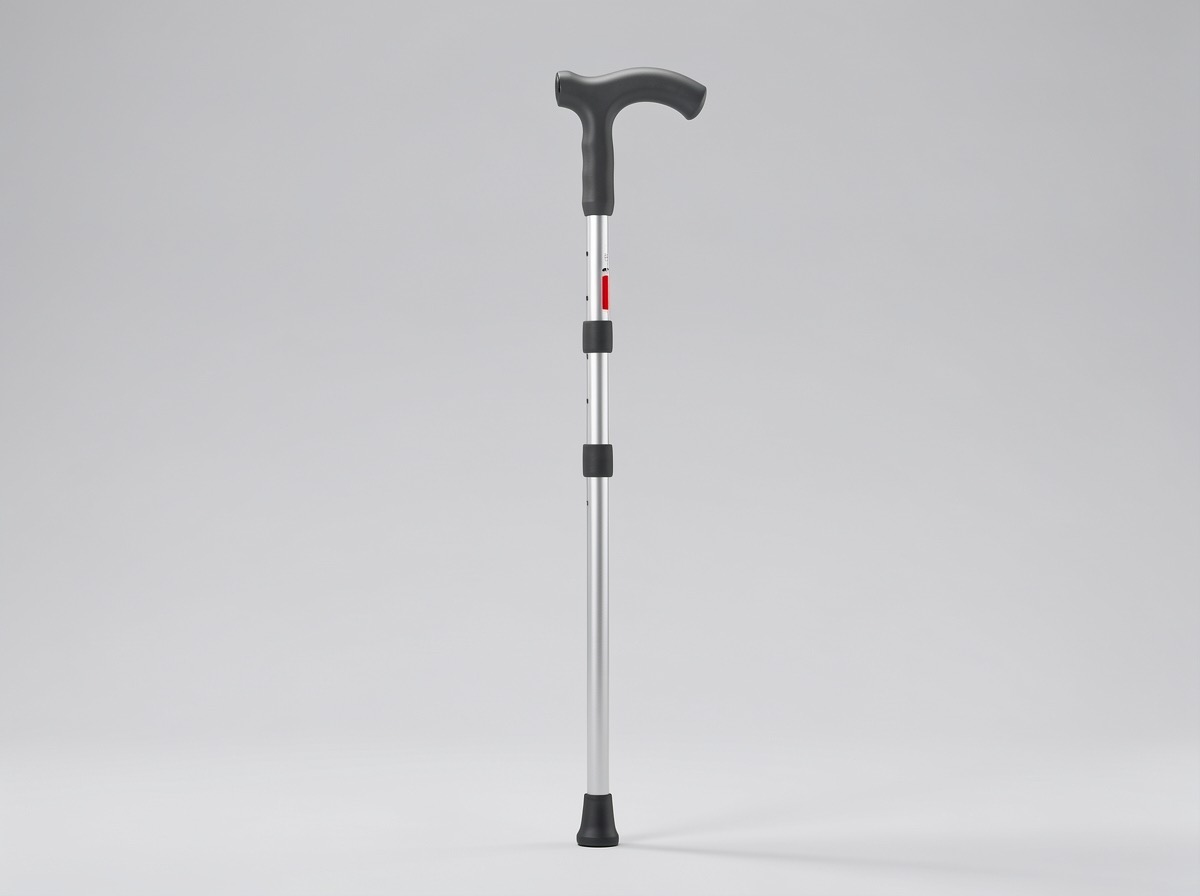
Illustrative picture. We confirm the exact model with your price.
Adjustable walking stick
Lightweight, height-adjustable stick with a non-slip rubber tip and comfortable grip.
Good forMild unsteadiness or knee pain
- Price and delivery confirmed first
- A nurse can advise before you buy
- Set-up help when it is needed
What it is, and who it helps
A walking stick adds a third point of contact with the ground. For someone who is a little unsteady, or whose knee or hip hurts, that small extra support can make the difference between staying in and going out.
An adjustable stick lets the height be set precisely, which matters more than most people expect: a stick that is too long or too short pushes the shoulder up or bends the back and can make walking worse.
How to choose
- Set the height so the handle reaches the crease of the wrist when the arm hangs relaxed, or ask a physiotherapist to check it.
- Choose a handle that fits the hand: a rounded or ergonomic grip eases pressure for arthritic fingers.
- Look for a wide, ribbed rubber tip that grips wet and smooth floors, and a stick that holds the person's weight.
- Check it folds or fits easily in a car if your parent travels.
Using it safely
- Hold the stick on the opposite side to the weaker or painful leg, and move the stick and the weak leg together.
- Replace the rubber tip as soon as it is smooth or cracked; a worn tip slips.
- If your parent needs the stick for every step, ask a physiotherapist whether a frame would be safer.
Before you buy
Which hand should hold the stick?
The hand opposite the painful or weak leg. Move the stick forward with that leg so that the stick takes some of the load.
More in Mobility and walking aids · Care plans · Services · Preventing falls in older adults · Medical equipment at home
General information, not medical advice. Ask a doctor, nurse or physiotherapist what is right for your parent.
Often chosen together
Not sure this is the right one?
A nurse can suggest the right choice, arrange delivery and show how to use it.