Before you start: check the frame and the floor
A two-minute check prevents most accidents.
- Height. The grips should be level with the wrist crease and the elbows slightly bent. See buying a walking frame for the method.
- Legs. All four legs set to the same height and each adjusting pin fully engaged.
- Feet. Rubber feet intact, ribbed and secure.
- Locks. On a folding frame, both hinges locked open with a firm click.
- Floor. Clear of rugs, cables, shoes and wet patches. Good lighting.
- Footwear. Closed, flat shoes with a non-slip sole. Not socks, slippers or sandals.
If your parent has had surgery, check the instructions of the surgeon or physiotherapist about how much weight to put on the operated leg. Some people are told to keep full weight on both legs, some to put only part of their weight on one leg and a few to put none at all. Follow those instructions exactly.
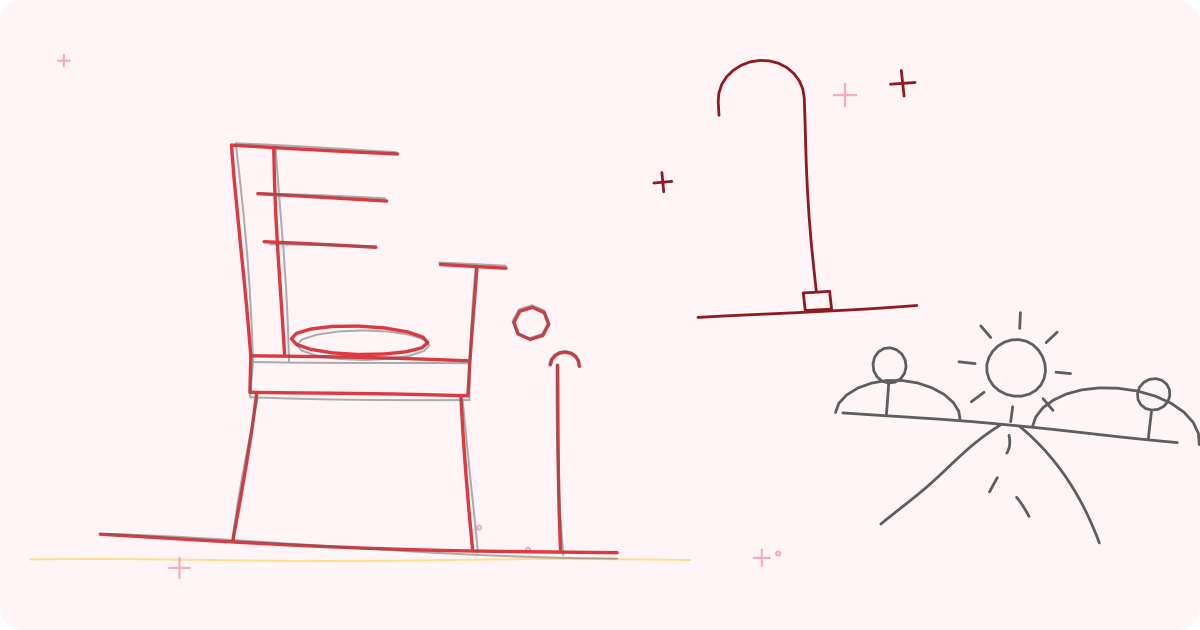
Standing up from a chair or bed
Standing is the riskiest moment, because the frame is not yet in use.
1. Place the frame directly in front of the chair, but do not lean on it yet. 2. Sit near the front of the seat, feet flat on the floor and slightly back under the knees. 3. Put both hands on the arms of the chair, or on the bed edge or seat on each side. 4. Lean forward ("nose over toes") and push up through the hands and legs. 5. Once standing and steady, reach for the frame grips, one hand at a time. 6. Pause until the dizziness settles, if any. Many older adults feel light-headed on standing; wait for a few seconds before moving.
Never grab the frame to pull yourself up. The frame can tip towards you. Never stand with the frame behind you.
Walking with the frame
The pattern is "frame, weak leg, strong leg".
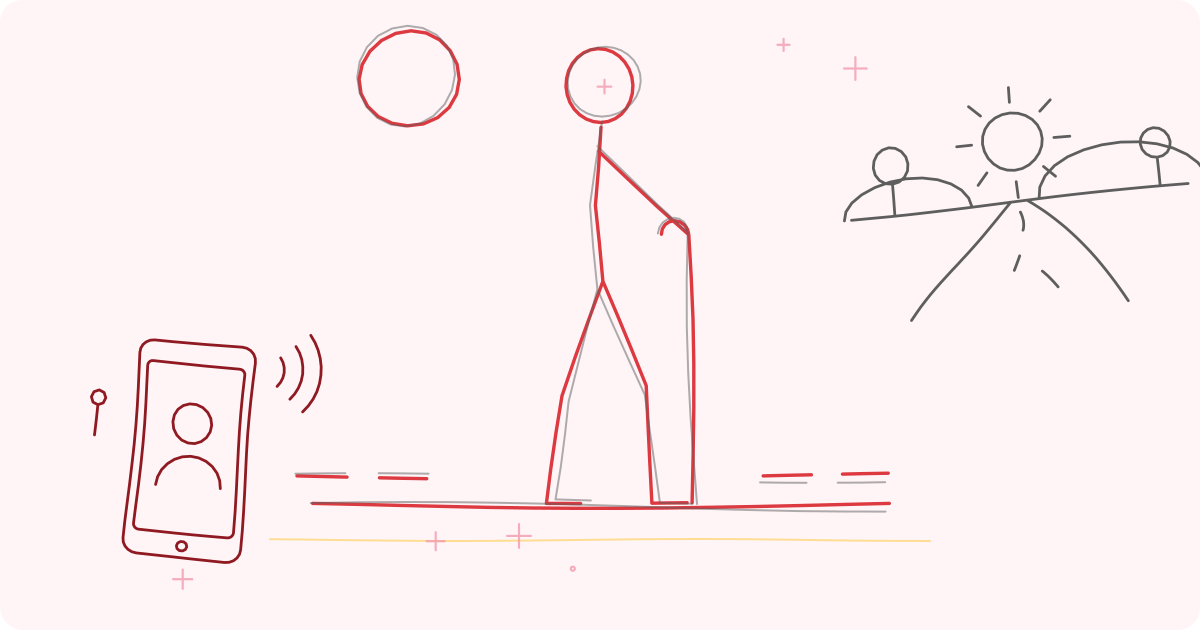
1. Move the frame forward. Lift it, or push it if it has glides, about one short step ahead, no more than an arm's length. Place all four feet down together before taking a step. 2. Step with the weaker leg into the frame, keeping the heel down first, then the toes. 3. Step through with the stronger leg, placing the foot level with, or just past, the weaker one. 4. Repeat, looking ahead and keeping the back straight.
A few points make a big difference:
- Stay inside the frame. Stand so your body is between the back legs and the front bar. Standing too far back lets the frame be too far ahead; too far forward tips it.
- Short steps. Long strides unbalance the user.
- Keep the frame close enough that the elbows stay slightly bent.
- Look ahead, not at the feet. Looking down bends the neck and rounds the shoulders.
- Do not slide the frame unless it is designed to glide; dragging a frame on a rough floor catches the feet.
- Rest as needed. Stop, stand steady and breathe. If your parent becomes breathless or dizzy, sit down at once.
Turning safely
Turning is where many frame falls occur. The wrong way is to twist the body or pivot the frame and leave the feet behind.
1. Stop and stand steady. 2. Take small steps in a half-circle, moving the frame and the feet together. 3. Move the frame a little with each step so you stay inside it. 4. Do not turn by swinging the frame in the air.
In a narrow space, such as a bathroom, plan the turn before entering, or back out in a straight line rather than turning around.
Sitting down
1. Walk to the chair and turn so your back is to it. 2. Back up until you feel the chair touch the back of your legs. 3. Let go of the frame with one hand and reach back for the chair arm. Then the other hand. 4. Bend forward from the hips and lower slowly. Do not drop. 5. Once seated, slide the frame to one side, not in front of you, where it blocks the way.
Choose a chair with arms and a firm seat, ideally about 45 to 50 cm from the floor. A soft sofa is difficult to rise from. See choosing a chair for an older person for advice.
Doorways, thresholds and corridors
- Doorways. Measure first; a typical frame needs about 70 to 75 cm. If the opening is tight, fold the frame slightly or turn it sideways, or ask the physiotherapist for a narrow frame.
- Thresholds. A small raised threshold can catch the front legs. Stop, lift the frame over, then step. A threshold ramp can make this easier; see portable ramps for thresholds.
- Door opening. Pull or push the door open before stepping through, then stand the frame in the opening to hold the door. A door closer or an open door is simpler.
- Corridors. Keep to one side and clear clutter. In shared corridors, ask others to give way.
Bathroom and toilet
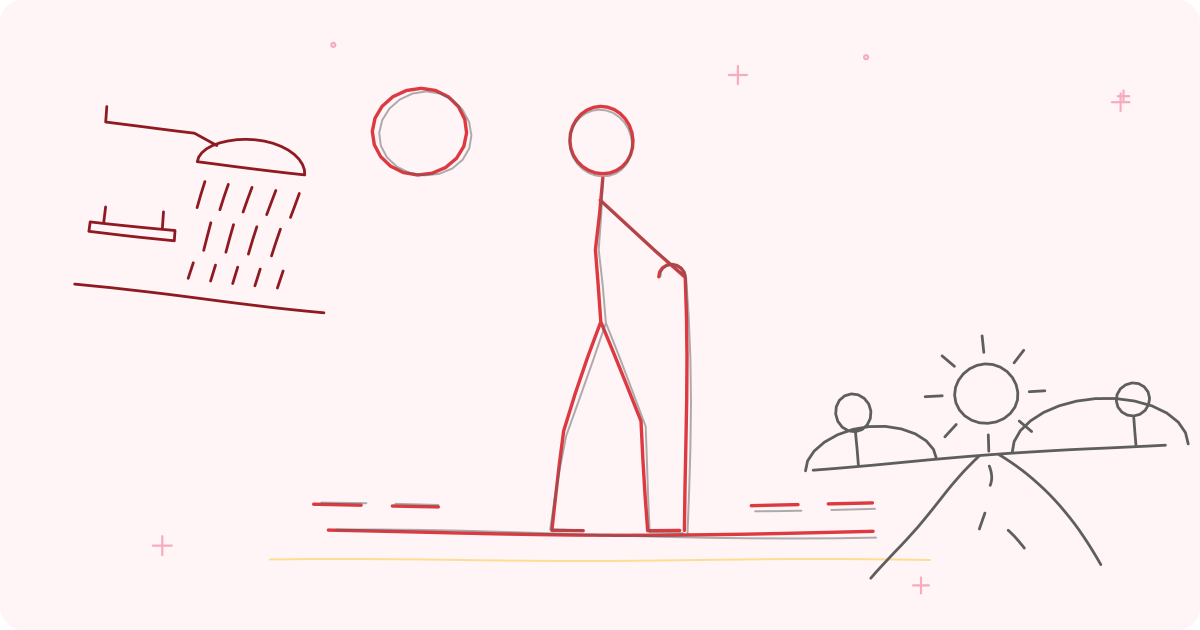
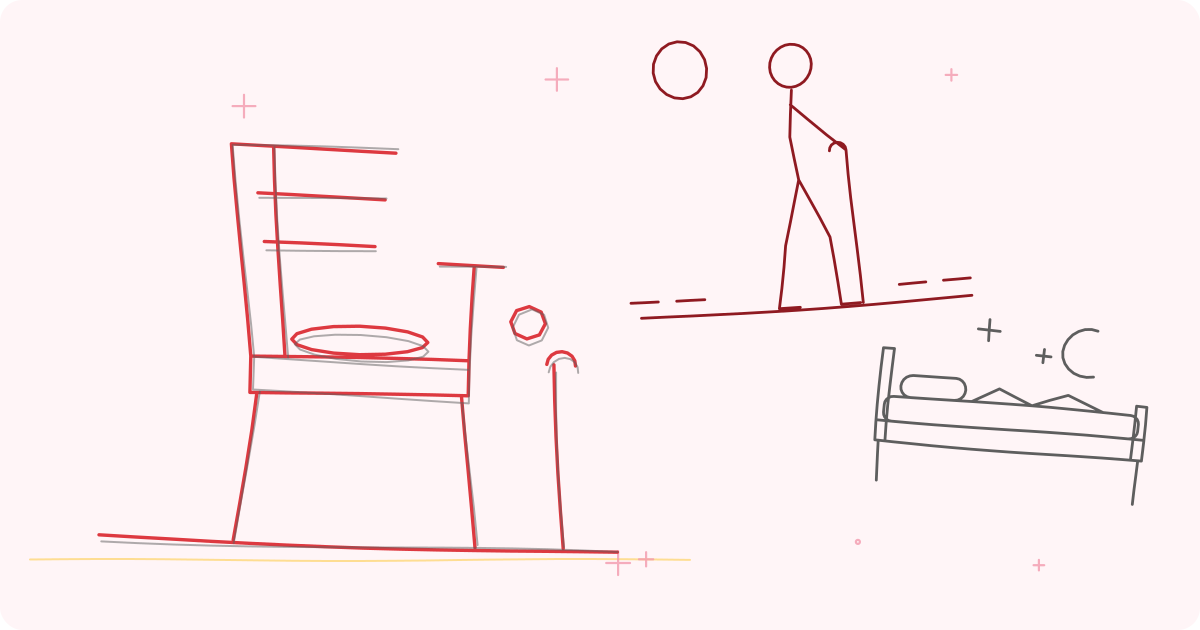
The bathroom is the hardest place to use a frame. The floor is wet, space is tight and the toilet is low. Many families decide that a frame stays outside the bathroom and a different aid is used inside.
- Fit grab bars by the toilet and shower so the user can take hold of something fixed; see grab bars.
- Use a raised toilet seat or a toilet frame to make sitting and rising easier; see raised toilet seats.
- Place a non-slip mat and use a shower chair for bathing.
- Park the frame beside the toilet, not in the way, and use the grab bar to lower and rise.
Stairs and steps
A frame must not be used on stairs. If stairs are essential, use a sturdy handrail, ideally on both sides, with a stick or a second frame at the top and bottom. A physiotherapist can teach a safe method, and if stairs are too risky it is better to move daily life to one floor. See using a walking stick on stairs and slopes for the "up with the good, down with the bad" rule, which also applies to rail-and-stick stair use.
Outdoors
A basic frame is best on smooth, level surfaces. On uneven pavements, gravel, grass or mud its feet catch and it tips. If your parent wants to walk outside regularly, a wheeled walker or a rollator will cope better; see rollators on Indian pavements. Take care with wet leaves and puddles after rain.
What the helper should do
A family member can help, but only if they know how.
- Stand slightly behind and to the side of the user, on the weaker side, with a hand ready near the waist. Do not hold the frame; the user holds it.
- Use a transfer belt if the physiotherapist has recommended one; see how to use a transfer belt.
- Do not rush or talk a lot during the walk; a quiet, calm presence is better.
- If your parent starts to fall, do not try to hold them up if they are heavy; guide them to the floor, protect the head and call for help. See what to do after a fall.
- Celebrate progress. Walking after surgery is hard work, and encouragement helps.
Common mistakes and how to fix them
- Pulling up on the frame to stand. Push up from the chair arms instead.
- Stepping too far into the frame, so the body presses on the front bar. Stay inside, with the front bar about a hand's width ahead.
- Leaving the frame too far ahead, so the arms are straight and the body leans forward. Keep it close.
- Looking down. Look at the horizon.
- Taking long strides. Take short steps.
- Turning by twisting. Turn by stepping.
- Using the frame on a slippery floor. Clean the floor and use non-slip socks or shoes.
- Carrying objects in the hands. Use a bag or tray on the frame.
- Ignoring tiredness. Rest before fatigue causes a stumble.
When to move to a different aid
A frame is usually a stage, not a destination. As strength returns, many people move to a stick. Others may need a rollator for outdoor use. A physiotherapist will advise, and families should not drop the frame early or stay on it too long; both raise fall risk. For comparisons see rollator or walking frame and when to move from a stick to a walker.
When to ask a professional
Ask a doctor or physiotherapist if your parent:
- feels dizzy or faint on standing;
- has new pain in the leg, hip or back on walking;
- has swelling or redness in the calf;
- has fallen; or
- finds the frame heavy or hard to lift.
Equipment mentioned in this guide
Frequently asked questions
How far should the frame be moved each step?
About one short step, no further than an arm's length, with all four feet placed on the floor before the user steps. Moving it too far makes the user lean forward.
Should the weaker leg or the stronger leg go first?
Usually the weaker leg steps into the frame first, followed by the stronger leg. If a surgeon or physiotherapist gives different instructions, such as partial weight bearing on one leg, follow those.
Can I use a walking frame in the bathroom?
Only if the door and space allow, and with grab bars, a non-slip mat and a shower chair. Many people leave the frame at the bathroom door and use fixed grab bars and a raised seat inside.
What should I do if my parent starts to fall while using the frame?
Do not try to take their full weight. Guide them to the floor gently, protect the head and call for help. Do not move them if you suspect an injury; see our guide on what to do after a fall.
How long will my parent need the frame?
It varies from a few weeks after surgery to long-term for frailty. A physiotherapist can review progress and advise when to change to a stick or rollator.
Sources and further reading
- NICE guideline NG249, Falls: prevention, assessment and management in older adults and adults at higher risk
- Chartered Society of Physiotherapy, patient information on using walking frames
- NHS hospital physiotherapy leaflets: using a walking frame after surgery
- American Academy of Orthopaedic Surgeons, OrthoInfo: Using a cane, crutches or walker
Tags: how to use a walking framewalker techniquewalking frame safetyfalls preventionpost-surgery mobilityWalking and mobility aidsFolding walking frameTwo-wheeled walkerMobility and walking aidsBathroom and toilet safety
This article is for general education and is not medical advice. Speak to your doctor before changing your exercise, diet or medicines.