First: should your parent be using stairs at all?
Before the technique, ask a simple question. Does your parent need to use stairs, and is it safe? If they have fallen on stairs before, feel dizzy, are very breathless, have weakness on one side or tire after a few steps, the safest answer may be to avoid stairs, to use a lift, or to move the bedroom and bathroom to one floor. A physiotherapist or occupational therapist can assess this. If they do use stairs, a stick alone may not be enough; a handrail is far more reliable. Where possible, fit a sturdy rail on both sides.
The golden rule for stairs: up with the good, down with the bad
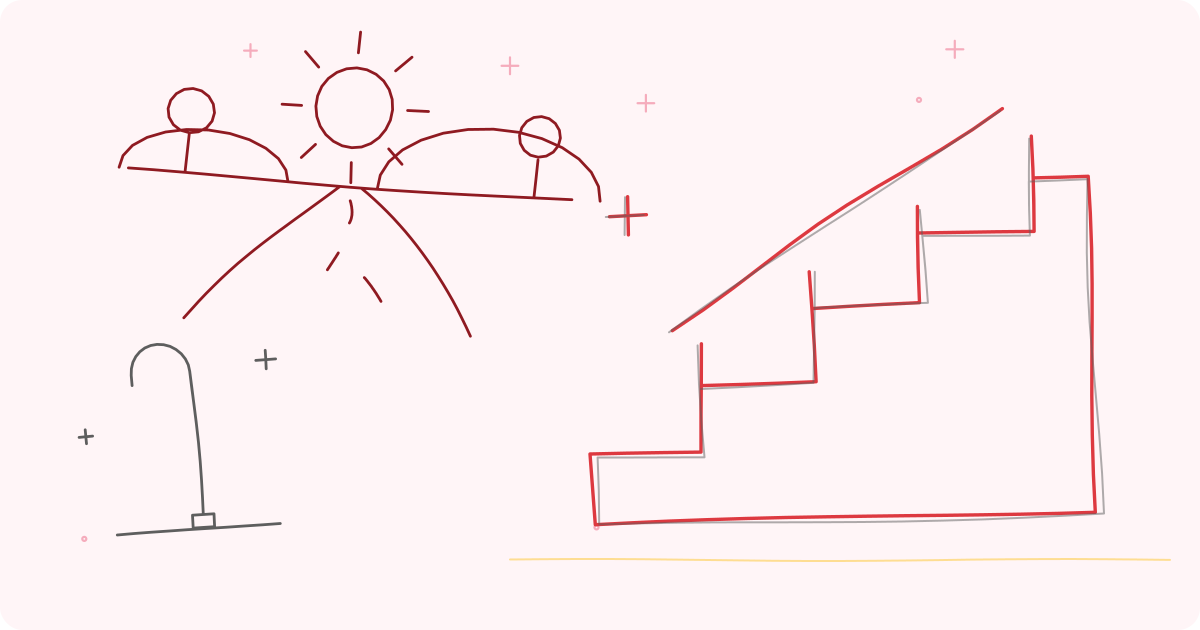
When using one stick and the stairs, the principle is easy to remember. The stronger or "good" leg leads when going up; the weaker or "bad" leg leads when going down. The stick moves together with the weaker leg.
Going up:
1. Stand close to the bottom step and hold the handrail with the free hand if there is one. 2. Step up with the stronger leg first. 3. Bring the weaker leg and the stick up to the same step. 4. Pause, find your balance and repeat.
Going down:
1. Stand at the top, close to the edge but with the whole foot on the step. 2. Move the stick down to the lower step first, together with the weaker leg. 3. Then bring the stronger leg down beside them. 4. Pause and repeat.
The memory aid is that the strong leg does the hard work of lifting and lowering the body, so it stays on the higher step when the weak leg moves, whichever way you are going. If your parent has two weak legs, or if both knees hurt, the physiotherapist can suggest the best sequence.
Use the rail, not just the stick
If there is a handrail, use it. A rail is fixed to the wall and cannot slip away. With a rail on one side, hold it with one hand and carry the stick in the other, moving it with the weaker leg as above. If the stick is hard to manage on stairs, it is perfectly acceptable to hold the rail with one hand and have a helper carry the stick, or to leave a second stick at the top and bottom of the stairs so that nobody has to carry one. For the stairs at home, rails on both sides give the most freedom.
Do not carry things while using stairs with a stick. Use a bag across the body, or have someone else carry shopping.
Kerbs and single steps
A kerb is a single step, and the same rule applies.
- Stepping up a kerb: stick up first with the stronger leg, then bring up the weaker leg.
- Stepping down a kerb: stick down first, then the weaker leg, then the stronger leg.
- Face the kerb squarely. Approaching at an angle makes the foot catch the edge.
- Look at the height. Indian kerbs vary, and a steep or broken one may be too high; choose a lower crossing.
- Where possible, use ramps and zebra crossings, and avoid crossing busy roads at kerbs with broken edges.
Ramps and slopes
A ramp is easier than stairs but has its own hazards.
Going up a slope: lean slightly forward, take shorter steps and move the stick a short distance ahead. Do not rush; breathlessness is a sign to stop and rest. Going down a slope: lean back slightly from the hips, place the stick a little ahead and take small steps, keeping the knees soft. On steep slopes, walk across the slope in a zig-zag, as this lessens the angle.
If the ground is wet or leaf-covered, avoid slopes altogether or use the handrail. A portable ramp can make a doorstep or a bathroom threshold safer, but it must have a non-slip surface and a gentle gradient. A slope that is too steep is as dangerous as no ramp.
Uneven ground: lanes, gardens and temple courtyards
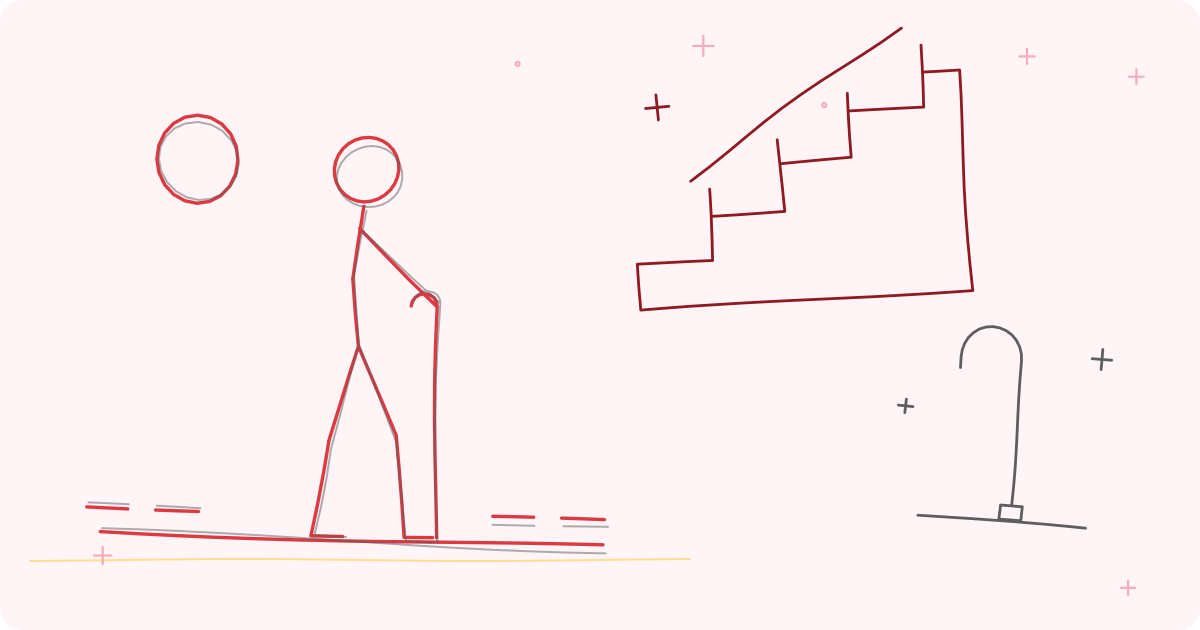
A stick adds stability on rough ground, but it also adds a new hazard: the tip can catch in a crack. Use these ideas.
- Look ahead. Scan the next few steps for loose stones, potholes, cables and puddles.
- Place the stick firmly. Do not stab it down at an angle. Place it flat and check it is steady before putting weight on it.
- Shorter steps. Reduce the stride on uneven surfaces, because long steps make you less stable.
- Choose footwear carefully. Flat, closed shoes with a good tread are better than slippers or sandals. See shoes and walking aids.
- Consider a pivot-base stick. The tilting foot stays flat on uneven or sloping ground. See our guide to pivot-base sticks.
- Avoid rough ground at dusk. Light is poor and trip hazards are hard to see.
For temples, pilgrimage sites and old forts with many steps, plan the route with a rest every few flights, travel with a helper and consider a folding stick with a seat for rest stops. If walking barefoot is customary at a temple, ask your doctor first about foot safety, as hot stone and uneven floors are risky, especially for someone with diabetes or neuropathy.
Rain, wet floors and the monsoon
Wet surfaces cut grip sharply. A few habits help.
- Check the tip. A worn tip slips; replace it before the rains. See rubber tips for walking sticks.
- Dry the stick after use. Wet rubber and metal on a polished floor can slip.
- Slow down. Take shorter steps and test the surface before committing weight.
- Avoid shiny floors near entrances where wet shoes and sticks carry water in. Keep a mat and a towel at the door.
- Use a rail on slippery steps.
- Avoid open drains and waterlogged lanes. Floodwater can hide holes and carries infection.
Getting up and down from a seat
Standing from a chair is a movement that precedes every walk. Sit on a firm chair with arms, slide to the edge, put the feet slightly back, lean forward and push up with the hands on the chair arms, not on the stick, then take the stick and steady yourself before stepping off. Leaning on a stick to stand up can tip it. For help with this movement, see helping an elderly parent stand from a chair.
Where the stick should go
Keep the stick close to the body and a short distance ahead. Placing it far in front pulls the body forward and makes it harder to recover balance. Do not let the stick swing; hold it firmly. When not in use, lean it against a wall with a rubber foot on a non-slip surface, or hang it from a hook or a table clip, so it does not fall as you stand.
Warning signs that a stick is not enough
A stick is a light aid. Consider a walker or rollator if your parent:
- needs to hold the wall or furniture while using the stick;
- has fallen or nearly fallen in the last few months;
- avoids stairs or outings because of fear;
- feels unsteady when turning; or
- cannot manage a flight of stairs without stopping.
Teaching the technique
If you are teaching your parent, stand one step below them when they go up and one step below when they come down, on the side of the weaker leg, so you can catch a stumble. Keep a hand near their waist or hold a transfer belt if one has been advised; see how to use a transfer belt. Practise in daylight, with good lighting and no hurry. Ask a physiotherapist to confirm the technique at least once.
Equipment mentioned in this guide
Frequently asked questions
Which leg goes first on the stairs when using a stick?
Going up, the stronger leg goes first and the weaker leg and stick follow. Going down, the stick and weaker leg go first and the stronger leg follows. A physiotherapist can adjust this if both legs are affected.
Is it better to use the stair rail or the stick on stairs?
The rail is more reliable because it is fixed. Hold the rail with one hand and move the stick with the other, or ask a helper to carry the stick. Rails on both sides are best.
How do I walk down a slope with a stick?
Lean back slightly, place the stick a short distance ahead and take small steps with soft knees. On a steep slope, zig-zag across it. Avoid slopes when wet.
Can a stick be used safely in the monsoon?
Yes, with a worn-free wide rubber tip, shorter steps and a dry stick. A pivot-base stick grips wet ground better. Avoid flooded lanes and open drains.
When should my parent stop using stairs?
If they have had a fall on stairs, feel dizzy or breathless on climbing, or need to hold on tightly to stay upright, ask a professional to assess. Consider moving daily activities to one floor.
Sources and further reading
- NICE guideline NG249, Falls: prevention, assessment and management in older adults and adults at higher risk
- Chartered Society of Physiotherapy, patient information on using walking aids on stairs
- American Academy of Orthopaedic Surgeons, OrthoInfo: Using a cane, crutches or walker
- World Health Organization, WHO global report on falls prevention in older age (2007)
Tags: walking stick on stairsusing a canestairs safetymonsoon walkingfalls preventionWalking and mobility aidsAdjustable walking stickPivot-base walking stickMobility and walking aidsBathroom and toilet safety
This article is for general education and is not medical advice. Speak to your doctor before changing your exercise, diet or medicines.