The ladder of support
Think of walking aids as rungs on a ladder, from the lightest support to the most.
1. Single stick. One point of contact. Offers a little stability and takes some load off one leg. 2. Quad stick. A stick with four small feet that stands up by itself. More stable than a single stick, but still a one-handed aid. 3. Two-wheeled walker or walking frame. A frame held with both hands. A large base of support. A frame without wheels is lifted and placed; a two-wheeled walker rolls forward. 4. Rollator. A four-wheeled walker with brakes and often a seat and basket. It gives continuous support and a place to rest. 5. Wheelchair. For people who cannot walk safely or for long. It can be used alongside a walker for outings.
The right aid is the lightest one that keeps your parent safe. A heavier aid than needed can reduce activity, and a lighter aid than needed raises the risk of a fall.
What a stick is good for, and where it stops
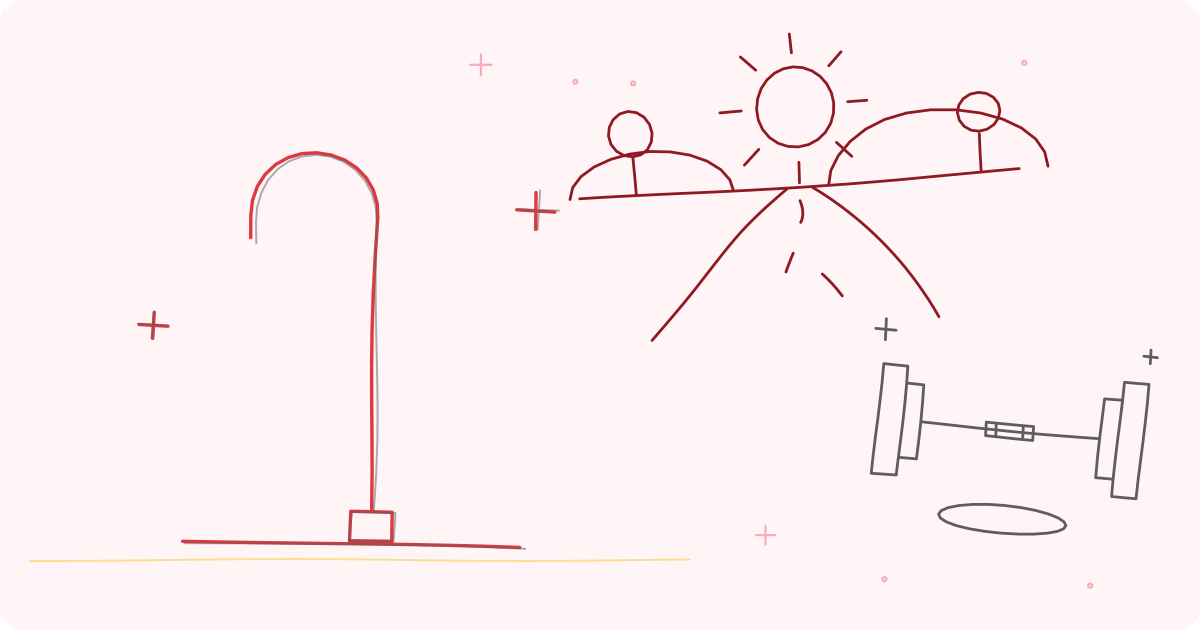
A single stick is for people who are mostly steady but have pain or mild weakness on one side, or who simply feel more secure with an extra point of contact. It can take about a fifth to a quarter of body weight off the opposite leg when used well. It does little for a person with poor balance who sways when they turn, and it is not enough for someone who has to lean heavily. A stick that is leaned on a lot can slip. Read our guide on choosing a walking stick for the details.
A quad stick is helpful for those with weakness on one side, such as after a stroke, because it stays upright while the person adjusts their grip. It needs a flat floor and a bit more space, and it can be awkward on stairs.
What a walker is good for
A walker is held with two hands, so it gives a wide base of support and a handle for each arm. It suits people who are unsteady on both sides, who need to lean on the aid to walk, who have significant weakness after surgery or illness, or who have already fallen. A walking frame provides the strongest static support, because it does not roll. A two-wheeled walker rolls forward without lifting, which suits frailer people who cannot lift a frame. A rollator rolls on four wheels, has brakes and a seat, and suits people who can walk steadily but tire or get breathless.
The price of the extra stability is bulk: a walker takes space, is harder to use on stairs and in narrow doorways, and some people feel it is a step towards dependence. In practice, many people walk further and more often with a walker because they feel safe.
A simple self-check you can do together
These questions are not a diagnosis, but they help to decide when to see a professional. Answer them honestly with your parent.
- The chair test. Can they stand up from a standard chair without using the arms, and sit down slowly without dropping?
- The reach test. Standing, can they reach forward with an arm without losing balance or taking a step?
- The turn test. Can they turn through 360 degrees in a few steps without wobbling or holding on?
- The furniture test. Do they hold the wall, furniture or a person as they walk through the house?
- The history test. Have they fallen or nearly fallen in the last six months?
- The fear test. Do they avoid going out because they are afraid of falling?
- The tiring test. Do they have to stop and rest after a short distance?
If your parent can do the chair, reach and turn tests, does not hold on and has not fallen, a single stick or no aid may be enough. If they struggle with two or more tests, or have fallen, a walker is probably a better fit. If they have fallen and are unsteady, ask for a professional assessment before buying anything.
Matching the aid to common situations
Mild knee or hip arthritis, steady otherwise. A single stick with an offset handle, held in the opposite hand. See walking aids for knee arthritis.
After hip or knee surgery. Usually a walking frame or two-wheeled walker at first, then a stick as strength returns. Physiotherapists decide the order. See walking frames after hip or knee surgery.
After a stroke. A quad stick for mild weakness, a walker for moderate weakness and a wheelchair for outings if needed. A physiotherapist should assess and teach the technique. See walking aids after a stroke.
Parkinson's disease. The choice depends on freezing, shuffling and balance. A walker with wheels may be better than a stick, but some people do better with a stick or with none. See walking aids for Parkinson's.
Osteoporosis and fragile bones. A more stable aid is often better, because a fall can cause a fracture. See walking aids for osteoporosis.
Breathlessness (COPD or heart failure). A rollator with a seat and brakes, as it allows rests and may reduce breathlessness by letting the arms support the chest.
Frailty and general weakness. A walking frame or two-wheeled walker, with a seat nearby for rests.
Outdoor walks over long distances. A rollator or a folding stick with a seat, plus a wheelchair for the longest days.
Where your parent walks changes the answer
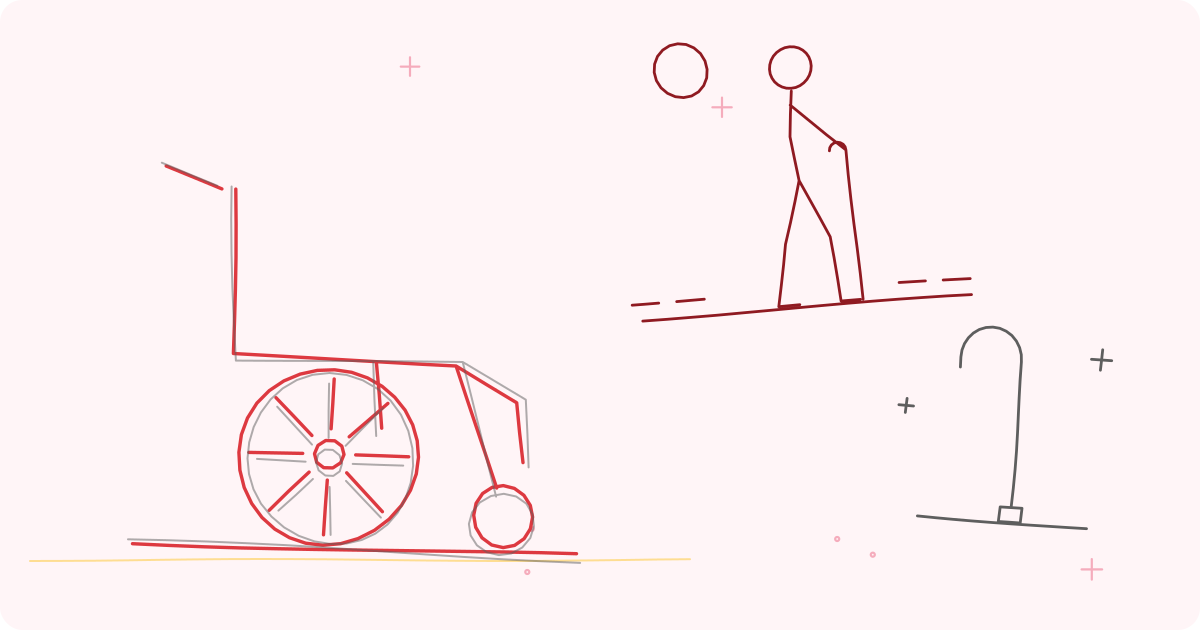
The same person may need different aids in different places. A stick may be fine indoors on a smooth floor but not enough on a pothole-strewn lane. A rollator may be perfect in a park but impossible in a narrow bathroom. Think about:
- Doorways and corridors. A walker needs about 70 cm of clear width; many bathrooms and older homes are narrower.
- Stairs. None of the walkers can be used on stairs; you will need a handrail, a second walker on each floor or a lift.
- Surfaces. Rollator wheels cope with pavements better than tiny castors, but cobbles, gravel and mud are tough.
- Distances. Long outdoor walks may need a wheelchair or transit chair as well as a walker.
- Travel. Folding sticks and folding walkers fit in a car boot. See wheelchair and car travel.
The role of pride and the role of safety
Many older adults resist a walker. The reasons are common: it looks like illness, it announces age and it changes how others see them. It helps to talk about what the aid allows rather than what it signals. A parent who can walk to the park, the temple or the market with a rollator keeps their independence, while a parent who stays home out of fear loses it. Offer a trial, ask a physiotherapist to explain, and let your parent choose the colour and model. Many families find that a parent who rejected a walker in theory takes to it after the first confident outing.
What not to do
- Do not hand down a relative's aid. Height, weight, hand size and needs differ. Always fit the aid to the new user.
- Do not buy the cheapest option without checking weight capacity and brakes.
- Do not use a walker as a support to stand up from a chair. It can tip. Stand up first using the chair arms and then take hold.
- Do not use a rollator's seat while the brakes are off.
- Do not delay. Waiting for a fall before buying an aid is the commonest mistake.
When to ask a professional
A physiotherapist can assess strength, balance and gait in a short visit and recommend the right aid, set its height and teach safe use. Ask for an assessment if your parent:
- has fallen or nearly fallen;
- has a new condition such as a stroke, Parkinson's disease or a fracture;
- shows a change in the way they walk;
- feels dizzy, faint or breathless on walking; or
- is afraid to go out.
Families often find it useful to ask for a session at home, since the home environment shapes the choice. Our care advisors can arrange a physiotherapist visit.
Equipment mentioned in this guide
Frequently asked questions
How do I know if my parent needs a walker instead of a stick?
Signs include holding on to furniture, leaning heavily on the stick, being unsteady on turning, a recent fall or fear of falling. If your parent struggles with standing from a chair, reaching forward or turning, a walker is likely safer. A physiotherapist can confirm.
Is a rollator better than a walking frame?
Not always. A rollator is better for people who can walk steadily but tire and want a seat. A walking frame gives firmer static support for those who are weak or recovering from surgery, but it must be lifted or pushed, which suits fewer people.
Will using a walker make my parent weaker?
Not if it is the right aid and used well. A safe aid lets people walk more, which keeps muscles strong. Weakness is more likely if fear keeps your parent at home.
Can my parent use a stick and a walker at different times?
Yes. Many use a walker for long distances or outdoors and a stick or furniture-walking indoors, but this should be agreed with a physiotherapist, because switching between aids can raise the risk of a fall.
Should we rent a walker first?
For a short recovery, renting makes sense. For long-term use, buy one fitted to your parent. See [renting or buying a wheelchair](/library/renting-vs-buying-a-wheelchair) for the principles, which apply to other aids too.
Sources and further reading
- NICE guideline NG249, Falls: prevention, assessment and management in older adults and adults at higher risk
- Chartered Society of Physiotherapy, patient information on walking aids
- World Health Organization, World report on ageing and health (2015)
- American Academy of Orthopaedic Surgeons, OrthoInfo: Using a cane, crutches or walker
Tags: walker or stickrollatorwalking framewalking aid for elderlymobility assessmentWalking and mobility aidsAdjustable walking stickQuad (four-point) stickMobility and walking aidsHealthy ageing
This article is for general education and is not medical advice. Speak to your doctor before changing your exercise, diet or medicines.