What a seat stick is
A seat stick, sometimes called a shooting stick or a cane seat, comes in two main designs.
Tripod or folding-seat design. The shaft opens at the top into a small triangular or round seat, supported by two or three splayed legs that hinge out from the shaft, forming a stool. The user sits on the seat, with the stick's tip and the legs on the ground.
Saddle or disc-seat design. A flat disc or saddle at the top of a single shaft, sometimes with a pointed or wide tip. The user perches on it. This is the older shooting stick design. It is less stable and best for firm ground.
In both designs, the shaft is adjustable in height, typically 70 to 90 cm when used as a stick, and the seat height is about 55 to 70 cm when opened as a stool. Weight is usually 0.7 to 1.5 kg.
Who it suits
A seat stick suits an older adult who:
- is generally steady on their feet but tires quickly;
- walks short distances outdoors and needs a rest every few minutes;
- can lower themselves to a perch and rise from it without difficulty;
- has good balance sitting and standing, and good judgement; and
- wants something lighter and more compact than a rollator.
Examples include a person with mild heart or lung disease who needs short rests, someone with arthritis in the hips or knees, an older gardener or a person who likes to attend events where standing is long. For many of these people, a seat stick is a pleasant convenience.
Who should avoid one
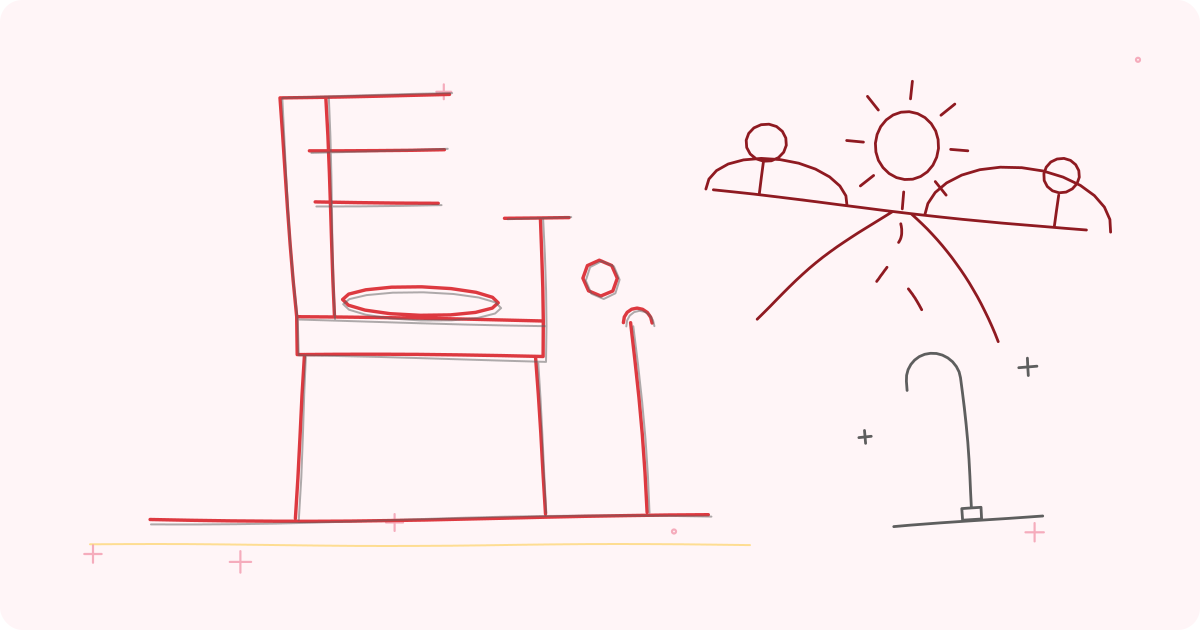
A seat stick is not a proper seat. It has a small base, a high perch and a single central point of support, which can tip. It should not be used by people who:
- are unsteady, have poor balance or have fallen recently;
- are heavy and exceed the weight limit;
- have difficulty getting up from a low or perched position;
- have weak hands, so cannot hold the stick firmly;
- have severe arthritis, dizziness, memory loss or poor judgement; or
- need a stable seat for longer rests, for example for breathlessness.
For these people, a rollator with a seat and brakes is much safer. See also stick or walker: which one does your parent need.
What to check when buying
Weight limit. Seat sticks are often rated lower than ordinary sticks, commonly 90 to 120 kg. Check carefully and choose a model well above your parent's weight.
The hinge and legs. The mechanism that opens the seat should lock firmly with a click. Wobble, play or a loose hinge is dangerous. Test by sitting in the shop with a helper holding you.
The base. A tripod design with a wide spread of legs is more stable than a single point. Rubber feet must grip.
The seat. A wide, padded seat is more comfortable and less likely to tip you off than a small hard disc.
The shaft. Adjustable, with a firm locking button, and strong aluminium or steel.
The handle. When used as a stick, an offset or soft grip is more comfortable; see walking stick handles compared.
The tip. A wide, non-slip rubber foot; see rubber tips for walking sticks.
Weight. Heavier than a normal stick, so check that your parent can carry it.
Build quality. Stitching or seat material, welds and finish. Avoid cheap, flimsy models.
Using a seat stick safely
Walking. Use it as an ordinary stick, with the seat folded closed. Set the height at the wrist crease; see how to measure and set the height of a walking stick.
Sitting down. This is where most accidents happen.
1. Find firm, level ground. Avoid grass, mud, sand, slopes and wet surfaces. 2. Stop and plant the stick so that the legs can open fully. 3. Open the seat and check that the legs are fully extended and locked. 4. Press down on the seat with your hand to test its stability. 5. Turn and back up to the seat, bend your knees and lower yourself slowly, keeping the legs apart for balance. 6. Sit upright, with feet flat, and do not lean back or sideways.
Rising. Place your feet back, lean forward and push up with the thighs, using the stick's handle for balance, not for pulling up. Stand for a moment before walking.
Do not use it on uneven ground, lean back, twist, rock or sit for long. A seat stick is for rests of a few minutes.
Never let a child or another adult stand on or sit heavily on it, or exceed the weight limit.
Check it often. Look at the hinge, legs, locks and feet before every outing.
Seat stick, rollator or portable stool?
- Seat stick: lightest and most compact; suitable for steady people who need short rests; least stable.
- Rollator with seat: more stable, with a backrest and brakes, and a basket; heavier and bulkier. See rollator on Indian pavements.
- Folding portable stool: a three-legged or four-legged stool, more stable than a seat stick, but a separate item to carry.
- Folding stick plus a bench: use a folding stick for walking and rest on benches; see folding walking sticks for travel.
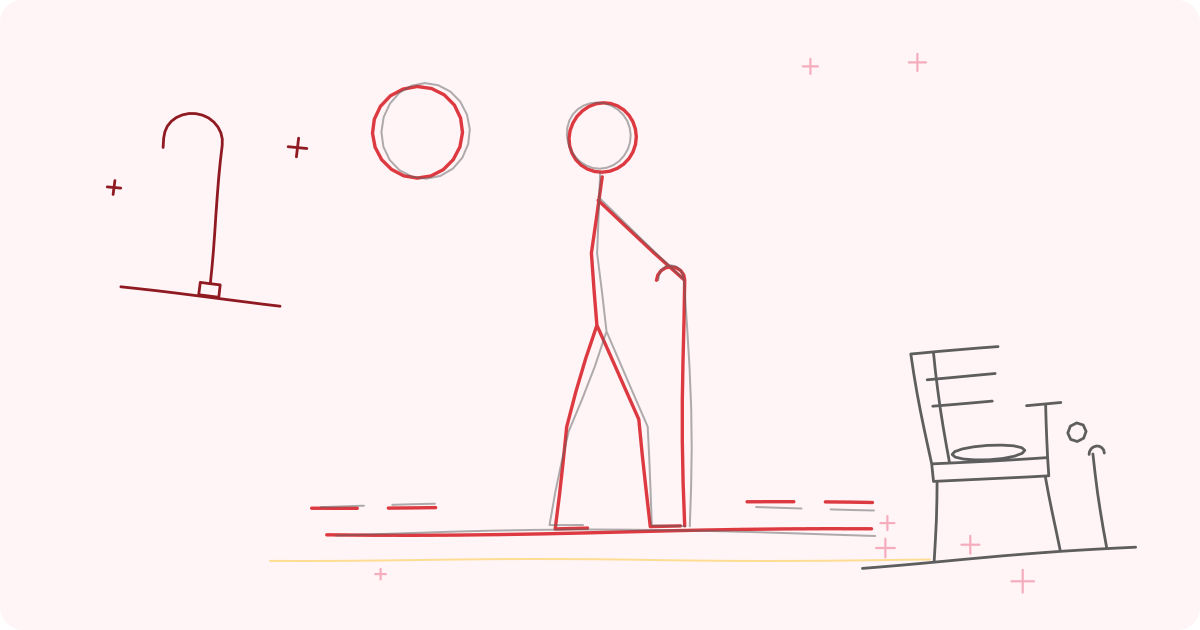
If your parent needs to sit often, or is breathless, choose a rollator. If they need a rest only on occasion, a seat stick can do.
Where it is useful
- Queues, such as at banks, railway counters and government offices.
- Gardens and parks, where benches are few.
- Religious sites, where a rest between darshan and exit is needed, where permitted.
- Fairs, markets and cricket matches.
- Travel, at stations and airports.
- Short walks, with planned rest stops.
Check that the site allows a stick seat.
Care
Wipe the stick and seat after use, dry in the monsoon and check for rust. Lubricate the hinge lightly if stiff. Keep the stick closed when not in use. Replace the tip when worn, and discard a stick with a bent shaft, a loose hinge or cracked legs.
Choosing between short rests and proper seating
A useful test is to ask how long your parent needs to sit and how often. If the answer is two or three minutes every ten minutes, a seat stick or a rollator may do. If the answer is ten minutes or more, or if your parent becomes breathless or dizzy, a proper seat is needed: a bench, a folding stool with a backrest or a rollator with a seat. Look ahead on the route for benches, steps to sit on and shaded spots, and plan to use them before tiredness arrives. Rest before you need to, not after. A seat stick that is carried but never opened has no value, while one that is opened at the right time can extend a walk by half an hour. Practise opening, sitting and rising at home with a helper beside your parent until the movement is smooth, and agree a signal for when to stop.
When to ask a professional
Ask a physiotherapist if your parent is unsure about their balance, has fallen or finds rising from a perch hard. A professional can say whether a seat stick, a rollator or another aid is safest. Ask a doctor if your parent tires or becomes breathless or dizzy on short walks, since this can be a sign of heart, lung or other illness. Our care advisors can help choose equipment.
Equipment mentioned in this guide
Frequently asked questions
Is a seat stick safe for older people?
For steady people who need short rests on firm, level ground, it can be. For unsteady, heavy or weak people, it is not stable enough, and a rollator is safer.
How much weight can a seat stick take?
Commonly 90 to 120 kg, but it varies. Check the rating and choose one well above your weight.
Can I use a seat stick as my only walking aid?
If your balance is good and a physiotherapist agrees. If you lean heavily or fall, you need a more supportive aid.
Where should I not use a seat stick?
On soft, uneven or sloping ground, wet surfaces, or anywhere you cannot plant the legs firmly.
How is it different from a rollator?
A seat stick is a stick with a small perch, light and compact but less stable. A rollator is a walker with wheels, brakes, a seat and a backrest, more stable but larger.
Sources and further reading
- Chartered Society of Physiotherapy, patient information on walking aids
- NICE guideline NG249, Falls: prevention, assessment and management in older adults and adults at higher risk
- Disabled Living Foundation (UK), information on walking sticks and seats
- American Academy of Orthopaedic Surgeons, OrthoInfo: Using a cane, crutches or walker
Tags: seat walking stickshooting stickcane with seatwalking stick with stoolrest stop walking aidmobility aidWalking and mobility aidsWalking stick with fold-out seatMobility and walking aidsHealthy ageing
This article is for general education and is not medical advice. Speak to your doctor before changing your exercise, diet or medicines.