What the hand and wrist go through
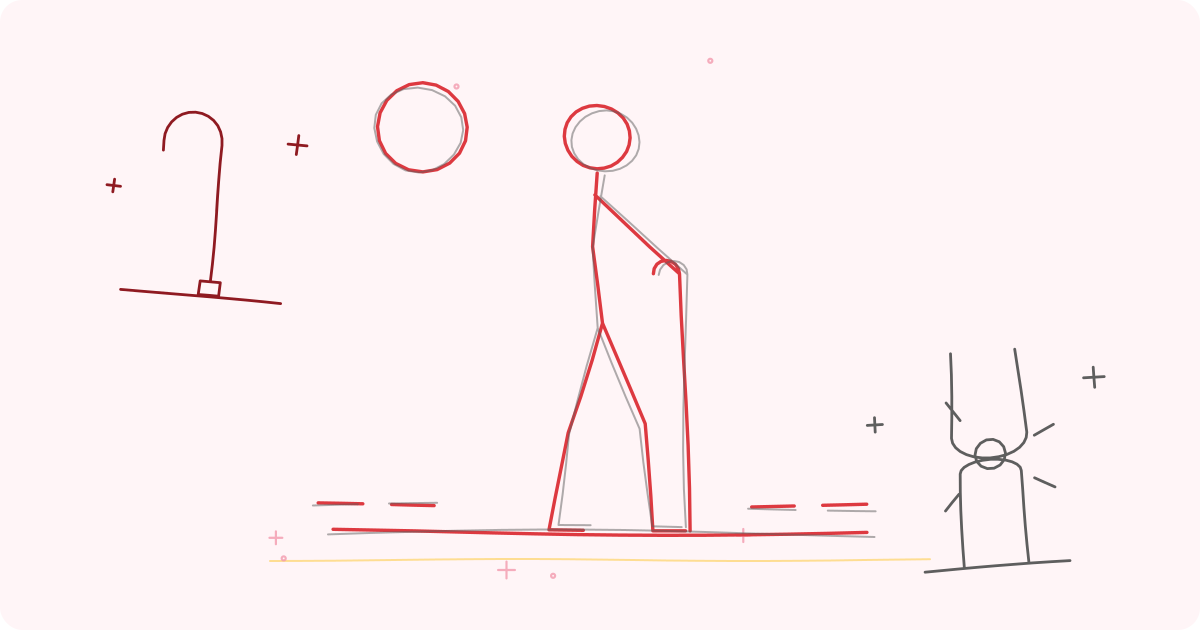
Each step with a stick sends force from the ground up through the shaft to the handle, and from there through the palm and wrist into the arm. In a healthy hand that force is spread over the pad of the palm. In an arthritic hand, a pressure point can mean a sharp ache over the thumb or a cramp across the fingers within minutes. In someone with carpal tunnel syndrome, a wrist bent back by a poor handle can cause numb fingers at night.
A good handle does three jobs: it spreads pressure over as much of the palm as possible, keeps the wrist straight and gives enough grip that the stick does not slip out of a weak or sweaty hand. Sticks are cheap enough that the best advice is simple: hold the actual handle before buying, and keep the receipt.
The main handle types
### Crook (hook or "derby") handle
The classic curved top, like an upside-down J. Its great advantage is that you can hang it over a forearm, a chair back or a table edge while you open a door or take out your wallet. For light use, it is fine.
Its weakness is the point of contact. The curve puts pressure on a narrow band of the palm, and the shaft is set directly under the handle's centre only if the curve is symmetrical. For someone who leans on the stick, the narrow contact can bruise the palm and the force travels at an angle to the shaft. Crook handles are best for people who use the stick lightly or only for confidence.
### Offset handle
The shaft rises up the side of the handle instead of the centre, so the weight passes straight down the line of the shaft. A flat or gently curved top gives a broader surface to rest the palm on. Most physiotherapists prefer offset handles for people who lean on their sticks, because the load goes down the shaft, not sideways, and the stick is less likely to tip. It is also the most useful general-purpose handle for older adults and a sensible default.
### Foam or soft-grip handle
A thick, cushioned covering on the grip. It helps people with arthritis in the finger joints, because a larger diameter requires less finger bend and the softer surface spreads pressure. It also helps people with a weak grip, since the thicker handle is easier to hold. Foam is not only found on offset handles; many sticks of different shapes can have a foam cover.
### Contoured or anatomical handle
Moulded to the shape of the palm, often with a groove for each finger and a rest for the thumb. These handles are made in left-hand and right-hand versions, so check which hand it is for. They are popular with people who walk long distances or who have wrist pain, as they keep the hand in a neutral position. A contoured handle that does not match the person's hand size, however, can be worse than a plain one, so check the fit in the hand.
### T-shaped or "Fischer" handle
A handle shaped like a T, with a bar across the top. The Fischer type, with a downward-angled grip, lets the palm rest in a position closer to a handshake. It suits people with wrist pain or weak thumbs. It is heavier and bulkier than a standard handle and may not fit into a bag easily, but for someone who walks every day it can be the most comfortable.
### Ball or bulb handle
A rounded handle that fits into the cupped palm. It suits people with a light grip and gentle use, but it can slip out of a very weak hand. It tends to lack the leverage needed for rising from a chair.
Matching the handle to the person
- Mild knee or hip pain, normal hands. An offset handle in plastic or foam.
- Arthritis of the fingers or thumb. A thick foam grip or a contoured grip with a thumb rest. See also arthritis daily living gadgets.
- Wrist pain or carpal tunnel. A Fischer or contoured handle, with a wrist support if a doctor suggests one.
- Tremor, such as in Parkinson's disease. A handle with a firm, textured grip and a wrist strap, since the stick can slip during a tremor. A physiotherapist or occupational therapist can advise whether a stick is steady enough, or whether a frame or rollator is safer.
- Weak grip after a stroke. A handle shape that keeps the hand closed around it without effort. Often a quad stick with an offset handle works better; see quad sticks after a stroke.
- Frequent travel and short outings. A folding stick with a crook or offset handle; see folding walking sticks.
- Hands that sweat. Avoid smooth polished wood or plastic. Choose rubber or foam with a textured surface.
How to test a handle
Before buying, check these things with the actual stick in the actual hand.
- Grip. Hold the handle for a full minute without leaning. The hand should not feel strain or pressure over the thumb base.
- Lean test. Rest the stick on the floor, set to the right height, and press down gently as you would while walking. Does the pressure land in the middle of the palm or on a bony point?
- Wrist angle. Look from the side. The wrist should be straight, not bent back.
- Size. For small hands or weak fingers, a thick handle may be hard to wrap around. A diameter of about 3 cm suits most adult hands, but arthritic hands often prefer thicker.
- Material. Check that the surface is not slippery when damp, and that foam does not feel sticky or crumble.
- Strap. A wrist strap stops the stick from falling if the hand lets go. Make sure it does not catch on doorknobs.
Changing or adding to a handle
If a stick fits well but the handle is wrong, you can often change it.
- Slip-on foam covers. Soft tubes that slide over a standard grip can be bought separately and are an inexpensive fix.
- Self-amalgamating or grip tape. A layer wrapped around the grip adds thickness and traction. Wrap evenly to avoid lumps.
- Replacement handles. Some adjustable sticks accept screw-on or pop-on handles; check the shaft diameter before buying.
- Ask an occupational therapist. They can recommend or make a custom handle for severe arthritis or deformity.
Care and replacement
Handles wear out. Foam compresses and cracks with sweat and sun, plastic cracks and rubber can harden. Check the handle every few weeks for cracks, loose fittings or a handle that has started to turn on the shaft. A loose handle can come off in a stumble. Clean with a damp cloth and mild soap, and dry well, as dampness can lead to mould in foam. In humid cities, wipe the handle dry after every outing.
Safety notes
- Do not use a stick with a cracked or loose handle.
- Do not hang a stick from a wrist strap while using both hands for something else near stairs.
- Keep the stick within reach when seated, using a wall hook or a clip on the table edge, so that standing up does not become a reach and a stumble.
- If the hand or wrist is painful when using a stick, do not push through it; speak to a doctor or physiotherapist.
Equipment mentioned in this guide
Frequently asked questions
Which walking stick handle is best for arthritis?
A thick foam grip or a contoured handle with a thumb rest usually suits finger and thumb arthritis, because it spreads pressure and requires less finger bend. An occupational therapist can advise on custom options for severe joint changes.
Is an offset handle better than a crook handle?
For most people who lean on the stick, yes. The offset design puts the weight straight down the shaft, so the stick is more stable and comfortable. A crook handle is fine for light use and has the advantage that it hangs over an arm.
Do left-hand and right-hand handles really matter?
For contoured or anatomical handles, yes. They are moulded for one hand and feel wrong in the other. Plain crook and offset handles work in either hand.
Can I put a foam grip on an existing stick?
Yes, slip-on foam covers are inexpensive and usually fit standard handles. Check the diameter and fix the cover firmly so it cannot rotate.
How often should the handle be replaced?
There is no fixed interval. Replace it when foam compresses, cracks or becomes sticky, when plastic cracks or when the handle loosens on the shaft. Check it every few weeks.
Sources and further reading
- Chartered Society of Physiotherapy and NHS hospital physiotherapy leaflets on walking sticks
- American Academy of Orthopaedic Surgeons, OrthoInfo: Using a cane, crutches or walker
- College of Occupational Therapists, guidance on assistive equipment and adaptations
- World Health Organization, World report on ageing and health (2015)
Tags: walking stick handleoffset handlearthritis gripcane for arthritismobility aidWalking and mobility aidsAdjustable walking stickFolding walking stickMobility and walking aidsJoint and pain support
This article is for general education and is not medical advice. Speak to your doctor before changing your exercise, diet or medicines.