Start with the movements, not the wall
Before you mark anything, watch your parent do each task:
- Walk in through the door and cross the floor.
- Step into the shower or onto the bath edge.
- Turn around.
- Sit down on the toilet or shower seat.
- Stand up again.
- Step out and dry.
At each point, ask: where do their hands go? What do they grab by habit: a window sill, a tap, a towel rail? Habits show where support is needed. Use masking tape or a washable marker to mark proposed bar positions on the wall, and ask your parent to try them while you stand close. Adjust before you drill.
General height rules
Typical guidance for adult users puts horizontal bars about 80 to 90 cm above the floor, roughly the height of the hip or the top of the thigh. For a seated person on a shower chair, a bar at about elbow height when seated, around 20 to 25 cm above the seat, is usually comfortable. Vertical bars are normally fixed so that their lower end is about 90 cm from the floor and the bar extends upward to about 150 cm.
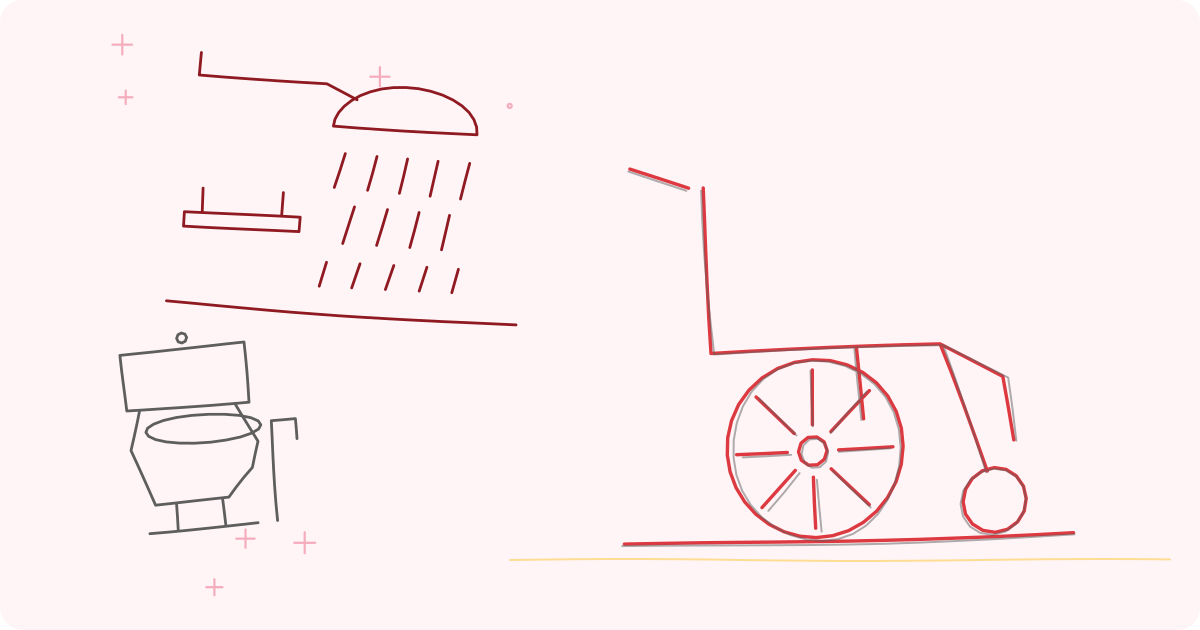
These are starting points. A very tall or short person, or a person using a wheelchair, needs different heights. Always check with the actual user, standing or sitting as they will, wearing the clothes and shoes they will use.
At the toilet
Side bar (horizontal or angled). A bar on the wall beside the toilet, about 30 to 35 cm from the centre line of the seat, lets a person push down with the hand to sit and pull to stand. The bar should reach slightly forward of the front of the pan so the hand can catch it while rising. If the bar is behind the seat, it is of little use.
Both sides? If there is a wall on only one side, fit the bar there. If there is space, a bar on each side, or a toilet safety frame with arms, is helpful for a person who needs two hands. A person with one weak side, after a stroke for example, must be able to reach the bar with the strong hand; the bar should be on that side of the toilet. See bathroom safety after a stroke.
Rear wall bar. A horizontal bar on the wall behind the cistern is rarely helpful, but a short bar above the cistern is sometimes used for a person leaning back. Ask a therapist.
Combined with a raised seat. If a raised toilet seat is added, the height of the new seat changes where the bar should be. Fit the seat first, then place the bar.
Indian-style toilets. For a squat pan, a vertical bar or a pair of bars at the sides can help a person lower and rise. Bars placed at about 90 cm let a person keep their back straight. If the toilet is hard to use, see adapting an Indian bathroom for knees and hips.
In the shower
The shower is where most people most need support, and where bars face the toughest conditions.
Entrance bar. A vertical bar just outside or just inside the shower entrance helps a person step over the tray edge or hob. It can be fixed to the wall next to the door or opening. A second bar placed just inside the shower stops a person letting go before they are steady.
Horizontal bar on the long wall. A horizontal bar at about 80 to 90 cm along the back or side wall helps a person move along and steady themselves while washing.
Seated bar. For a person using a shower chair, a bar on the side wall at about 20 to 25 cm above the seat height helps them rise.
Keep the controls reachable. Taps and a handheld shower should be within reach from the seat. Place bars so they do not block these.
Avoid slippery fixing points. Soap, shampoo and hot water weaken some adhesives and sealants. A bar that is screwed into the wall with proper plugs, not stuck on, is the only dependable choice.
At the bath
A bathtub is harder. Getting over the side requires a person to lift a leg high while balancing on the other.
- Bar on the wall at the head or the side at about 80 to 90 cm gives a hand-hold while stepping in.
- A vertical bar at the outer end gives something to hold while lifting the first leg over the edge.
- A clamp-on tub bar can help but only when the tub edge is suitable. Check the manufacturer's advice.
- For many older adults a bath transfer bench is a better first step than a bar alone, because it lets the person sit and swing their legs over.
At the bathroom door and along the route
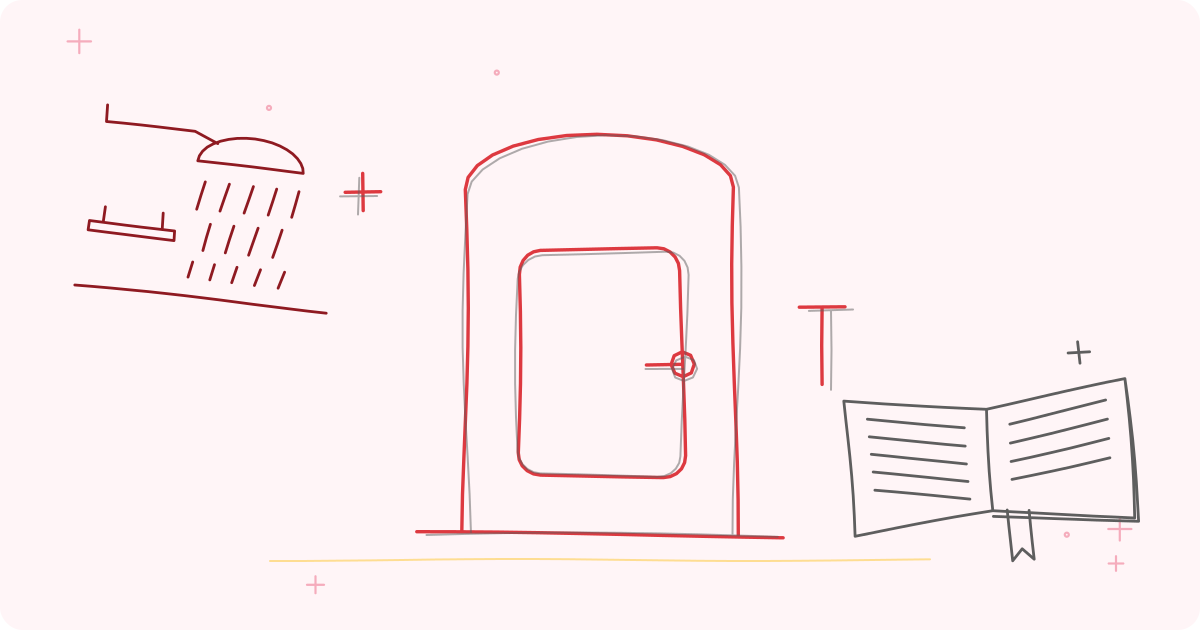
- Door-side bar. A short vertical bar on the wall beside the door, on the latch side, helps people stand while opening the door, and helps those who feel unsteady on the threshold.
- Handrail along a long route. If the way from the bedroom to the bathroom is long, a continuous handrail on the wall can help. See handrails and stair lifts.
- Basin area. A person who stands at the basin to brush teeth, shave or wash may want a bar or a firm support. A sturdy basin on a bracket can be mistaken for support but may pull off the wall. Check it before relying on it, or add a bar beside it.
Left-handed, right-handed and one-sided layouts
Place bars so that the stronger hand and the stronger leg lead on the wall side. For someone with weakness on one side, a bar is best on the side of the strong hand when they enter, and on the other side when they leave, so that both directions work. In a narrow bathroom the layout may be dictated by the walls, so use a mix: a vertical bar at the entrance and horizontal bars for sitting and standing.
If two people share the bathroom, such as a husband and wife with different needs, mark each person's reach points separately and check that bars suit both. A joint family might have a child and an elder using the same bathroom. A bar at an adult's height is out of reach of a child; keep that in mind when fixing the toilet bar position.
Checking the wall
Before drilling, find out what the wall is.
- Solid brick or concrete. Common in Indian homes. A proper wall plug of suitable size can be strong. Use a masonry drill bit and drill slowly through the tile first.
- Hollow or lightweight partitions. Common in newer flats. Plugs can slip or pull out. A backing plate, a longer fixing through to a stud or a professional's advice is needed.
- Tiles over damp plaster. Moisture can weaken plaster behind tiles. If tiles sound hollow when tapped, there may be a gap.
- Pipes and cables. Check the wall for hidden water pipes or electrical conduits, which are common behind bathroom walls. A handyman with a detector can check this.
After fitting, test the bar. Pull on it hard with both hands, lean your body weight against it and try to wiggle it. If there is any movement, remove it and refit it with stronger fixings. See the grab bar buying guide for what to look for in the bar itself, and fitting grab bars in a rented or apartment home if you are not sure about drilling.
Mistakes that appear again and again
- Putting the bar where the fitter finds it easiest, not where the user needs it.
- Fixing it too high because the fitter is tall.
- Placing it too far from the toilet, so the user has to lean.
- Fixing it over a tile joint that cracks.
- Using a bar of the wrong length, which leaves a gap in the support at the moment it matters.
- Forgetting to leave space for a carer to stand beside the person.
- Not re-checking the bar every few months.
When to ask a professional
An occupational therapist can visit the home, watch your parent use the bathroom, and tell you exactly where to fit each bar. This is particularly useful after a stroke, a hip or knee operation, with Parkinson's disease, dementia or when a wheelchair or walker is in use. A physiotherapist may help with how to stand and sit. For the wall itself, a qualified mason or plumber should check hidden pipes and fix the bars safely. If your parent has fallen, or feels dizzy when standing, they should also see a doctor.
Equipment mentioned in this guide
Frequently asked questions
How high should a grab bar be fitted?
Horizontal bars are commonly fitted around 80 to 90 cm from the floor, with vertical bars rising from about 90 cm. These are starting points; test with your parent and adjust for height, reach and whether they sit or stand.
Which side of the toilet should the bar go?
On the side of the stronger hand. For a person with weakness on one side, such as after a stroke, the bar goes on the stronger side so that the good arm can push and pull.
How many grab bars does a bathroom need?
Usually at least two: one at the toilet and one in the shower or bath. Many older adults need three or four, adding a bar at the entrance or beside the basin.
Can I place a grab bar on a tile joint?
Avoid it. Fix through the tile into solid wall, and keep the bar's fixings away from cracked or loose tiles. If the wall is unreliable, ask a professional.
Sources and further reading
- World Health Organization, Global report on falls prevention in older age (2007)
- Royal College of Occupational Therapists, guidance on home adaptations
- Centers for Disease Control and Prevention, STEADI initiative materials on home safety
- NICE guideline NG249, Falls: prevention, assessment and management in older adults and adults at higher risk
Tags: grab bar placementgrab bar heighttoilet grab barshower grab barbathroom rail positionbathroom layout elderlyBathroom and toilet safetyWall-fixed grab barHealthy ageingElder care
This article is for general education and is not medical advice. Speak to your doctor before changing your exercise, diet or medicines.