Recognising that squatting has become unsafe
Signs that your parent needs another option:
- They hold the wall, a tap or a bucket to lower down and rise.
- They take a long time on the toilet or avoid going.
- They have knee, hip or back pain on squatting.
- They have had a fall or near-fall in the toilet.
- They have had a joint replacement and the surgeon advises against deep squatting.
- They feel dizzy or faint on standing.
- They have constipation or incomplete emptying, from straining or avoiding the toilet.
- They use the bedroom instead, or have accidents because they cannot reach the toilet in time.
- They need a carer's help to get up.
If any apply, act now. Do not wait for a fall.
What the options are
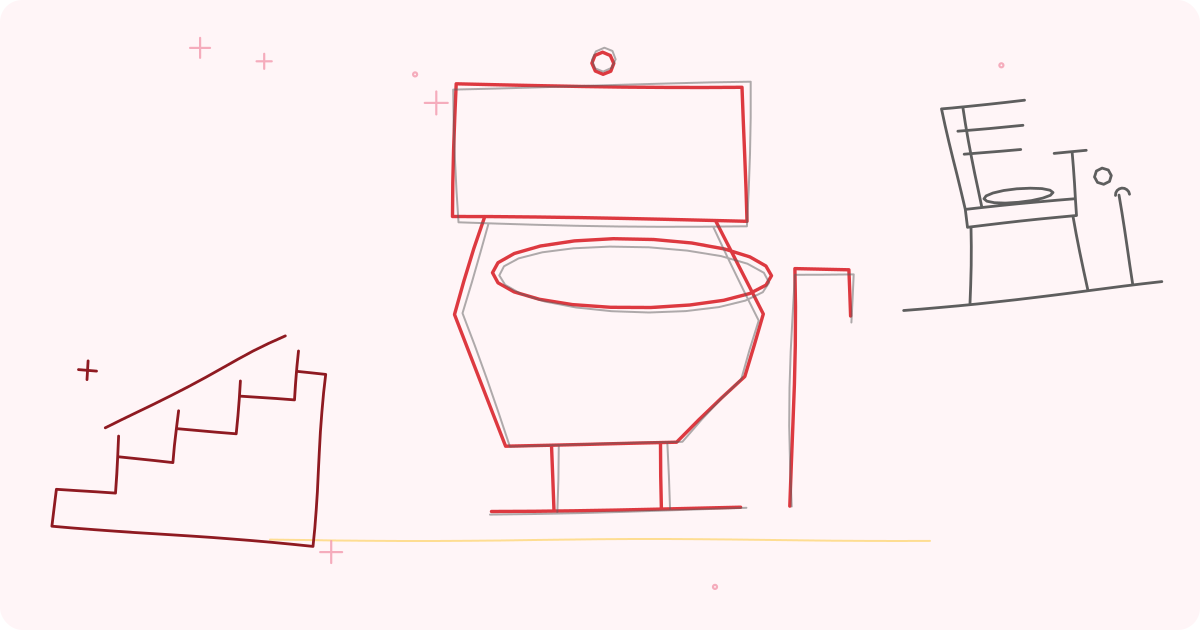
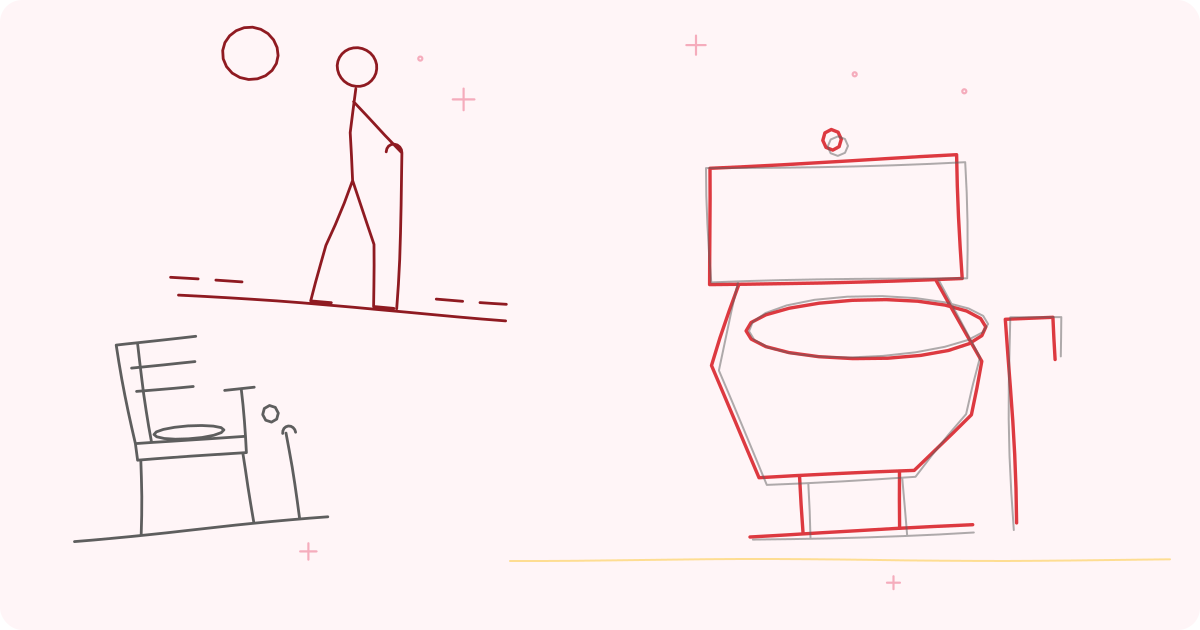
Option 1: a commode or toilet chair over the squat pan. A sturdy commode chair with a seat and a hole is placed over the floor pan, with its legs either side. The person sits on the seat and uses the pan below. It is inexpensive, reversible and suits rented homes. Check stability, the leg positions on the sloped floor, and that the hole lines up with the pan. Some commodes designed for squat pans have a cut-out base or a frame that straddles the pan. Without the pot, the unit acts as a raised seat with arms. See commode chair guide.
Option 2: a toilet frame or stool seat over the pan. A free-standing frame with a seat and arms made for squat pans. Quality varies, so test it with weight before use. See toilet frame guide.
Option 3: a folding or portable seat unit. Some products have a seat and hinged legs that fold flat when not in use, so the pan can still be used by others in the family. They suit joint families where some people prefer to squat.
Option 4: a built-in raised platform with a seat. A mason can build a low, solid platform over the pan with a Western seat fitted on it. It is semi-permanent and needs waterproofing and a proper seal. A poor job leaks.
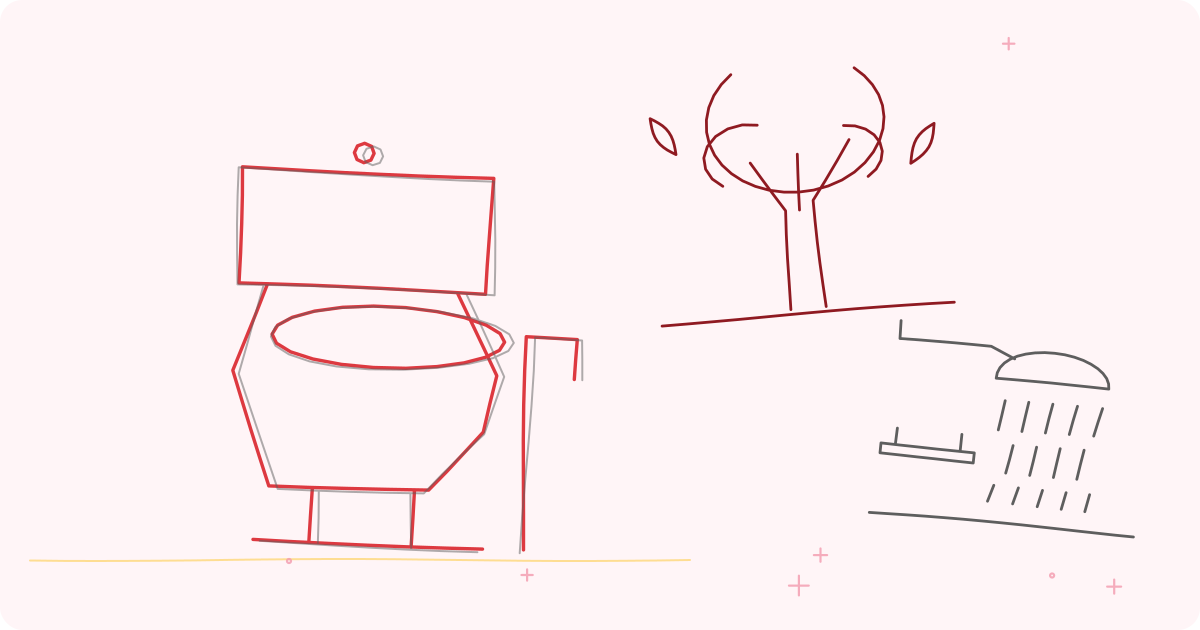
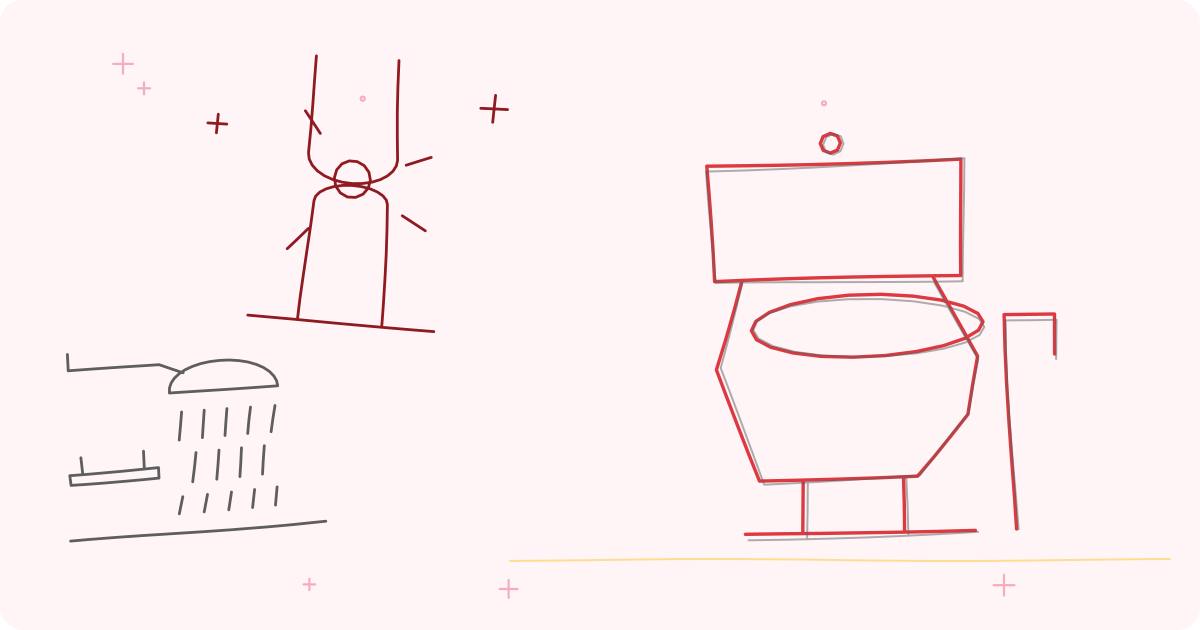
Option 5: replacing the pan with a Western toilet (WC). A plumber removes the floor pan and fits a Western pan, either floor-mounted or wall-hung, with a cistern. It is the best long-term option for people who cannot squat, and improves resale and general use. It involves breaking the floor, new plumbing, a new drain connection and re-tiling. It takes some days and needs a plumber, mason and tile worker.
Option 6: adding a Western toilet elsewhere. If one bathroom has a Western toilet, a person can use that and other family members the squat toilet. This works well for joint families, in which people differ in preference.
Option 7: a commode in the bedroom for night, and the bathroom toilet for the day. See bedside commode and urinal routines.
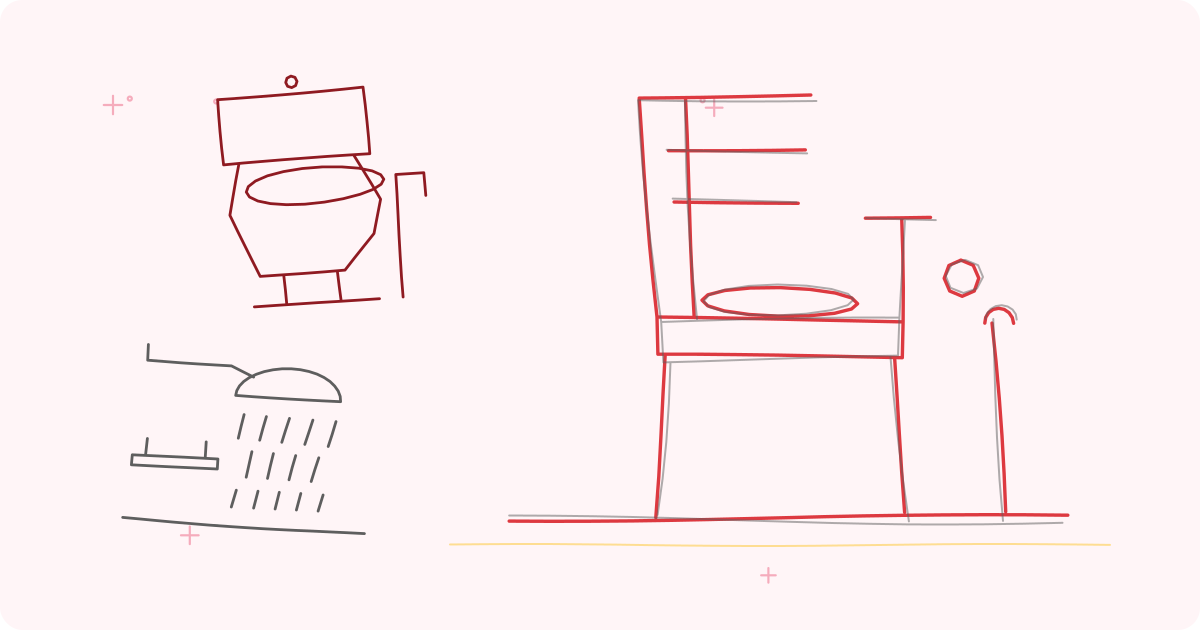
Choosing between options
Ask these questions:
- How much does your parent need? Someone who only needs a little help can use a simple raised seat on a platform. Someone with very weak legs needs a seat with arms, and a bar, and may need help.
- How long is the need? After a hip or knee replacement, it is temporary, so a rented commode may be enough. For permanent changes, a Western toilet is better.
- Do others use the toilet? If the household still squats, a removable or folding solution is better than a permanent change.
- Do you own the home? Owners can plan a conversion. Tenants need landlord consent and probably a removable solution; see fitting grab bars in a rented or apartment home.
- Is there space? A Western toilet and a commode take more room than a floor pan. Measure.
- What is the budget? Costs vary by city, brand, plumber and tile work. Get several quotes. See home modification budget India.
If you convert to a Western toilet: what to check
Before work starts, make a plan with your plumber and, if possible, an occupational therapist.
- Drain position. A floor pan and a Western pan often have different outlets (S-trap or P-trap). The drain pipe position must match, or the plumber must change it. Ask about the type of outlet in the wall or floor.
- Floor level and slope. Breaking the floor can affect waterproofing. The new floor must slope to the drain and be waterproofed again.
- Cistern and flush. A wall cistern, a concealed cistern or a flush valve; check water pressure and noise. A dual flush saves water.
- Space. There should be at least 20 to 25 cm from the toilet centre to the side wall, and room in front to stand and turn. A grab bar or frame needs a side clearance of 30 to 45 cm.
- Height. Choose a comfort-height or raised pan, about 43 to 48 cm, or fit a seat riser; see raised toilet seat guide.
- Seat. A firm, wide seat with a soft-close lid. A raised seat with arms may help later.
- Water spray. Many people prefer to wash with water. Fit a health faucet (bidet spray) within easy reach of the seat, on the stronger hand's side, with a controlled flow. Add a mug or small bucket where this is not possible.
- Wall reinforcement. Fit grab bars or a frame beside the pan, and reinforce the wall.
- Non-slip floor. See bathroom flooring and wet-floor safety.
- Ventilation and light. A fan and a night light.
- Waterproofing and testing. Ask the contractor to do a water test on the floor before re-tiling, so you avoid leaks into the flat below.
- Society and building rules. In apartments, work on plumbing may need permission, and a common drain may be affected.
- Disruption. Plan where your parent will go to the toilet while work is on, such as a commode, and for how many days.
Using a commode or frame over the pan safely
- Level the legs. The floor slopes toward the drain. Place rubber pads or choose adjustable legs so the seat is level.
- Test with weight. Have an adult sit and rock, and check the legs do not slide on a wet floor.
- Mind the pan edge. Legs should not rest on the pan lip, which may break.
- Keep the floor dry and put a non-slip mat or treatment; see non-slip bath mats.
- Clean. Splashes land on the floor and the legs. Clean daily. See commode chair hygiene.
- Washing. Place a mug or a spray within reach, and a wipe or towel.
- Check clearance. The seat must not be so close to a wall that the person is wedged in.
- Ask for help getting up until the person has practised.

Cultural comfort and dignity
Some people feel uneasy sitting on a Western seat, which others have used, or feel it is unclean. Others worry about the change in posture, or the feeling that it is a mark of age or illness. Respect these feelings:
- Offer a disposable seat cover or a wipe to clean the seat before use.
- Place a small foot stool in front, so the knees are raised, which many people find more natural; check stability and ask a doctor if there is a heart condition or other concern.
- Explain that this is a way to keep independence.
- Allow the person to choose the colour and the position of the new seat.
- Keep other toilets available for family members who prefer squatting.
- Be matter-of-fact. Avoid mocking their reluctance.
If a squat posture is used for religious or purification reasons, discuss what is comfortable with the person, and with a trusted elder or priest, as your family wishes.
Mistakes to avoid
- Buying a commode that does not straddle the pan.
- Placing a platform or stool that wobbles.
- Forgetting waterproofing in a conversion.
- Ignoring the drain type, leading to leaks and smells.
- Making the toilet too low, which is hard to rise from.
- Fitting a Western toilet in a bathroom so small that there is no room to turn or help.
- Not adding grab bars.
- Ignoring the cultural dimension.
When to ask a professional
An occupational therapist can assess your parent's strength, transfers and the room, and suggest the right option. A physiotherapist can advise on exercises for strength and safe standing, and on postoperative rules. A plumber or contractor must plan the drain, waterproofing and fittings, and an engineer may be needed in apartments. See a doctor if your parent has constipation, pain on passing urine or stool, bleeding, dizziness or recurrent falls.
Equipment mentioned in this guide
Frequently asked questions
Can an older person use a commode over an Indian toilet?
Yes, if the commode is stable, the legs rest firmly on both sides of the pan and the floor is non-slip. It gives a Western-style seat with arms without any building work.
Is it expensive to change a squat toilet to a Western one?
Costs vary widely with the city, fittings, plumbing changes and tile work. Get several quotes, and compare with a raised frame or commode if the need is temporary.
Is the Western toilet less healthy than squatting?
Some people feel squatting aids bowel emptying, and a small foot stool in front of a Western seat can mimic it. For someone who cannot squat safely, a seat is safer. Ask your doctor if you have concerns.
What if only some family members want the change?
Keep one squat toilet for those who prefer it, and add a Western toilet or a removable commode for the person who needs it.
Sources and further reading
- World Health Organization, World report on ageing and health (2015)
- Royal College of Occupational Therapists, guidance on toilet equipment and home adaptations
- American Academy of Orthopaedic Surgeons, OrthoInfo patient information on recovery after hip and knee replacement
- Bureau of Indian Standards, general standards for sanitary appliances and plumbing fittings
Tags: indian toilet conversionsquat toilet elderlywestern commodeknee pain toilettoilet over indian panconvert indian toilet to westernBathroom and toilet safetyCommode chairHealthy ageingElder care
This article is for general education and is not medical advice. Speak to your doctor before changing your exercise, diet or medicines.