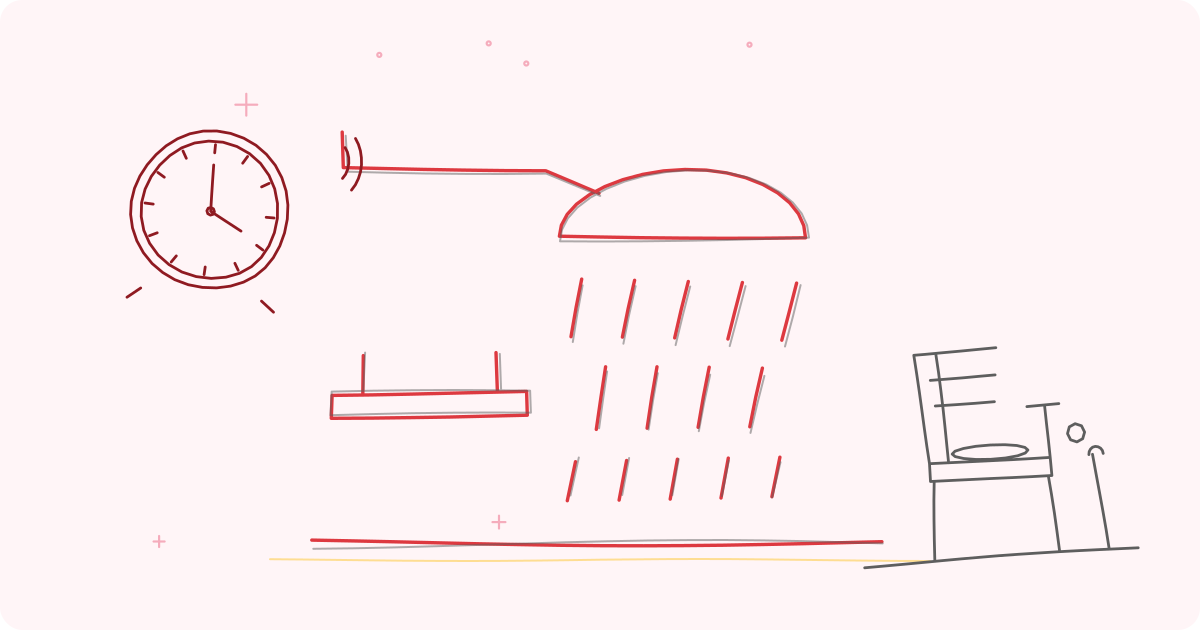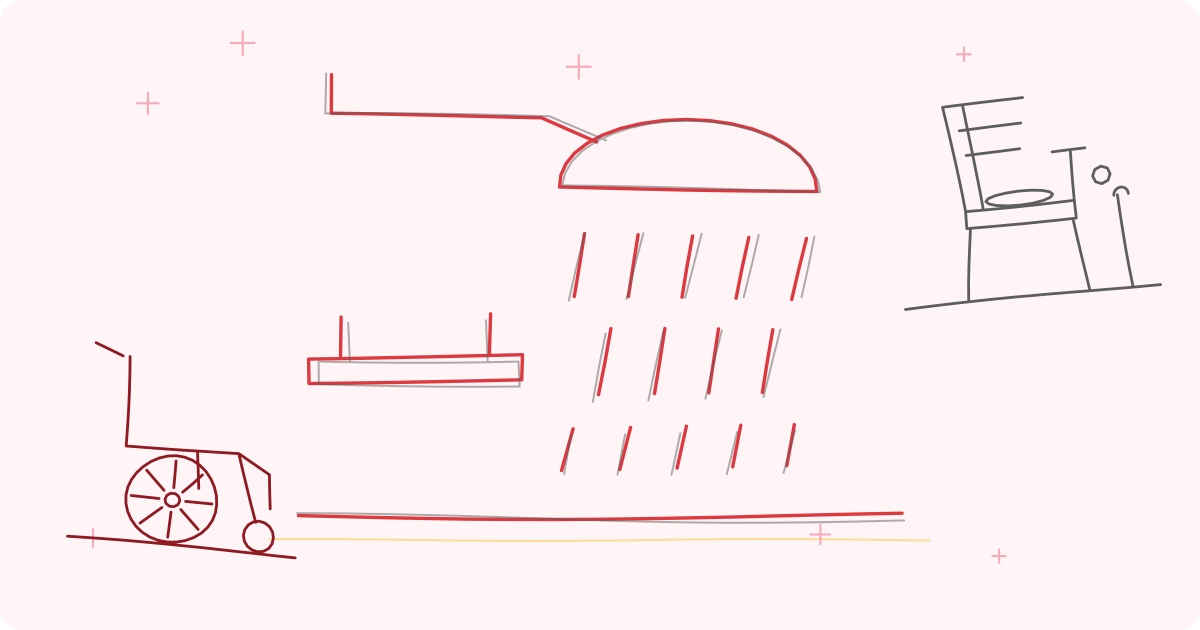
What a bath transfer bench is
A transfer bench has a seat and a back, supported by legs. Two legs stand inside the tub and two outside, on the bathroom floor. The person sits on the outer part of the seat, with their back to the tub, and then lifts or slides their legs over the side one at a time while still seated. They then slide along the seat to the inside part to bathe, often under a handheld shower. To leave, they reverse the movement.
It is different from a bath board, a plain plank resting across the tub's edges. A board is cheaper but offers no back support and can slide, so it suits only those with good balance. It is also different from a bath lift, a powered seat that lowers a person into the water, which is a much bigger and more costly piece of equipment. A shower chair sits inside a shower tray or tub bottom; see the shower chair buying guide. And for people who cannot transfer at all, a commode or shower chair on wheels may fit better.
Who needs one
A transfer bench is worth considering if your parent:
- has trouble lifting a leg over the tub side;
- has had a hip or knee replacement and has been told to avoid deep bending;
- has weak legs, arthritis or balance problems;
- uses a stick or a walker;
- has had a stroke, with weakness on one side;
- feels dizzy or tired when standing in a shower;
- or has had a fall in or near the tub.
It is not enough for a person who cannot sit unsupported, whose legs cannot be lifted over the side even when seated, or who has major trunk weakness. Those people may need a hoist, a bath lift, or a sponge bath at the bedside. See bed bath step by step for that option.
Measuring the tub and the room
Check these points before ordering:
- Tub width at the rim. The two outside legs must stand on the floor beside the tub, and the two inside legs must fit within the tub. Measure the width of the tub from outer edge to outer edge. Most benches fit a range, such as 55 to 75 cm.
- Tub height. The seat should be at roughly the same height as the tub edge or just above, so a person can slide across without lifting. Measure from floor to tub rim.
- Tub floor. Inside legs must stand on a flat bottom. A tub with a deep slope or a very narrow bottom may not fit.
- Space outside. There needs to be room beside the tub for the bench's outer legs and the person to sit down. Many Indian bathrooms are small, with a tub close to a wall or the toilet. Check you can reach the seat from a standing position, without having to squeeze past.
- Distance to the wall. Some benches are one-sided and must be placed with the backrest on a particular side, depending on the layout.
- Tub walls. Some tubs are curved or have raised ridges that stop the legs from sitting level.
- Taps and controls. The person should be able to reach them while seated on the inner part of the bench.
Adjustable legs help with uneven floors. A bench with legs that are adjustable in height can be set to level on a bathroom floor that slopes to the drain.
What to look for in a bench
Seat. A seat about 40 cm wide and 40 cm deep suits many people. Slatted or perforated seats drain water. A moulded surface with a slip-resistant texture reduces sliding. A cut-out helps with washing.
Backrest. Look for a sturdy, well-supported back; a very low back gives little support. A back that is removable or can be flipped from one side to the other gives flexibility for left- or right-sided use.
Arms or handle. One or two arms or a side handle give something to push up on. A handle that can be fitted on the left or right is helpful when one side is weaker.
Weight limit. Choose a bench with a rating well above your parent's weight. Many are rated at 125 to 160 kg, but check the label.
Feet. Wide, rubber suction-type feet grip tubs and floors. Check the inside feet suit your tub material; some tubs are smooth and slippery.
Material. Aluminium frames are light and resist rust. Plastic seats are easy to clean. Check for rough edges or joints that might hold dirt and mould.
Folding and storage. A bench that folds or comes apart is easier to store, but folding mechanisms add weak points. Check they lock firmly.
A hole for a shower curtain. Some benches have a cut-out so a shower curtain can close without a gap. Without it, water may splash outside onto the floor.
Using a bench safely, step by step
Teach the routine first, with a family member present.
1. Place the bench with the outer legs on the floor and the inner legs in the tub, and check all feet are firm. Press down on it to check for movement. 2. Run the water and check the temperature with your hand, so the person does not sit down into water that is too hot. See hot water and scald safety. 3. Walk to the bench and turn so that your back is to it, keeping a hand on a grab bar or a firm support. 4. Reach back for the seat and lower slowly, using the arms. 5. Sit well back and sit upright for a few seconds. 6. Lift one leg at a time over the tub edge, helping the weaker leg with the hands if needed. 7. Slide along the seat to the middle of the tub. Keep both feet flat on the tub floor. 8. Wash seated. Use a handheld shower and a long-handled sponge. Do not lean out of the seat. 9. To leave, turn off the water, dry off what you can, slide back and lift the legs out, one at a time. 10. Pause with the feet on the floor before standing, to let any dizziness pass.
If your parent has had a hip replacement, the surgical team may advise which side to enter from and how far to bend. Follow that advice.
Mistakes to avoid
- Placing a bench on a tub with slippery legs. Check the rubber feet inside the tub.
- Using a bench that is too tall or too low. If the seat is much above the rim, the person has to lift too high; if it is below the rim, getting a leg over is harder.
- Forgetting the floor outside. A wet floor next to the bench is a hazard. Put a non-slip mat or treatment, and dry the area; see non-slip bath mats.
- Not securing the shower curtain. Water on the floor creates a slip risk.
- Carrying a bucket in and out. Use a handheld shower or a mug while seated.
- Leaving the bench in the tub where it can trap water and mould. Clean and dry after use.
- Using the backrest as a handle when it is not designed to be one.
Indian homes: what to think about
Many Indian bathrooms have no tub at all, only a floor drain and a bucket. A transfer bench is then not needed, and a shower chair or stool is more suitable. If the home has a tub, it is often in a newer flat or in a family room, and may be narrow or deep. Some tubs are shallow, with tall rims, and benches may not fit. Measure carefully and, if possible, test a bench in the home before you commit. If the tub is rarely used, consider whether a walk-in shower conversion or an adapted shower would be better in the long run; see the bathroom budget makeover.
For many families, hot-water supply comes from a geyser with limited capacity. A soak is less likely than a quick wash, so a seated wash with a handheld shower may be more realistic.
Care and checks
- Rinse the bench after each use and dry it.
- Clean the underside of the seat, where soap and mould build up.
- Check for cracks, wobble and worn feet every month.
- Tighten any bolts or pins, and check that they have not rusted.
- Replace if the frame bends or the seat cracks.
When to ask a professional
An occupational therapist can assess whether a bench is the right choice, which side it should go on, and how to teach the transfer safely. They can also check whether another solution, such as a walk-in shower, would be better. A physiotherapist can help with leg strength and standing. Ask a doctor if your parent feels faint, has chest pain or breathlessness, or has new weakness. After joint replacement, follow your surgeon's movement rules.
Equipment mentioned in this guide
Frequently asked questions
What is the difference between a bath transfer bench and a shower chair?
A transfer bench spans the tub edge, with two legs inside and two outside, so the person sits outside and slides in. A shower chair stands entirely inside the tub or shower tray, so the person still has to step in first.
Will a bath transfer bench fit any bathtub?
No. Check the tub's rim width, height and floor shape against the bench's adjustable range, and measure the space beside the tub. Some narrow, curved or raised tubs do not suit standard benches.
Can my parent use the bench with a handheld shower?
Yes, and this is the usual way. A handheld shower lets them rinse while seated and avoids reaching or twisting. See the [handheld shower guide](/library/handheld-shower-guide).
Is a bench safe for someone with dementia?
It can be if the routine is simple and someone supervises. A person with dementia may forget how to use it or try to stand in the tub. A therapist can advise on the best approach.
Sources and further reading
- World Health Organization, World report on ageing and health (2015)
- Royal College of Occupational Therapists, guidance on bathing equipment and home adaptations
- NICE guideline NG249, Falls: prevention, assessment and management in older adults and adults at higher risk
- American Academy of Orthopaedic Surgeons, OrthoInfo patient information on recovery after hip replacement
Tags: bath transfer benchbathtub seatbath boardgetting into bathtub elderlytub benchbath safetyBathroom and toilet safetyHealthy ageingElder care
This article is for general education and is not medical advice. Speak to your doctor before changing your exercise, diet or medicines.