
Three tools, three jobs
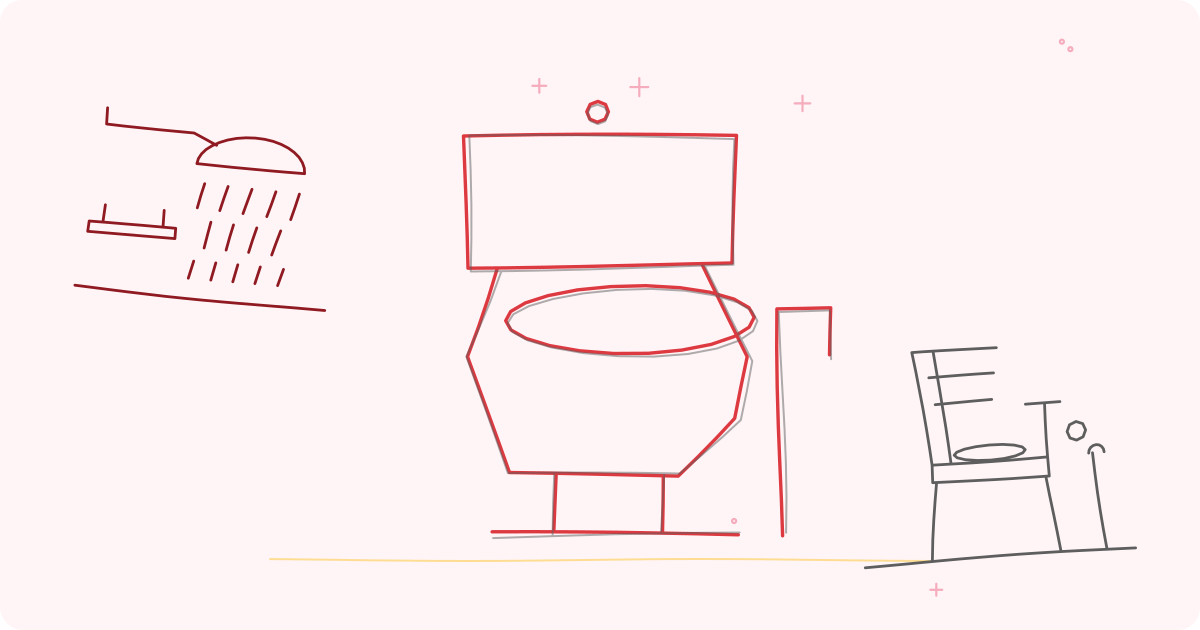
Shower chair or stool. A seat that stands in the shower tray, on the floor of a walk-in shower or in a tub. The person walks in, turns, sits and washes seated. It supports bathing but not necessarily the toilet. It is the simplest and most common item. See shower chair buying guide.
Bath transfer bench. A seat that spans a bathtub, with two legs in the tub and two outside. The person sits down outside the tub and then slides over the edge while seated. It exists mainly to solve the problem of getting over the side of a bath. See bath transfer bench guide.
Commode chair. A chair with a toilet seat and a removable pot, used beside the bed or placed over a toilet. The shower commode version has wheels, and can be pushed over a toilet and into a shower, so one chair serves two purposes. It is for people who cannot walk to the toilet, or who need seated transfers with a carer. See commode chair guide.
A fourth option, a bed bath, is used when no safe way to the bathroom exists; see bed bath step by step.
Start with the person
Answer these questions about your parent, ideally with a therapist.
1. Can they stand and walk safely? For how far, and with what aid? Can they stand for a few minutes without support? 2. Can they sit upright without support? Do they lean or slump? Do they need a backrest, arms or head support? 3. Can they step over a high edge, such as a tub side or shower tray? Can they lift one leg at a time? 4. Do they have a weaker side? After a stroke, one side of the body may be weak; see bathroom safety after stroke. 5. Do they tire quickly or feel dizzy? Do they get breathless or faint in hot, steamy rooms? 6. Can they stand up from a seat without help? Or do they need a carer, a frame or a raised seat? 7. Do they follow instructions? Does confusion, dementia or poor judgement affect their ability to use equipment? 8. Do they have pain, stiff joints, or movement restrictions after surgery, such as hip precautions? See bathroom setup after hip replacement. 9. Is incontinence or urgency a problem, particularly at night? 10. How much help is available, and who will give it? Is the carer physically able to help with transfers?
Then look at the bathroom
- Is there a tub or a shower? Most Indian homes have a floor-level shower area or a bucket space. A tub changes the options.
- How wide is the door? Wheeled chairs need clear space. See bathroom layout for wheelchair and walker users.
- Is there a raised sill or a tray? A lip of even 5 cm can stop a wheeled chair.
- What kind of toilet is there? A Western pan, in which a shower commode can be placed, or a squat pan, in which case a commode may be used elsewhere. See adapting an Indian bathroom for knees and hips.
- How big is the floor space? Turning a commode chair needs more room than a stool.
- Is the floor level or sloped? A wheeled chair on a slope can roll; a stool on a slope can tilt.
- Walls for bars? Solid walls can take grab bars; see where to fit grab bars.
A simple matching guide
Use this as a rough guide, and confirm with a professional.
A basic shower stool or chair suits a person who:
- walks and stands independently, or with a stick, but tires or feels unsteady in the shower;
- can sit upright without support;
- uses a Western or a squat toilet without difficulty, or already has a solution for it;
- has a walk-in shower or a tray with a low edge.
Choose a stool for good trunk balance and a chair with a back and arms for those who lean or need to push up. Add a handheld shower and a non-slip surface.
A bath transfer bench suits a person who:
- has a bathtub they want or need to use;
- cannot lift their legs over the side while standing, but can sit upright and lift each leg while seated;
- has some leg movement and trunk control;
- has enough room outside the tub.
If there is no tub, a bench is not needed. If the person cannot lift the legs over the side even while sitting, a carer may need to help, or a different solution, such as a hoist, may be needed.
A wheeled shower commode chair suits a person who:
- cannot walk to the toilet or the shower, or only a few steps with help;
- needs a carer to transfer;
- cannot stand safely for personal care;
- uses the same chair for toilet and shower, to reduce transfers;
- has a wide enough door and a level-access shower.
It needs a roll-in shower, space, and a carer who is trained in transfers and in using the brakes. Check that the chair is rated for showering and the metal is rust-resistant.
A fixed bedside commode suits a person who:
- can stand and walk a few steps but cannot reach the toilet in time or at night;
- is recovering from surgery or illness;
- has urgency, or has to go often at night;
- needs a Western seat in a home with only a squat toilet.
Note that a bedside commode is not a shower chair, and should not be used under running water unless it is rated for it.
A bed bath or sponge wash suits a person who:
- cannot sit upright or stand;
- is very frail, ill or at the end of life;
- has a bathroom that cannot be adapted.
Combinations are common
Many people need more than one piece, for different times of day.
- Shower chair plus raised toilet seat for a person who walks but is weak.
- Bench plus handheld shower plus grab bar for a tub user.
- Bedside commode at night plus shower chair in the day for a person with urgency and unsteadiness.
- Shower commode chair plus a roll-in shower for a person who needs a carer.
Aim for the simplest set that does the job, since each extra item takes space and money, and each one needs cleaning and checking.

Check fit and safety
Whichever item you choose:
- Weight limit. Choose one rated above the user's weight, with a margin.
- Seat height. Adjust so feet are flat and knees about level with the hips.
- Stability. Check for rocking, and for sloping floors.
- Material. Rust-resistant and easy to clean.
- Feet or castors. Wide rubber feet for fixed items. Locking brakes on wheeled ones.
- Fit. Measure the space and the door.
- Cleaning. Items used for toileting must be easy to clean. See commode chair hygiene.
- Carer needs. Handles for pushing, or a design that allows the carer to stand beside the user.
- Return and warranty. See equipment delivery, installation and aftercare and equipment to rent vs buy checklist.
Renting may suit short-term needs, such as recovery from surgery, while buying suits long-term use, for hygiene and fit.
Trial and review
- Try before you buy where you can, in the shop or through a therapist's loan.
- Practise on a dry day, with clothes on, before the first real bath.
- Review after a few weeks. Does your parent use it? Are they safe? Is the carer comfortable?
- Revisit as needs change. People recover or decline, and equipment that suited at first may no longer suit. Ask the therapist to review.
When to ask a professional
Choosing between these items is a task for an occupational therapist, who can watch your parent transfer, test equipment and measure the bathroom. Ask your doctor or hospital team for a referral, or look for a private therapist if public services are not available. A physiotherapist can advise on strength, balance and transfers. A nurse can advise on skin, continence and care. If you cannot get a professional's advice, take photographs and measurements of the bathroom to the shop and ask for help choosing, but remember that sellers are not clinicians. Tell a doctor about any new weakness, fainting or confusion.
Equipment mentioned in this guide
Frequently asked questions
Can a shower commode chair be used instead of a shower chair?
Yes, if the bathroom has the space, a level-access shower and a carer. It serves as both a toilet and shower chair. For a person who can walk, a simple shower chair is lighter and cheaper.
Do I need a bath transfer bench if I have no tub?
No. A bench is for getting over a tub edge. In a shower area, a shower chair or stool does the job.
Is a bedside commode safe to use in the shower?
Only if the manufacturer says it is rated for wet use. Many are not, and may rust or have no brakes. Use a purpose-made shower commode or shower chair.
Who can help me choose?
An occupational therapist is the best person, as they can assess your parent and the bathroom. Your doctor or hospital can refer you, and many therapists offer home visits.
Sources and further reading
- World Health Organization, World report on ageing and health (2015)
- Royal College of Occupational Therapists, guidance on bathing and toileting equipment
- NICE guideline NG249, Falls: prevention, assessment and management in older adults and adults at higher risk
- American Occupational Therapy Association, resources on bathing and toileting equipment and home modifications
Tags: shower chair or commodebath bench or shower chairwhich bathroom equipmentshower commode chairbathing equipment choiceoccupational therapy equipmentBathroom and toilet safetyShower chair with backHealthy ageingElder care
This article is for general education and is not medical advice. Speak to your doctor before changing your exercise, diet or medicines.