How suction cups work, and why they let go
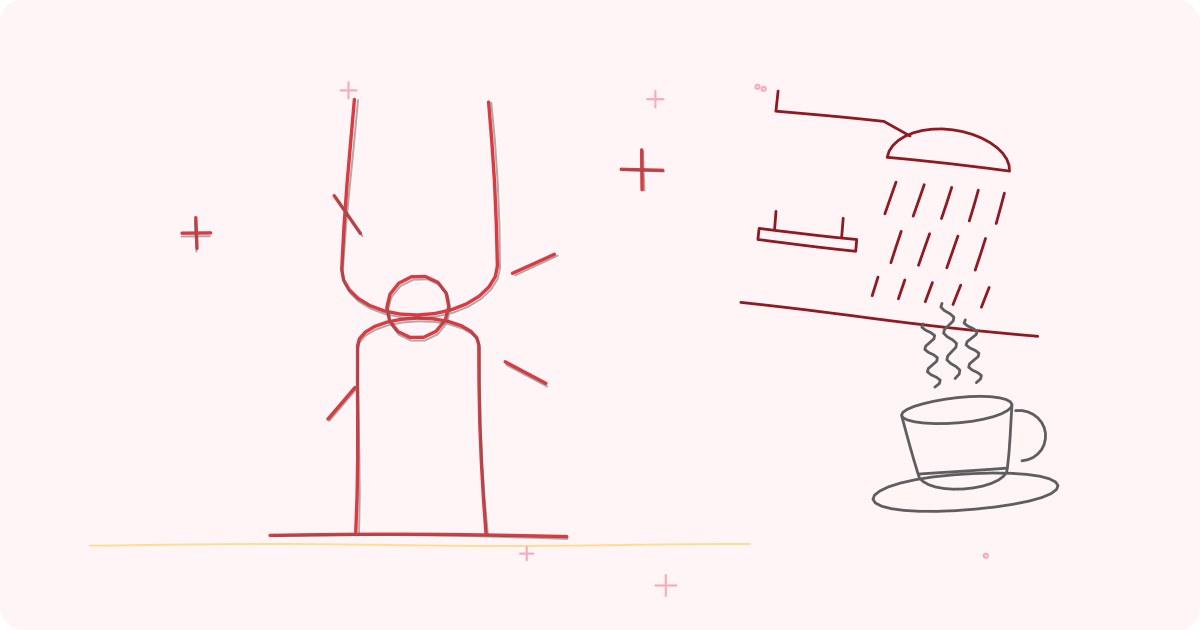
A suction cup holds because air is pushed out from under it, so that the air pressure outside pushes the cup against the wall. The grip depends on a perfect seal. Anything that lets a small amount of air in will let the pressure slowly equalise, and the cup will weaken and drop off.
In a bathroom, many things break the seal:
- Tile surface. Textured, embossed, matt or porous tiles do not seal well. Even glossy tiles have tiny pores and micro-scratches.
- Grout lines and tile joints. A cup that sits over a joint cannot seal.
- Soap film and hard water deposits. Invisible films reduce the grip over time.
- Temperature changes. Steam and hot water make the rubber soften and the air inside expand and contract.
- Age of the rubber. Rubber hardens, cracks and loses elasticity, particularly in hot Indian summers.
- Uneven walls. A wall that is not flat leaves tiny gaps.
The cup may look secure and even pass a gentle pull test, and then slowly lose grip over hours. Some bars have a small indicator, a red band or a pump, to show when the vacuum is dropping, but the person has to look at it every time and there is not always a warning before a sudden release.
Why failure is so dangerous
A person who grabs a bar is usually already unsteady. If the bar holds, they recover. If it comes off the wall, they fall at that moment, and often with the bar in their hand, carrying extra momentum. Falls onto tile or marble can cause a hip fracture or head injury. Because the person trusted the bar, they may have leaned their full weight on it, so the fall can be sudden and heavy.
There is also a false sense of safety. Families fit a bar and feel the risk is dealt with, and the parent stops being careful. A suction bar that fails once in a hundred uses is not good enough for a device whose whole purpose is to be there in the moment of danger.
Manufacturers' own instructions often say suction bars are not to be used to support body weight or to prevent falls, or that they should only be used as a steadying aid. Read the box. Many state the bar is only a "balance aid." If the packaging says not for support, then it is not a grab bar in the true sense.
The limited situations where a suction bar might be acceptable
A suction bar is never a replacement for a fixed grab bar. Some families use one for specific, low-risk purposes, while they arrange something better:
- A short-term visitor or guest who needs light steadying in a holiday home or hotel and cannot use a fixed bar.
- A light-touch cue for a person who is steady but wants a mental reminder to go slowly.
- A temporary measure for a few days while a mason is called.
- A bar for a child or smaller adult with good balance.
Even then:
- Never use it to pull up, to lower the body weight or to catch a fall.
- Fix it only to clean, flat, glossy, non-porous tile that is free of cracks and joints under the cups.
- Check the seal every single time before use, not once a week.
- Replace it at the first sign of cracking or hardening of the rubber.
- Avoid it entirely for people with weak legs, poor balance, dementia, Parkinson's disease or after a stroke.
If you are asking whether a suction bar is "enough" for your parent, the answer is almost certainly no.
Better options when you cannot drill
Many families worry about damaging tiles, or the landlord's rules. There are sturdier ways to get support:
Toilet safety frame. A floor-standing frame that surrounds the toilet gives firm armrests without any wall fixing. Adjust the legs to the right height and check that the frame does not rock. See the toilet frame guide.
Shower chair or stool. If balance is the problem, sit down. A stable seat is safer than a grab bar for a person who cannot stand safely at all. See the shower chair guide.
Bath transfer bench. For a bathtub, a bench that spans the tub lets a person sit outside and slide in. Read the bath transfer bench guide.
Floor-to-ceiling pole. A pressure-fixed vertical pole, braced between floor and ceiling by a heavy spring or a screw mechanism, gives a vertical grip anywhere in a room. It depends on a solid ceiling and floor and must be checked regularly. It suits some people but not those who need strong pulling support.
Bed or chair rails. Not for the bathroom, but useful near the bed or a chair.
Properly fixed grab bars. In most Indian homes the walls are solid brick or concrete, and the damage from drilling is two small holes that can be sealed or tiled over later. Many tenants and landlords agree to this, particularly when it is explained as a safety measure. See fitting grab bars in a rented or apartment home for how to ask and what to offer, and the grab bar buying guide for what to buy.
Some adhesive-fixed systems. A few bars are fixed with strong adhesives or with special anchors that grip tile without drilling the whole wall. Their performance varies hugely, and the weight rating may apply only to new, ideal conditions. Treat them with the same caution as suction.
How to tell a trustworthy bar from a risky one
If you are still tempted by a no-drill product, check:
- What the box says about use. If it says not for weight-bearing, it is not a grab bar.
- What the load rating is, and how it was tested. A rating given for "pull" in a lab with a perfect surface is not a rating for a wet bathroom.
- How the manufacturer says to check the seal. An unclear or absent method is a warning.
- Whether the bar has a visible seal indicator and whether the indicator is easy to see for someone with poor eyesight.
- How many cups, and how big. More and larger cups are better, but never enough.
Do not believe reviews that say "I have used it for two years." A product that works for most people is still unsafe for the one person who falls.
Behaviour counts too
A parent who has been using a suction bar for months may have learned to rely on it. Explain gently why you are changing it. Offer a firmer alternative at the same time, so they do not lose independence. Remove the old bar so it is not used by mistake. If a family member is nervous about drilling, a mason can fit bars in under an hour.
Also remember that equipment is only a part of bathroom safety. See the bathroom safety checklist for floors, lighting, water temperature and other points that matter as much as the bar.
When to ask a professional
If your parent has been grabbing walls, taps or towel rails because they feel unsteady, they need more than a bar. Ask a doctor or physiotherapist to look at their balance, strength, medicines and eyesight. An occupational therapist can visit the home and suggest the safest type of support for each part of the bathroom, including options when drilling is not allowed. If a bar has already come off the wall in use, or your parent has had a near-fall, treat it as an urgent warning and get advice.
Equipment mentioned in this guide
Frequently asked questions
Are suction grab bars ever safe to use?
They can give light steadying for a person with good balance who only wants a reminder to go slowly, and only if the seal is checked every time. They are not safe for pulling up or catching a fall.
How can I tell if a suction bar is losing its grip?
Many have an indicator or a pump that shows the vacuum state, but a bar can fail suddenly. Press and tug before every use, and replace the bar if the cups are cracked, hard or discoloured.
What should I use in a rented flat instead?
A toilet safety frame, a shower chair or bench and a floor-to-ceiling pole are options. Most landlords will accept two small drill holes for a properly fixed bar if you explain why. Ask in writing.
Can a suction bar be used on any tile?
No. It needs a smooth, flat, non-porous, crack-free surface. Textured tiles, joints, wall paint and some stone tiles do not work.
Sources and further reading
- World Health Organization, Global report on falls prevention in older age (2007)
- Royal College of Occupational Therapists, guidance on home adaptations and equipment
- NICE guideline NG249, Falls: prevention, assessment and management in older adults and adults at higher risk
- Manufacturer instructions that accompany suction-fixed bathroom aids, which usually state the limits of weight-bearing use
Tags: suction grab barsuction cup handletemporary grab bargrab bar without drillingrented home grab barbathroom safetyBathroom and toilet safetyWall-fixed grab barHealthy ageingElder care
This article is for general education and is not medical advice. Speak to your doctor before changing your exercise, diet or medicines.