First, see the house as your parent does
Walk the house at night with a torch, at your parent's pace, holding what they hold. Note where they pause, reach, turn or tire, and where the floor changes level. Then look for the three commonest causes of falls: slippery surfaces, poor light and trailing or cluttered paths. An occupational therapy home assessment and a falls risk assessment at home give a structured way to do this; see also ageing in place room by room.
The bathroom
Most serious household falls in older adults happen here.
Floors. Marble and polished tile are slippery with soap and water. Fit ribbed, rubber-backed mats where feet land, inside the shower and at the door, and dry the floor after use with a wiper. Anti-slip tape or a coating works on tile where mats slide; see non-slip bath mats guide, anti-slip tape and coatings and bathroom flooring for older people.
Grab bars. Place them beside the toilet and at the shower, fixed into the wall with proper plugs or wall studs, not suction cups; see grab bar buying guide, where to fit grab bars and suction grab bars are not safe. In a rented flat, see installing grab bars in rented homes.
Seating. For anyone who tires standing, a shower chair or bench and a handheld shower make bathing safer; see shower chair buying guide, handheld shower guide and bath transfer bench guide.
Toilet. If your parent struggles to rise, a raised seat or a toilet frame helps; where the toilet is Indian-style, see indian style toilet to western conversion, raised toilet seat guide and toilet frame guide.
Water temperature. Geysers can be set too hot; see hot water and scald safety for older skin and safe use of heaters and geysers. Never use a gas geyser in a closed bathroom.
Doors and calling for help. A door that opens outward or can be unlocked from outside lets help in if someone falls; a bathroom alert or pendant worn in the shower adds safety; see bathroom emergency alerts.
Checklist: non-slip surface in and outside shower; grab bars at toilet and shower; seat if needed; handheld shower; towels and soap within reach, no reaching; night light; door that can be opened from outside.
For the full list, see bathroom safety checklist for seniors.
The bedroom
Winter in Delhi is cold, and a cold room tempts people to rush to the toilet in the dark, half asleep and in stiff joints.
- Bed height. Sitting on the edge, feet should be flat with knees about level with hips; too low a bed makes rising hard, too high makes climbing risky; see bed height and getting out of bed and bedroom setup for night safety.
- Lighting. A switch within reach of the bed and a motion-activated night light along the route to the bathroom; see motion night lights for seniors.
- Clear route. Remove rugs, cables and stacked boxes; see flooring, rugs and trip hazards and decluttering for safety and calm.
- Warmth. Keep the room warm enough but use safe heaters with a tip-over cut-off, kept away from bedding; see cold weather health risks for seniors.
- Bedside. Water, glasses, phone, a torch, and a commode or urinal if the bathroom is far; see bedside commode and urinal routines and night time toilet trips and falls.
- Rails. Bed rails help some people but can trap others; see bed rails guide and bed safety for restless sleepers.
- Mattress and skin. For those who spend long hours in bed, see choosing an anti-bedsore mattress.
- A care room. If a parent needs a hospital bed, a ground-floor room near a bathroom is often best; see hospital bed at home guide and setting up a care room in a joint family home.
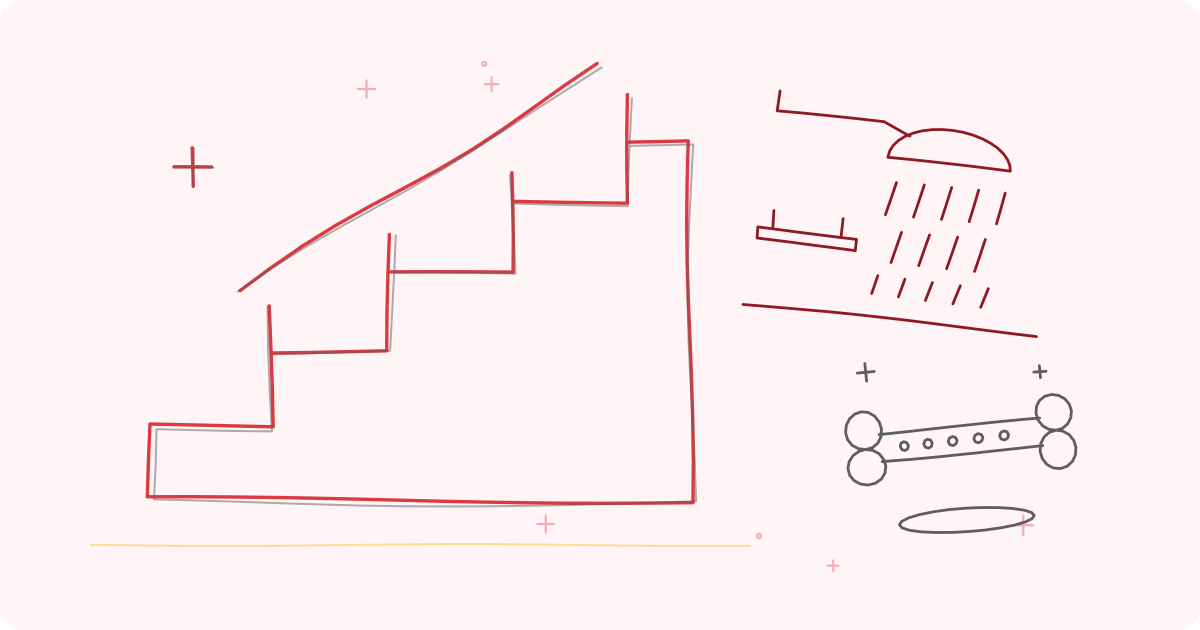
Stairs, steps and thresholds
Builder floors and tall houses often have steep, narrow staircases.
- Handrails on both sides, continuous and firm, at a height comfortable for your parent; see handrails and stair lifts.
- Step edges. Anti-slip tape or a contrasting strip on the nose of each step helps feet and eyes; polished stone and marble steps are especially slippery.
- Light. A bright, glare-free bulb at top and bottom, with switches at both ends; see lighting and contrast at home.
- Clutter. Nothing on steps, not shoes, bags or laundry.
- Gates. A gate at the top for a parent with memory loss; see wandering and dementia safety.
- Thresholds and steps at the entrance. A portable ramp or a rail at the gate can transform access; see portable ramps for thresholds and stairs, steps and thresholds.
- Avoiding stairs. Where possible, move daily living to the ground floor; see ground floor vs upper floor living and care equipment for a first floor flat. In apartments, check lift reliability and power backup; see lifts and apartment living for seniors.
- Using a stick on stairs. A physiotherapist can teach the technique; see using a walking stick on stairs and slopes.
Power cuts, voltage and the dark
Summer power cuts and voltage dips can leave a stair or bathroom suddenly dark. Fit a rechargeable emergency light near the stairs, keep a torch by the bed, and make sure alert devices and medical equipment have backup; see power cuts and older adults and hospital bed electricity and power cuts.
Doors, locks and alone-at-home safety
A parent alone during the working day needs a way to call help and a way for help to enter: a panic pendant, a key safe for a trusted neighbour or carer and a lock that can be opened from outside in an emergency; see home safety for seniors living alone, key safe guide, lock and door safety for seniors and safety in gated societies and apartments.
Priorities when budget is tight
If you can do only a few things this month: a night light on the route to the toilet, a non-slip mat and tape in the bathroom, grab bars at the toilet, a handrail on the stairs and a clear path. See home modification budget india and bathroom budget makeover for seniors.
Balconies, terraces and entrances
Many NCR homes have balconies and terraces where older residents sit in winter sun. Check that railings are firm and high enough, that the door threshold is not a trip, and that chairs are stable with arms. Keep floors dry after washing, and avoid rugs. Where there are steps at the gate or compound, add a rail and contrast tape on edges, and light the entrance well so the first and last step are visible; see garden, balcony and terrace safety.
Kitchen routes and the way to the toilet
Look at the path from bed to toilet to kitchen. Slippery spills, low cupboards that need bending and a stove that is hard to reach are all hazards. Keep daily items at waist height, a stool with a back for resting, and use an auto-off kettle for tea; see kitchen setup for seniors and auto-off kettle and stove safety.
Checking again
Repeat the walk-through twice a year, in October and in March, and after any illness, fall or new medicine; see monthly home safety check.
When to ask a professional
Ask an occupational therapist to assess the house and recommend changes. Ask a plumber or carpenter experienced in grab bar fixing, and check the wall type first. Ask a physiotherapist about a parent's balance. Call 112 after a fall with injury, head blow, or inability to get up.
Equipment mentioned in this guide
Frequently asked questions
Are suction grab bars safe in a Delhi bathroom?
No. They can loosen with wet tiles and steam. Fit grab bars into the wall.
How do we make polished marble safer?
Ribbed mats where feet land, anti-slip tape or a suitable coating, drying after use and good footwear.
Should a parent with weak knees climb stairs daily?
Safer to organise living on one floor if possible, with rails and rest stops if stairs are unavoidable. Ask a physiotherapist.
What is the most important first change?
Usually a lit, clear route from bed to toilet with a grab bar and a non-slip surface in the bathroom.
Sources and further reading
- National Institute for Health and Care Excellence, NG249 Falls: assessment and prevention in older people
- World Health Organization, global report on falls prevention in older age
- Royal College of Occupational Therapists, guidance on home adaptations and falls prevention
- Bureau of Indian Standards, general guidance on safety and accessibility in the built environment
Tags: Delhi NCRhome safetybathroom safetystairsbedroomgrab barsfalls preventionGear for your cityBathroom and toilet safetyHealthy ageing
This article is for general education and is not medical advice. Speak to your doctor before changing your exercise, diet or medicines.