First, understand the needs
Before choosing the room, be clear about your relative's needs now and in the likely near future. Ask the doctor or therapist: How much help is needed to move, toilet, bathe, eat and take medicines? Is a hospital bed or pressure-relieving mattress needed? Is oxygen or other equipment in use? Is there memory loss or confusion? Is night-time help needed? Are there infection risks? How long is the need likely to last? See activities of daily living explained, hospital bed at home guide and caring for a parent with dementia at home. Ask your relative, too, what they want: to be near the kitchen, near the prayer room, near the children, near the garden or somewhere quiet.
Choosing the room
The ideal room, which many homes cannot offer, is: - On the ground floor, or the floor where family life happens, avoiding stairs; see ground floor vs upper floor living and stairs steps and thresholds. - Close to a bathroom, ideally with a door wide enough for a commode, walker or wheelchair; if not, plan a bedside commode. - Central enough for company, within hearing of the family but not in the busiest passage; a person left in a distant room can feel abandoned and may not be heard in an emergency. - Bright, well ventilated and with a window to see daylight and, if possible, the garden or street, and a view of the door. - Cool in summer and warm in winter, with good air, without draughts directly on the bed; see temperature and ventilation at home. - Large enough for a bed with clear space on both sides for carers, a chair, a small table and room to turn a wheelchair or walker; measure doors and the route from the entrance. - Away from smoke, heavy cooking fumes, damp and heat sources; see pest damp and mould at home. - Quiet enough for sleep, but not isolated. - Near a socket for powered equipment, with backup for power cuts. If the best room is currently used by someone else, discuss it openly; the family may need to swap rooms. Treat it as a family decision, not a sacrifice by one person. See ageing in place room by room.
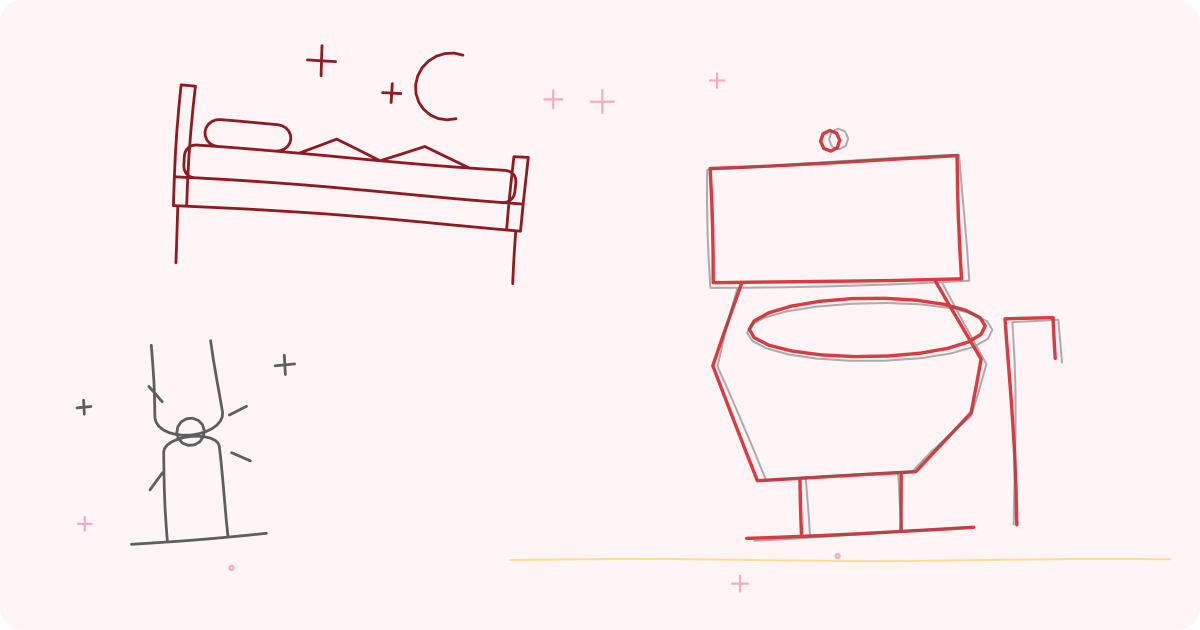
Layout inside the room
- The bed: place it so the person can see the door and the window, with clear access on both sides if they need help, and a wall at the head; leave a gap for carers to work and to turn the bed if needed. For a standard bed, check the height: feet flat with knees about level with hips; see bed height and getting out of bed. For a hospital bed, see setting up a hospital bed at home.
- A route to the toilet: clear, short and lit; no rugs, cables or low stools.
- A bedside table within reach: water, glasses, medicines in a closed container, a phone, a torch, a bell or pendant and tissues; see bedside essentials checklist.
- An overbed table for meals and activities; see overbed table guide.
- A comfortable chair with arms and a firm seat for sitting out, set where your relative can see family activity; see choosing a chair for an older person.
- A commode or urinal, screened by a folding screen or curtain; see commode chair guide and bedside commode and urinal routines.
- Storage for supplies: continence products, linen, gloves, wipes and dressings in a closed cupboard, not on display; see incontinence in older adults explained.
- Familiar things: a photo, a clock, a calendar, a favourite shawl and religious items, because familiar objects help orientation and comfort; see orientation aids for memory loss.
- Clear floors, with mats secured and cables tidy; see flooring rugs and trip hazards.
Light, air and comfort
- Natural light by day, with curtains that can darken the room at night.
- A soft night light along the route to the toilet; see motion night lights for seniors and lighting and contrast at home.
- Fresh air, daily ventilation and, where heaters or coolers are used, safety rules; see safe use of heaters and geysers.
- Comfortable bedding, breathable in heat and warm in cold; see bed linen for sensitive older skin.
- Pressure care, the right mattress and cushions for those who spend long hours in bed or a chair; see preventing bedsores at home and choosing an anti-bedsore mattress.
Equipment and power
List what is needed: a bed, a mattress, a commode, a walking aid, a shower chair, a thermometer, a blood pressure monitor, an oximeter if advised, a pendant, a call bell and any oxygen or suction equipment. Plan for power: a dedicated socket, no overloaded boards, backup for essential devices and a plan for outages; see hospital bed electricity and power cuts, oxygen and power cuts and safe use of oxygen and electrical equipment. Decide whether to rent or buy; see equipment to rent vs buy checklist. For delivery and set-up, see equipment delivery installation and aftercare. For a clinical-style set-up, see hospital room at home complete setup.

Privacy and dignity
In a household where many people come and go, privacy needs deliberate protection. - A door or a curtain that closes, and a rule to knock and wait before entering. - Screens around the bed or commode for personal care. - Visitors: agree when visitors may come, so that your relative is not woken or exposed; let them choose who they see. - Personal care: done by an agreed person, with explanation and consent, in privacy; see dignity and consent in care and dignity in intimate care. - Talk to your relative, not about them, in the room; avoid discussing their condition, finances or toileting in front of others. - Personal decisions: keep involving your relative in decisions about their care and their room.
Noise, family life and keeping connected
A care room at the heart of the house should be neither a prison nor a thoroughfare. - Control noise: television, kitchen noise and children's play can tire or distress an older person, particularly with dementia; set a quiet period, keep the door ajar if they want to hear the family, and use soft furnishings. - Keep company: invite the family to sit with your relative, to eat in the room at times and to bring the children for stories and games; see dementia daily routines and loneliness and isolation in older adults. - Sleep and routines: keep regular times for waking, meals, medicines, washing and sleep, and tell the household; see daily routine chart for a frail parent and night time caregiving routines.
Sharing the work
Care in a joint family can fall unevenly, on one daughter-in-law or one son, who burns out. Agree a plan. - List the tasks: medicines, meals, washing, toileting, night duty, appointments, laundry, paperwork, shopping. - Assign owners and backups, and write the plan on a single page in the room; see sharing care among siblings and care diary and handover notes. - Hire help where needed: a trained attendant or nurse for tasks that need skill or night duty; see hiring a home attendant checklist and training a new attendant first week. - Agree on money: costs of equipment, attendants and medicines; see care costs in india budgeting and managing a parent s money safely. - Rest and respite: schedule breaks for the main carers; see caregiver burnout signs and prevention and respite care and taking a break. - Talk regularly, in a weekly family meeting, without blame; see talking to parents about ageing and care. - Include your relative in the plan where they can take part.
Safety and hygiene in a busy home
- Medicines: keep them in one place, in a lockable box if children or people with memory problems are about, with a written list and a pill organiser; see pill organiser guide and giving medicines safely at home.
- Night safety: a pendant, a bell and a plan for who responds; see night safety for a parent alone.
- Fire and electrical safety: no overloaded sockets; oxygen away from flames, lamps and incense; see smoke and gas safety for older adults.
- Emergency plan: emergency numbers, a bag and a summary ready, and a plan for getting your relative out; see ambulance and emergency numbers in india and emergency bag for a hospital visit.
Common mistakes
- Putting the care room in a far corner, where nobody hears a call.
- Making the care room the busiest passage.
- Leaving all care to one family member.
- Having no curtain or door that closes for personal care.
- Discussing toileting and finances in front of others.
- Overloading sockets for a bed and a cooler.
- Forgetting your relative's own wishes.
When to ask a professional
Ask an occupational therapist or nurse to assess the room and recommend equipment. Ask the doctor about care needs and infection control. Ask a physiotherapist about transfers. Ask a counsellor or a community worker for support with family tensions and carer strain. Call 112 in an emergency.
Equipment mentioned in this guide
Frequently asked questions
Which room is best for a care room in a joint family home?
Usually a ground-floor room near a bathroom, bright and ventilated, close enough for company and quiet enough for rest.
How do we protect privacy in a busy house?
A door or curtain that closes, screens, a knock-and-wait rule, agreed visiting times and care by an agreed person.
How can we stop one person doing all the care?
List the tasks, assign owners and backups, hire help for skilled or night work and hold regular family meetings.
Should the care room be separate from family life?
No. The aim is a room that is private and calm but connected, with family visits, meals and celebrations.
Sources and further reading
- Royal College of Occupational Therapists, guidance on home adaptations and equipment
- National Institute for Health and Care Excellence, NG179 Pressure ulcers: prevention and management
- World Health Organization, guidance on caregiving and long-term care for older people
- Alzheimer's and Related Disorders Society of India, guidance for family carers of people with dementia
Tags: care roomjoint familybedroom setupdignity and privacyhospital bedfamily routinescaregivingSetting up the homeBeds, mattresses and restBathroom and toilet safety
This article is for general education and is not medical advice. Speak to your doctor before changing your exercise, diet or medicines.