Vertigo, dizziness and unsteadiness
- Vertigo: a spinning or tilting sensation, often with nausea, vomiting and unsteadiness. It suggests a vestibular (balance system) cause.
- Light-headedness or near-faint: feeling faint on standing, with greying vision, suggests a drop in blood pressure or heart issue; see dizziness when standing: postural hypotension in older adults.
- Disequilibrium: feeling off balance when walking, without spinning, often from nerve, muscle, vision, joint or brain causes; see peripheral neuropathy and balance.
- Non-specific dizziness: a vague "swimming" feeling from anxiety, dehydration, medicines, anaemia, low sugar or poor sleep.
Ask your parent to describe it in their own words, when it happens and what triggers it. That description helps the doctor more than the word "dizzy".
BPPV: the commonest cause of spinning in older adults
What happens. Inside the inner ear are tiny calcium crystals (otoconia). With age, injury, infections, long periods lying still, or for no clear reason, some crystals break loose and drift into one of the semicircular canals, which sense head rotation. When the head moves in certain ways, the crystals shift and send false signals of spinning.
Typical features - Brief spells of spinning, usually lasting under a minute, set off by changes in head position: rolling over in bed, getting in or out of bed, looking up or down, bending forward, reaching for a shelf. - Nausea, sometimes vomiting, and a "woozy" feeling afterwards. - No hearing loss, ringing or ear pain, and no weakness, speech or vision problems. - Eyes flicker (nystagmus) during an episode, which a clinician can see. - Episodes come and go over days to weeks, and often recur.
Diagnosis. A doctor, physiotherapist or ENT specialist performs bedside tests (such as the Dix-Hallpike manoeuvre), where the head is turned and the person lowered backwards while the eyes are watched. The test can provoke a brief spell, so be prepared and have someone with you.
Treatment. BPPV is usually treated with canalith repositioning manoeuvres (for example the Epley manoeuvre), a series of gentle head and body movements performed by a trained clinician that guide the crystals out of the canal. One or two sessions often help the majority of people. Some people need repeat treatment, since BPPV can recur. Do not attempt manoeuvres at home without training, since doing the wrong one can worsen symptoms or be unsafe for people with neck, spine, heart or eye problems. Clinicians may teach a home exercise appropriate to the affected ear. Medicines for dizziness are generally not helpful for BPPV and can cause drowsiness and falls in older adults; ask the doctor before using any.
Other causes of vertigo and imbalance
- Vestibular neuritis or labyrinthitis: sudden, severe, continuous vertigo lasting days, often after a viral illness, with nausea and imbalance; labyrinthitis also causes hearing loss or ringing.
- Ménière's disease: episodes of vertigo lasting minutes to hours, with fluctuating hearing loss, ringing and ear fullness.
- Vestibular migraine.
- Medicine side effects and toxicity; some can affect the inner ear or balance; see medicine side effects families should watch for.
- Ear wax, infection or fluid in the ear; see ear wax and hearing: safe care.
- Stroke or transient ischaemic attack in the brainstem or cerebellum (an emergency).
- Head injury, after-effects.
- Heart rhythm problems, low blood pressure, anaemia, low blood sugar.
- Multiple sensory problems: poor vision, hearing loss, neuropathy in the feet, stiff joints, combining to impair balance; see hearing and vision loss together: practical support.
- Brain conditions, including tumours (rare), Parkinson's disease and others.
- Anxiety and low mood can cause or worsen dizziness.
Emergency signs: call 112
Vertigo can be the only early sign of a stroke affecting the balance centres, particularly if it comes suddenly and is continuous, or if there are other neurological signs. Call 112 or go to hospital at once for vertigo or dizziness with:
- Facial droop, weakness or numbness of an arm or leg, or on one side.
- Slurred or confused speech, or difficulty finding words.
- Double vision, loss of vision, or difficulty focusing the eyes.
- Severe headache, especially sudden or "the worst ever", or neck pain after an injury.
- Inability to stand or walk without falling, even with support.
- Drowsiness, confusion or fainting.
- Chest pain, palpitations or breathlessness.
- Sudden hearing loss in one ear; see signs of hearing loss in parents and how to raise it gently.
- Persistent vomiting with inability to drink.
- Fever with stiff neck.
- A fall with head injury or suspected fracture.
For stroke recognition and what to do in the first hour, see stroke warning signs and the first hour. Do not wait to see if it settles.
What to do during a spell at home
- Sit or lie down at once on a safe surface, with eyes closed or fixed on a point; avoid moving the head.
- Stay still until it passes, then move slowly.
- Do not rush to stand; use support.
- Offer sips of water if not vomiting; keep a basin handy.
- Check for injury after a fall.
- Note what triggered it, how long it lasted and what else was felt, for the doctor.
- Call for help if you are alone, using an alert device or phone; see panic pendant buying guide and fall detection watch guide.
Making the home safer
Vertigo's worst consequence is a fall. See falls risk assessment at home.
- Light: night lights from bed to toilet; bright, even lighting; see motion night lights for seniors.
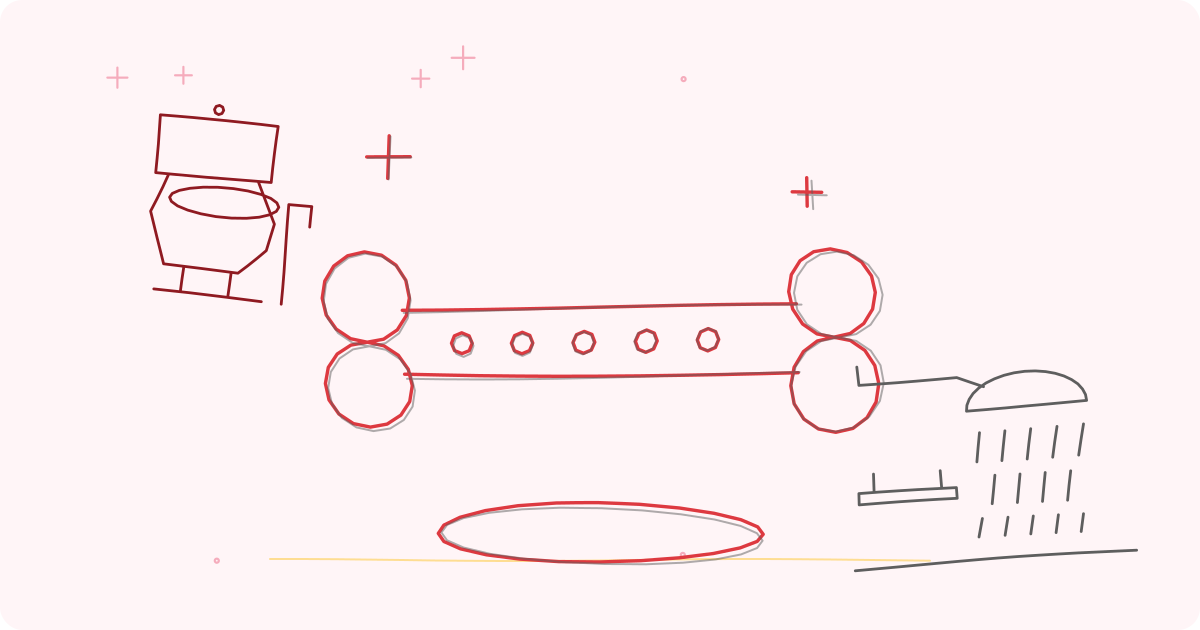
- Grab bars and rails at the toilet, shower and stairs; see grab bar buying guide and handrails and stair lifts.
- Shower chair and handheld shower, since hot, steamy bathing with the head tilted can trigger spells; see bathing safely with a shower chair.
- A commode or urinal at night to avoid rushing in the dark; see commode chair guide.
- Clear floors, no loose rugs, good footwear; see flooring, rugs and trip hazards.
- A stick or walker if the doctor or physiotherapist advises; see stick or walker: which one does my parent need? and walking stick height fitting.
- Avoid high shelves, ladders and stools, and awkward head positions: store things at waist height.
- Sleep position: if BPPV is on one side, the clinician may suggest sleeping propped slightly on pillows or avoiding that side; follow their advice.
- Avoid driving, climbing and cooking at heights during active vertigo.
- Take extra care on stairs and on wet or uneven ground.
Exercises for balance and vestibular rehabilitation
For many forms of persistent imbalance or after vestibular neuritis, supervised vestibular rehabilitation by a physiotherapist helps the brain adapt: eye and head movement exercises, balance training and walking practice. Do not start these on your own, since the wrong exercises can provoke symptoms or falls. Once cleared, general balance exercises can be done at home: standing near a counter with a feet-together stance, tandem stance, heel-toe walking and weight shifting; see balance exercises for seniors. A balance pad may be introduced later, under a physiotherapist's guidance, and always with something sturdy to hold; see balance pad guide.
Tai chi and gentle yoga, adapted for sitting or standing with support, may improve balance for some; ask the doctor first.
Medicines and dizziness
Do not give leftover or neighbour's tablets for vertigo. Sedating "dizziness" medicines can slow recovery of balance, cause confusion and increase falls in older adults. Ask the doctor about any medicine that might contribute, and do not stop prescribed ones yourself; see polypharmacy and deprescribing: taking fewer, better medicines.
Emotional effects
Vertigo is frightening, and people may fear another attack, avoid movement, go out less and become isolated and anxious. Fear of falling can itself reduce balance and strength. Reassure your parent that BPPV is common and usually treatable, encourage gentle activity as the clinician advises, and watch mood; see anxiety in older adults.
When to ask a professional
See a doctor for any new vertigo, particularly if it is sudden, continuous or the first episode. Ask an ENT specialist or a trained physiotherapist about positional tests and repositioning. Ask an audiologist about hearing and ringing; see a hearing test: what to expect. Ask the doctor to review medicines, blood pressure, vision and neuropathy. Seek emergency help for stroke signs, severe headache, double vision or inability to walk; call 112.
Equipment mentioned in this guide
Frequently asked questions
What is BPPV?
A common, harmless inner ear problem where tiny crystals move into the wrong place, causing brief spinning with head movements. It is often treated successfully with repositioning manoeuvres by a trained clinician.
Can I do the Epley manoeuvre at home?
Not without training and a confirmed diagnosis. Doing the wrong manoeuvre can make things worse or be unsafe. Ask a clinician to teach you.
When is vertigo a stroke?
When it comes on suddenly, is constant and comes with weakness, facial droop, speech problems, double vision, severe headache or inability to walk. Call 112.
Will BPPV come back?
It can recur. The clinician can teach what to do and which exercises suit your parent.
Should my mother take a tablet for dizziness?
Only if the doctor advises. Many such medicines cause drowsiness and falls in older adults.
Sources and further reading
- National Institute for Health and Care Excellence, Clinical Knowledge Summary: Benign paroxysmal positional vertigo
- American Academy of Otolaryngology-Head and Neck Surgery Foundation, clinical practice guideline on benign paroxysmal positional vertigo
- Vestibular Disorders Association, patient information on balance and dizziness
- National Institute for Health and Care Excellence, NG249 Falls: prevention, assessment and management in older adults
Tags: vertigobppvdizzinessbalance problemsinner earvestibular rehabilitationfalls preventionConditions and devicesBathroom and toilet safetyMobility and walking aids
This article is for general education and is not medical advice. Speak to your doctor before changing your exercise, diet or medicines.