Start with the main seat
Your parent probably has a favourite place to sit. Make it work.
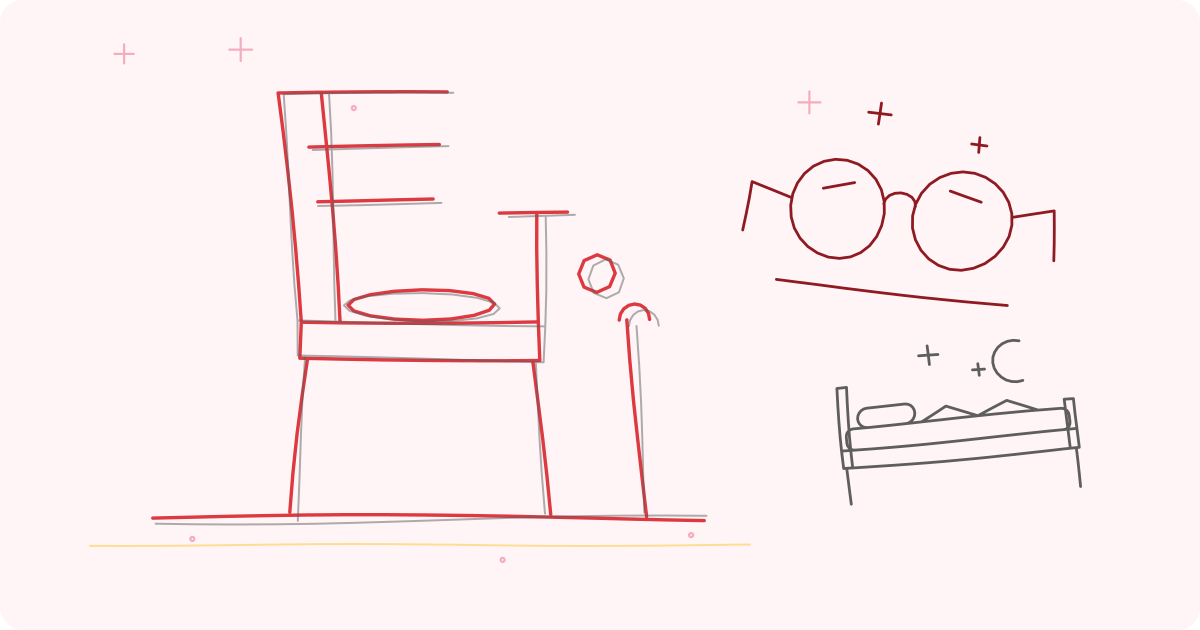
- Height: seat about 45 to 50 cm from the floor, so the knees are level with or slightly below the hips, and the feet rest flat; see choosing a chair for an older person.
- Firmness: firm enough that your parent does not sink; avoid deep soft sofas and sagging cushions.
- Arms: sturdy, at a height that allows pushing up, extending near the front of the seat.
- Back: supportive, slightly reclined, with a lumbar curve; see lumbar cushions.
- Depth: the seat should not press behind the knees.
- Stability: no rocking or tipping; non-slip feet.
- Cushion: if needed, add a firm cushion to raise the seat or relieve pressure; see seat cushions for older adults.
- Location: near a window or the centre of family activity, with good light, away from direct draughts and heaters, and with a clear path to the toilet.
- Within reach: a side table with a drink, glasses, phone, remote and medicines.
If your parent sits for many hours, check posture and pressure care; see sitting for long hours.
Other seating
- A second chair with arms for visitors, so that guests do not take the main seat.
- A sofa with a firm seat and arms if desired, with a firm cushion to raise the height; avoid very low sofas.
- A stool or footrest for those who like to raise their feet, kept stable and out of walkways.
- A rise-and-recline chair for those who cannot stand from a normal chair; see choosing a chair for an older person.
- A dining chair with arms near the dining area.
Layout and clear paths
- Walkways: keep clear routes at least 90 cm wide, with 120 cm if a walker or wheelchair is used, between the main seat, the door, the toilet and the kitchen.
- Furniture arrangement: group seating for conversation, with a small table between chairs, not low, heavy glass tables in walkways.
- Space to turn: at least 150 cm for a wheelchair, and room beside the chair for a walker.
- Avoid obstacles: footstools, floor cushions, bags, shoes, pets' items and plants.
- Furniture against walls where possible, with stable pieces that can be used for support; avoid light, wobbly furniture that your parent might lean on.
- Fix wobbly furniture. Do not use tables or chairs that move when pushed.
- Place the most used items at easy reach.
- Keep the room consistent. Frequent rearranging confuses people with memory problems or poor vision.
Floors and rugs
- Remove loose rugs and mats, or fix them with non-slip backing and flat edges; see flooring, rugs and trip hazards.
- Non-slip floor, even and clean; avoid polishing floors until they are slippery.
- No cables across walkways; use cable covers or reposition sockets.
- Smooth transitions between rooms; fix or ramp thresholds; see stairs, steps and thresholds.
- Pets need training or placement to avoid tripping.
Lighting
- General light: bright, even, with no dark corners; several light sources are better than one.
- Task lighting: a good lamp by the main chair for reading and hobbies; see lighting for older eyes and magnifier lamps.
- Glare: avoid facing bright windows or bare bulbs; use curtains or blinds.
- Night lighting: a night light on the route to the toilet; see motion-sensor night lights.
- Switches: large rocker switches at the door and beside the chair; or touch lamps.
- Colour contrast: furniture that contrasts with the floor and walls helps people with poor vision; see lighting and colour contrast at home.
Television, hearing and communication
- Placement: at eye level, about two to three metres from the main seat, without glare.
- Remote: a large-button remote within reach; see phones, remotes and switches for arthritic hands.
- Sound: for hearing loss, consider TV headphones or a speaker, so the volume does not disturb others; see TV headphones and streamers and talking with someone who is hard of hearing.
- Subtitles if helpful.
- Phone: a landline or a mobile on a stand, with large buttons and a speaker; see amplified phones.
- Clock and calendar in view; see talking clocks for low vision and dementia.
- A bell or alert pendant within reach; see panic pendants.
Tables and storage
- Side table: stable, at a comfortable height, within reach of the main chair, with a non-slip surface. Avoid glass or sharp corners.
- Coffee table: low tables are a trip hazard and hard to reach; choose a sturdy one at a safe height, placed out of walkways, or remove it.
- A tray or lap table for meals and activities; see overbed table guide.
- Storage: items used often at hip to shoulder height; avoid high shelves; use a reacher for light items; see reachers and grabbers.
- Clutter: keep surfaces clear; see decluttering for safety and calm.
Temperature, air and comfort
- Heating and cooling: a comfortable temperature, not too hot or too cold; see temperature and ventilation at home.
- Ceiling and pedestal fans: secure, with covers and no loose cords; keep draughts off your parent's head and neck.
- Heaters: at a safe distance from furniture and curtains, never covered; see cold-weather warmth for older adults.
- Ventilation and air quality: open windows when air is clean, use air purifiers in polluted seasons; see indoor air quality for older lungs.
- A throw or shawl at hand.
- Plants and flowers in moderation, in stable pots, not obstructing paths.
Safety
- No trailing cords, and sockets in good order.
- Fire safety: smoke alarm in the room or nearby; keep incense, lamps and candles away from fabrics.
- Windows and balcony doors secure; see garden, balcony and terrace safety.
- Safe storage of medicines, chemicals and tools.
- Emergency information near the phone: 112, family, doctor.
- A plan for falls: where to call for help from, and a way to get up; see how to get up after a fall.
Living with a walker or wheelchair
- Clear 90 to 120 cm routes, and a turning space of 150 cm.
- A place to park the walker within reach of the chair but not in the way.
- Chairs with enough space beside them for a wheelchair.
- No thresholds, steps or rugs in the way.
- Furniture at transfer height.
- Doors that open wide or sliding doors; lever handles.
Social life
A living room should be welcoming. Seat visitors in comfortable chairs near your parent, with a table for tea and snacks. Arrange the room so that your parent sits where they can see and hear everyone, with their good ear towards the group. Keep a few photographs, a favourite picture or books in view. Create a space for hobbies such as a card table, a puzzle or a craft area, with good light. For people with dementia, keep the room calm, familiar and uncluttered; see dementia home setup.
A simple living room checklist
- Main chair at 45 to 50 cm, firm, with arms.
- Side table with essentials within reach.
- Clear walkways of 90 cm or more.
- No loose rugs, cables or clutter.
- Bright, even lighting and a good reading lamp.
- Large-button remote; hearing aids or headphones if needed.
- A clock and a calendar in view.
- Comfortable temperature and ventilation.
- A phone or alert device within reach.
- Visitors' seating available.
When to ask a professional
An occupational therapist can assess seating, posture and layout and recommend changes, chairs and cushions. A physiotherapist can advise on standing up and mobility. Ask a doctor about pain or difficulty sitting and standing. Our care advisors can arrange a home safety visit and help source furniture and aids.
Equipment mentioned in this guide
Frequently asked questions
How high should a chair be for an older person?
Usually 45 to 50 cm, firm, with arms, so that the knees are level with or slightly below the hips and feet rest flat.
Are rugs safe?
Loose rugs are a major trip hazard. Remove them or fix them with non-slip backing and flat edges.
How much clear space does a walker or wheelchair need?
About 90 cm for walkers and 120 cm or more for wheelchairs, with 150 cm for turning.
Should we get a rise-and-recline chair?
If your parent cannot stand from a normal chair even with a firm seat and good technique, a therapist may recommend one. It is costly and needs space.
What is the best television set-up for hearing loss?
Place the TV at eye level, use a large-button remote and consider TV headphones or a speaker, and subtitles if helpful.
Sources and further reading
- Royal College of Occupational Therapists, guidance on seating and home layout
- Disabled Living Foundation (UK), information on choosing chairs and furniture
- NICE guideline NG249, Falls: prevention, assessment and management in older adults and adults at higher risk
- World Health Organization, Global age-friendly cities: A guide (2007)
Tags: living room layout elderlysenior seatingfurniture arrangementchair heightaccessible living roomageing in placeSetting up the homeOrthopaedic seat cushionCushions, pillows and comfortBeds, mattresses and rest
This article is for general education and is not medical advice. Speak to your doctor before changing your exercise, diet or medicines.