How swallowing works, in brief
Swallowing has stages: chewing and preparing food in the mouth; moving it back with the tongue; triggering the swallow reflex, when the airway closes and the food passes into the gullet; and pushing it down into the stomach. Problems can arise at any stage: weak chewing or tongue control, a delayed swallow reflex, weak throat muscles, food sticking in the gullet, or reflux.
Signs of swallowing difficulty
During or after eating and drinking - Coughing, choking or throat clearing, especially with thin liquids such as water, tea or buttermilk. - A wet, gurgly or hoarse voice after swallowing. - Taking a long time to eat; very small bites; tiring during meals. - Food or liquid leaking from the mouth, or drooling. - Food left in the mouth or pocketed in the cheeks after meals. - A feeling that food is stuck in the throat or chest; pain on swallowing. - Watery eyes or a runny nose while eating. - Repeated swallowing for a single mouthful. - Regurgitation of food, or bringing up undigested food.
Wider signs - Recurrent chest infections or fevers, a persistent cough, or breathlessness after meals; see preventing aspiration pneumonia in frail older adults. - Unintentional weight loss, poor appetite, avoiding certain foods or meals; see malnutrition in older adults: signs and prevention. - Dehydration: dry mouth, dark urine, constipation, confusion; see hydration for older adults: how much and how to remember. - Avoiding eating with others, or fear at mealtimes. - Difficulty with tablets, which stick or are coughed up.
"Silent aspiration": in some people, food or fluid enters the airway without any cough, so the person seems fine; chest infections may be the only clue. A formal assessment can detect it.
Common causes in older adults
- Stroke, the commonest cause of sudden swallowing trouble; see stroke recovery at home guide.
- Parkinson's disease and other neurological conditions; see Parkinson's disease at home: a practical guide.
- Dementia, where recognition of food, chewing and swallowing coordination decline; see dementia, eating and weight loss.
- Frailty and muscle loss; see sarcopenia: muscle loss, protein and strength.
- Dental problems, poorly fitting dentures, dry mouth; see teeth, dentures and eating well in later life.
- Reflux and gullet disease: inflammation, narrowing, a hiatus hernia, or, importantly, tumours; see acidity and reflux in older adults.
- Cancers of the head, neck or gullet, and the effects of radiotherapy.
- Medicines that cause drowsiness, dry mouth or muscle weakness, or that irritate the gullet; do not stop any yourself; ask the doctor; see medicine side effects families should watch for.
- Acute illness, delirium, hospital stays and breathing tubes, after which swallowing may be temporarily weak.
- Lung disease, where breathing and swallowing are poorly coordinated; see COPD at home guide.
- Thyroid enlargement or neck problems.
- Muscle diseases, and age-related changes ("presbyphagia").
The assessment
If you notice any signs, ask the doctor for a swallowing assessment. Typically:
- Doctor's evaluation: history, medicines, examination of the mouth, neck, nerves; chest check.
- Speech and language therapist (SLT) assessment: observation of eating and drinking different textures, examination of the mouth and throat muscles, and advice on safe strategies and diet.
- Instrumental tests if needed: a videofluoroscopic swallow study (a moving X-ray while swallowing) or FEES (a thin camera through the nose to see the throat), which show whether food enters the airway.
- Other tests: endoscopy of the gullet, scans, blood tests, to find causes.
- A dietician's assessment of nutrition.
Ask about dysphagia services in your area; in India, availability varies, with speech-language pathologists in larger hospitals, rehabilitation centres and some home-care services; tele-therapy may be possible.
Safe eating habits, while waiting for assessment
These are general safety measures; the therapist will tailor them.
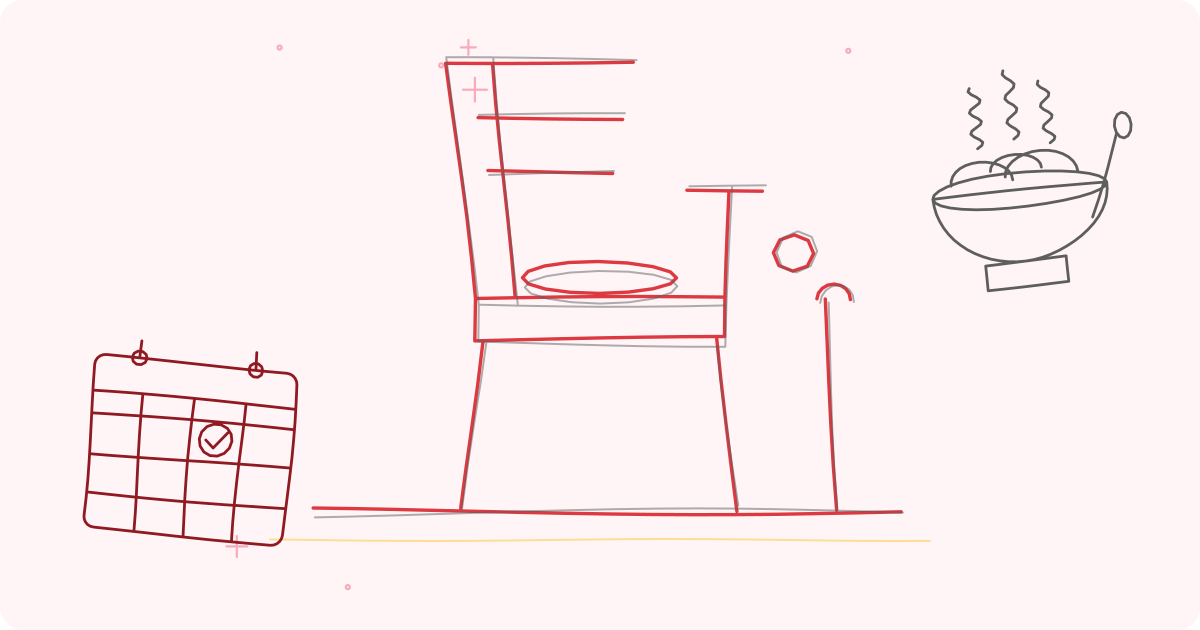
- Sit upright at 90 degrees, in a chair with support, or well propped in bed; use a backrest or wedge; see positioning a bedridden parent. Stay upright for 30 minutes after meals.
- Chin slightly down (not tilted back) when swallowing, unless the therapist advises another posture.
- Be alert: do not feed a drowsy person; wait until awake; keep glasses, hearing aids and dentures in.
- Quiet, calm setting, without television, talking or distractions.
- Small mouthfuls, small sips, using a teaspoon; wait until each swallow is complete; do not rush; no gulping with a straw or large cup unless advised.
- Eat at the best time of day, when least tired, and offer small, frequent meals; see loss of appetite in older adults: causes and practical fixes.
- Moist foods with sauce or gravy are easier than dry, crumbly or sticky foods.
- Avoid risky foods unless cleared: dry rotis and bread, crackers, nuts, seeds, popcorn, raw vegetables, tough meat, fish with bones, whole grapes, sticky sweets, large pieces of fruit, mixed textures such as soup with lumps.
- Check the mouth after eating for pocketed food.
- Oral care twice a day to reduce bacteria; see oral care for frail older adults and denture hygiene.
- Tablets: ask the pharmacist whether liquids, dispersible or crushable forms are suitable; never crush slow-release or coated tablets; see giving medicines safely at home.
- Supervise meals for those at risk, and stay close; be ready for choking.
- Adapted cups and cutlery (cups with a cut-out for the nose, small-bowled spoons) can help; see easy-grip cutlery guide and eating with tremor or weak grip.
- Do not thicken fluids yourself with household products such as cornflour or sabudana; wrong thickness can be unsafe. Use a prescribed or recommended thickener in the amount the therapist specifies.
Modified textures and drinks
Therapists use a standard framework, the International Dysphagia Diet Standardisation Initiative (IDDSI), to describe levels of foods (from soft and bite-sized, through minced and moist, to pureed) and drinks (from slightly thick to extremely thick). Which level suits your parent is decided after assessment. Food ideas and preparation are in soft and pureed diets. To keep nutrition up, fortify foods and consider sip feeds if advised; see nutrition supplements and sip feeds: when food is not enough and protein powder for older adults: who needs it and how to choose.
Therapy and rehabilitation
Depending on the cause, the SLT may teach swallowing exercises (for tongue, lip and throat muscle strength, and for protecting the airway), safe swallowing manoeuvres and compensatory postures, review progress and adjust diets as swallowing recovers. Many people after stroke improve over weeks to months. Families can help by practising the exercises daily as taught, and by keeping a mealtime diary.
Choking: first aid
Choking means the airway is blocked by food or an object.
- Mild choking: the person can cough, speak or breathe. Encourage them to keep coughing; do not slap the back or give water. - Severe choking: the person cannot cough, speak or breathe, clutches the throat, turns blue, or collapses. Call 112 at once. Then, if trained: 1. Give up to five firm back blows between the shoulder blades with the heel of the hand, with the person leaning forward. 2. If not cleared, give up to five abdominal thrusts: stand behind, wrap your arms around the waist, make a fist above the navel, and pull sharply inward and upward. 3. Alternate back blows and thrusts until the object comes out or help arrives. 4. If the person becomes unresponsive, begin CPR and follow the emergency call handler's instructions. - For a very frail person, a wheelchair user or someone much larger, adapt the position; the call handler will guide. - Even after the object is cleared, seek medical review to check for injury or aspiration.
It is worthwhile for family carers to learn first aid; ask a local hospital or the Red Cross for training; see also ambulance and emergency numbers in India.
Red flags
Call 112 for choking that does not clear, blue lips, severe breathlessness, stridor (noisy breathing), inability to swallow saliva with drooling and distress, or collapse.
See a doctor promptly for new or worsening swallowing difficulty, a feeling of food stuck, weight loss, repeated chest infections or fever, blood in vomit, pain on swallowing, a lump in the neck, hoarseness lasting weeks, or choking episodes. Sudden swallowing difficulty with facial droop, weakness or speech change suggests stroke: call 112; see stroke warning signs and the first hour.
When tube feeding is discussed
If swallowing is too unsafe to meet nutrition, doctors may discuss a feeding tube, a decision involving the person's wishes, prognosis and quality of life, which should be made carefully with the family; see nutrition supplements and sip feeds: when food is not enough and advance care planning in India: wishes, documents and conversations.
When to ask a professional
Ask the doctor for a referral to a speech and language therapist or a swallowing clinic. Ask a dietician for texture-appropriate, nutritious meals. Ask a dentist about teeth and dentures. Ask a pharmacist about tablet forms. Seek urgent help for choking, breathing difficulty or signs of stroke.
Equipment mentioned in this guide
Frequently asked questions
My father coughs when he drinks water. Is that serious?
It may signal that fluid is entering the airway. Ask the doctor for a swallowing assessment, and do not thicken fluids on your own.
Can swallowing improve after a stroke?
Often, with time and therapy. A speech and language therapist guides exercises and diet changes.
Is pureed food always needed?
No. The texture depends on the assessment. Unnecessary pureeing can reduce appetite and nutrition.
Is it safe to give tablets crushed in food?
Only if the pharmacist confirms the tablet can be crushed. Some are slow-release or coated and must not be.
What should I do if my mother chokes?
If she cannot cough, speak or breathe, call 112 and give back blows and abdominal thrusts if trained, alternating until help arrives.
Sources and further reading
- Royal College of Speech and Language Therapists, guidance on dysphagia
- International Dysphagia Diet Standardisation Initiative, IDDSI framework
- National Institute for Health and Care Excellence, guidance on stroke rehabilitation and nutrition support (NG236 and CG32)
- Resuscitation Council UK, guidelines on choking
Tags: dysphagiaswallowing difficultychokingaspirationspeech language therapistsafe swallowingmodified dietConditions and devicesCushions, pillows and comfortDaily living aids
This article is for general education and is not medical advice. Speak to your doctor before changing your exercise, diet or medicines.