Understand the problem first
Tremor. A rhythmic shaking, usually of the hands. In Parkinson's disease it is often worse at rest; in essential tremor it is worse when using the hands, as in holding a cup or spoon. Stress, tiredness, caffeine and some medicines make it worse. See Parkinson's disease at home guide.
Weak grip. The hand cannot close firmly. Causes include arthritis, a stroke, a pinched nerve, muscle loss and general weakness.
Poor coordination. The hand misses the mouth, as in some neurological conditions.
Fatigue. The arm tires during a meal.
Slow or stiff movement, as in Parkinson's disease, makes eating a long process.
Notice when the problem is worst: at the start or end of a meal, at certain times of day or when anxious or in company. A pattern helps the doctor and therapist.
Posture and table set-up
A stable body makes a steadier hand.
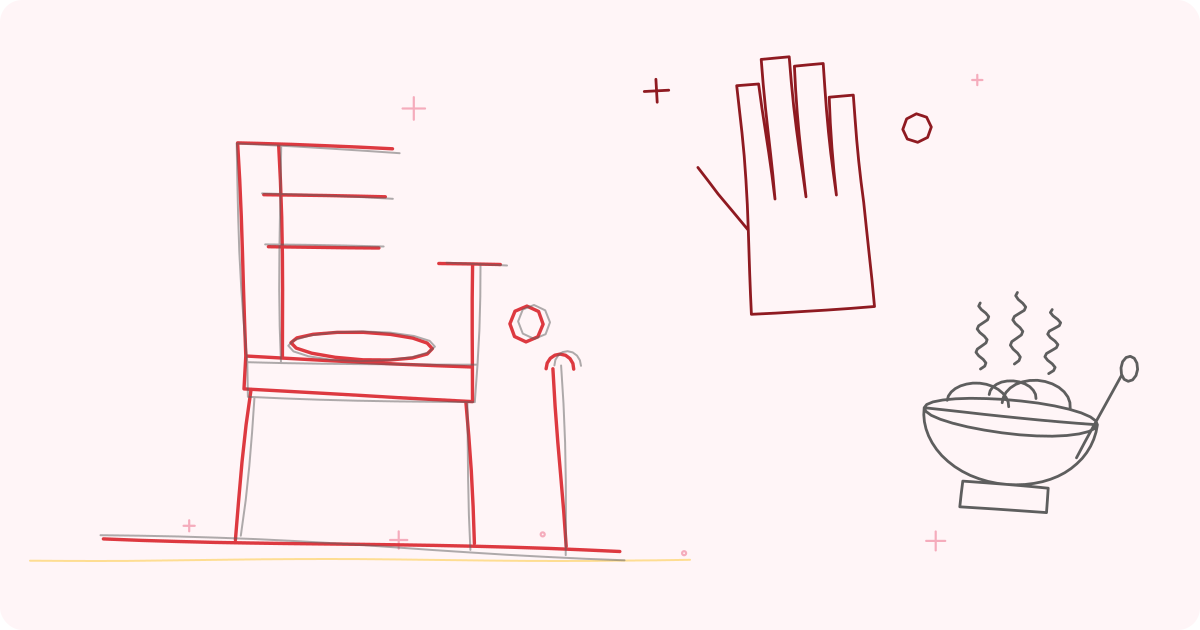
- Sit upright in a firm chair with arms, with feet flat and hips well back; see choosing a chair for an older person.
- Bring the food to you, not you to the food. The table should be at about elbow height, close enough that you do not have to stretch.
- Rest the forearms on the table or the armrests for stability. A damp cloth or a non-slip mat under the elbows helps.
- Support the wrist. Holding the cup or spoon with the elbow tucked in, or resting the wrist on the table edge, reduces shake.
- Use two hands when possible: one to steady the other.
- Keep the plate close and stable with a non-slip mat. A plate with a raised edge or a plate guard helps scoop.
- Use a bowl instead of a plate for soups, porridge and rice dishes; a deep bowl with a wide, heavy base is hard to tip.
- Good lighting, and a plain, contrasting plate so food is easy to see.
- Reduce distraction and rushing. A calm meal is a steadier meal.
Cutlery and aids
See easy-grip cutlery and eating aids for the full range. Options for tremor and weak grip include:
- Built-up or large-handled cutlery, which needs less grip force.
- Weighted cutlery, which dampens tremor for some people, but can tire the arm; try before buying.
- Self-levelling spoons, which keep the bowl of the spoon level despite the shake; more costly, helpful for severe tremor.
- Angled or bendable cutlery for limited wrist movement.
- Straps and cuffs, to hold cutlery to the hand when grip is very weak.
- Spoons with a deep bowl, that hold more and spill less.
- Cups with two handles and a lid, or a weighted base, and a straw or a cup with a spout.
- Non-slip mats under plates, cups and bowls.
- A bowl holder or plate holder that clamps to the table.
- A wrist support for stability; see wrist supports.
- Bedside and lap trays with raised edges; see overbed table guide.
Choose aids that look as normal as possible, and test them in your parent's hand before buying.
Food and serving choices
What and how you serve matters as much as the cutlery.
- Finger foods. Cut sandwiches, chapati strips, idli pieces, small samosas, soft fruit, boiled vegetables and cheese cubes are easy to pick up and need no cutlery.
- Thicker foods stay on a spoon: porridge, thick dal, khichdi, mashed vegetables, curd and thick soups. Thin soups spill more. A little thickening with lentils or mashed potato helps; for people with swallowing problems, do not thicken without a speech therapist's advice; see swallowing difficulties: cups, spoons and meal aids.
- Pre-cut food into bite-sized pieces, discreetly in the kitchen.
- Serve smaller portions, more often, to avoid tiring.
- Use a deep plate or bowl, with the food in the middle.
- Avoid very hot drinks, which can scald if spilled. Let tea cool slightly and fill cups halfway.
- Offer a straw for drinks.
- Mind the temperature of food, because reduced sensation can lead to burns.
- Keep favourite foods, for pleasure.
Timing, medicines and fatigue
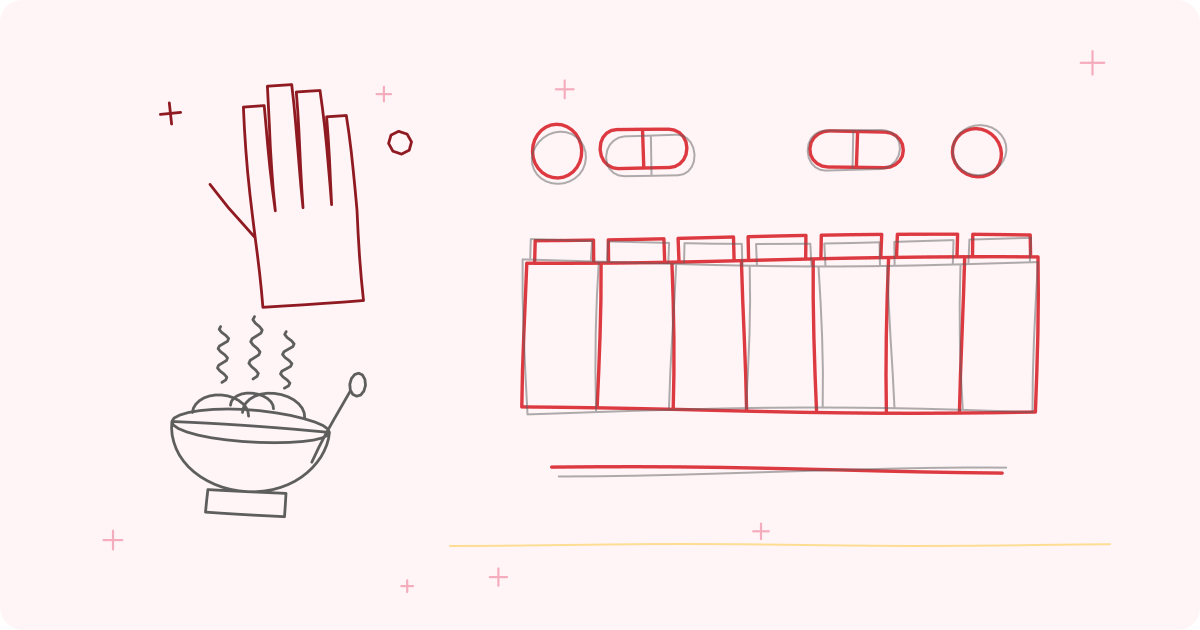
- Medicines. In Parkinson's disease, tremor and stiffness often ease when medicines are working. Plan meals for the "on" period, 30 to 60 minutes after a dose, and take medicines on time. Some medicines interact with protein; follow the doctor's advice and do not change doses; see setting up a weekly medicine box.
- Time of day. Many people are steadier in the morning than the evening.
- Rest before eating. A short rest before a meal helps tired arms.
- Take your time. Allow 30 to 45 minutes for a meal. Rushing makes the tremor worse.
- Caffeine and stress. Too much tea, coffee or anxiety can aggravate tremor; talk to the doctor.
- Several small meals instead of three large ones.
Dignity at the table
Embarrassment is the biggest barrier. Tips:
- Eat together, with relaxed company, and keep conversation light.
- Do not comment on spills. Keep a cloth nearby and wipe discreetly.
- Use a napkin tucked into the collar instead of a bib, if wanted.
- Offer help only when asked, or agree in advance on a signal.
- Avoid feeding unless needed; if a person must be fed, do it slowly, with respect, and let them hold the cup or a piece of bread.
- Dress in dark or patterned clothes if spills worry them.
- Respect preferences, such as eating in a private room.
- Praise independence.
Hand and arm exercises
Gentle exercises, as taught by a therapist, may help grip and control: squeezing a soft ball, putty or a rolled towel, finger stretches, wrist circles and picking up objects of different sizes. Do them daily, in short sessions, without pain. See grip strength and hand exercises for older adults.
A sample mealtime set-up
Put the pieces together and the difference can be large. Seat your parent in a firm chair with arms, pulled close to a table at elbow height. Place a non-slip mat on the table, and on it a deep bowl with a wide base and a spoon with a built-up handle. Put a two-handled mug with a lid and a straw to one side, filled halfway. Lay a plain cloth on the lap and a napkin at the collar, if wanted. Cut chapati into strips and soft fruit into pieces and put them on a small plate with a raised edge. Serve food warm, not scalding. Turn off the television, sit down together and let the meal take its time. Afterwards, ask what worked: was the spoon too heavy, the bowl too far, the cup too full? Change one thing at a time and keep what helps. Within a week or two most families find a set-up that feels natural, and many parents are pleasantly surprised at how much they can do themselves.
When to see a doctor
See a doctor for a new tremor, a tremor that is worsening, tremor with stiffness, slowness or balance problems, new weakness on one side, sudden changes in grip, or a tremor that began after starting a medicine. Treatment depends on the cause, and some causes, such as thyroid disease or medicine side effects, are treatable. Call 112 for sudden weakness, facial droop or slurred speech.
See a doctor or dietician if your parent is losing weight, avoiding meals or coughing or choking when eating; see loss of appetite in older adults and malnutrition in older adults.
Looking after the person, not only the problem
A tremor or weak grip can make people withdraw from company, so watch for signs that your parent is avoiding meals out, refusing invitations or eating alone in a hurry. Mention the embarrassment kindly and offer solutions, such as choosing a restaurant with a quiet corner, taking the favourite cup along or eating at home with the family. Check weight every month, as weight loss often follows difficulty with eating; see weighing scales and unplanned weight loss in older adults. Notice mood, too, because low mood and tremor feed each other. Ask the doctor to review medicines that could cause or worsen a tremor, and never stop a prescribed medicine yourself.
When to ask a professional
An occupational therapist can assess tremor and grip, trial aids and teach strategies. A speech and language therapist assesses swallowing. A neurologist or geriatrician diagnoses and treats tremor. A dietician advises on nutrition. Our care advisors can arrange an occupational therapist visit and supply eating aids.
Equipment mentioned in this guide
Frequently asked questions
How can someone with a tremor eat without spilling?
Sit upright with the forearms supported, use a bowl with a non-slip mat, choose thicker foods or finger foods, and try weighted or self-levelling cutlery and a lidded cup.
Does weighted cutlery help tremor?
It helps some people by damping the shake, but it can tire the arm. Try before buying and ask a therapist.
What foods are easiest with a weak grip?
Finger foods such as sandwiches, chapati strips and soft fruit, and thick foods like porridge and khichdi that stay on a spoon.
Should I feed my parent?
Only if they cannot eat themselves. Let them do as much as they can, and offer help with respect.
When is tremor a sign of something serious?
When it is new, worsening or comes with stiffness, slowness, balance problems or one-sided weakness. See a doctor.
Sources and further reading
- NICE guideline NG71, Parkinson's disease in adults
- Parkinson's UK, information on eating, drinking and tremor
- Royal College of Occupational Therapists, guidance on eating and drinking equipment
- World Health Organization, World report on ageing and health (2015)
Tags: eating with tremorweak grip eatingParkinson's eating aidsessential tremoradaptive cutlerymealtime independenceDaily living aidsEasy-grip cutlery setJoint and pain supportMobility and walking aids
This article is for general education and is not medical advice. Speak to your doctor before changing your exercise, diet or medicines.