Before you set off: a two-minute check
The chair.
- Brakes work on both wheels and, on a transit chair, the hand brakes grip.
- Tyres are firm or in good condition; wheels spin freely.
- Footrests are secure, at the right height and in the right position.
- Armrests and the seat are firmly fixed.
- The folding frame is locked open.
- The cushion is in place, the right way round.
The person.
- Comfortable, sitting well back with hips at the back of the seat.
- Feet on the footplates, not dragging.
- Hands and arms inside the chair, clear of the wheels.
- Clothes, blankets and bags tucked in, with nothing trailing into the wheels.
- Seat belt fastened, if used.
- Glasses, hearing aids, medicines, water and phone in place.
The route.
- Plan the route, and check for kerbs, steps, slopes, narrow doors, lifts and lavatories.
- Choose smooth surfaces and dropped kerbs.
- Allow time; rushing causes accidents.
- Check the weather: rain, heat and glare.
Tell your parent where you are going and warn before any change of direction, stop or bump. Always keep talking in a calm, friendly way.
Basic pushing technique
- Stand upright behind the chair with a wide stance and a straight back.
- Hold both handles firmly with a relaxed grip, elbows slightly bent.
- Push smoothly, using your legs and body weight. Do not jerk.
- Walk at a comfortable pace, matching your parent's comfort. Fast pushing frightens many people.
- Keep the chair straight, and watch for pedestrians, cyclists and obstacles.
- Slow down on corners and turn in wide arcs.
- Do not hang bags on the handles, as they can tip the chair backwards.
- Do not push while talking on the phone.
To turn on the spot, push down slightly on one handle to lift the front castors and swivel on the rear wheels, if the person is secure and you are trained. Otherwise turn in a wide arc.
Stopping and parking
Always apply the brakes when you stop, even briefly, and when the person gets in or out. On a transit chair, press the carer brakes; on a standard chair, lock both wheel brakes. Park on level ground, never on a slope. Do not leave a person alone in a chair on a slope or in traffic. When parking in a car park or street, keep the chair out of the way of traffic.
Kerbs and steps
Kerbs are the greatest hazard for a manual chair. Use a dropped kerb or a ramp if one is available. If you must negotiate a kerb:
Going up a kerb (forward):
1. Approach squarely and stop with the front wheels close to the kerb. 2. Tell your parent what you are about to do. 3. Press down on the tipping lever, if the chair has one, or on the back of the frame, with your foot, to tilt the chair back slightly so that the front wheels lift. 4. Roll forward until the front wheels are on the kerb, and lower them gently. 5. Push forward until the rear wheels touch the kerb; lift the handles slightly, and push the rear wheels up.
Going down a kerb (backwards):
1. Turn the chair around so that you descend backwards, which is safer than going forward. 2. Back slowly until the rear wheels reach the edge; lower them gently, while keeping a firm hold. 3. Continue back until the front wheels reach the edge, tilt the chair back slightly and lower the front castors.
Tilting back is a technique that needs practice and a person who is secure in the chair; a seat belt and anti-tippers help. Many people need a helper for kerbs and for any step. Do not attempt a tilt if the person is heavy, if you are not trained or have a bad back; go another way.
Stairs. A wheelchair cannot be pushed up or down stairs safely by one person. Use a lift, a ramp, a stair lift or a platform, or ask for trained help, with the user transferred if they can. Never try to carry a person in a chair downstairs.
Slopes and ramps
Going up a slope: lean forward slightly and push steadily. If the slope is steep and you tire, stop and apply the brakes.
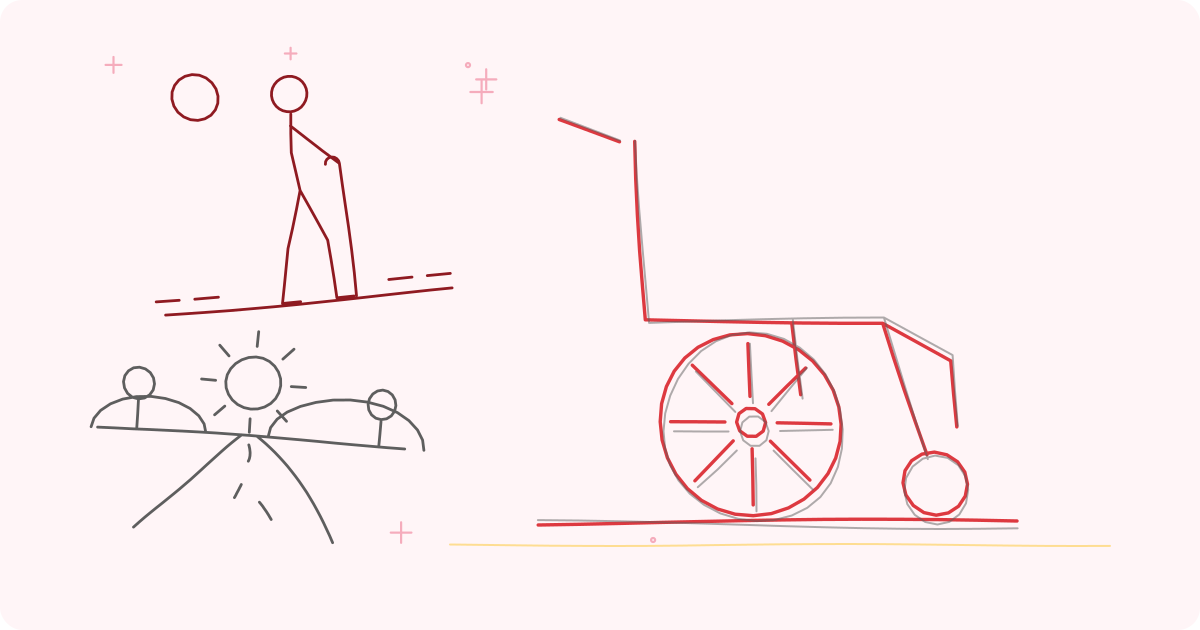
Going down a slope: for gentle slopes, go forward with the brakes lightly engaged and your body leaning back. For steeper slopes, going down backwards gives better control because the heavier part of the chair faces downhill; keep the person's weight to the rear. Never let go.
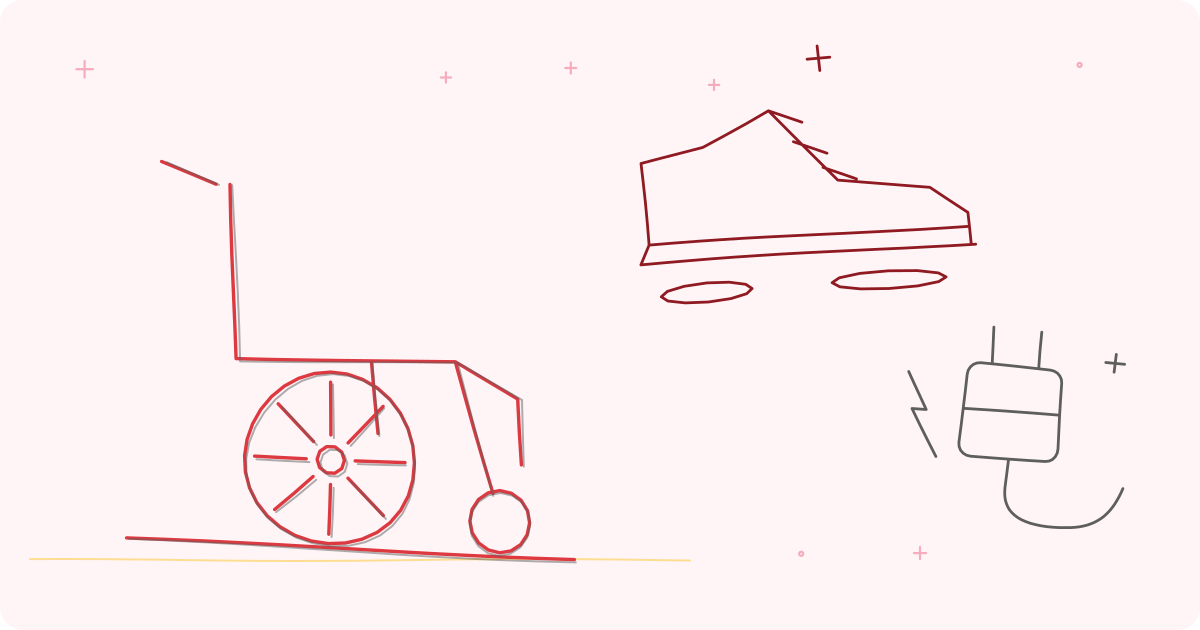
Ramps: a good ramp has a gradient of no steeper than about 1 in 12 (about 5 degrees), with side edges and a non-slip surface. If the ramp is steeper, two people may be needed. Check if a ramp is safe before using it. See portable ramps for thresholds.
Cross-slopes: a camber or tilted pavement makes the chair drift to one side. Push gently against the pull.
Doorways, corridors and lifts
- Doors. Check the width; the chair needs about 75 to 80 cm. Open the door, hold it open with your hip or an assistant, then push through slowly, watching hands and feet. Heavy doors with closers are a hazard.
- Narrow corridors. Push slowly and keep the elbows in. Warn people ahead.
- Lifts. Enter backwards if the lift is small, so you and your parent face the door when leaving. Apply brakes inside. Do not stand behind the chair if there is not enough room; ask for space.
- Thresholds. Tilt the chair slightly to lift the front castors over small thresholds, or use a threshold ramp.
Transfers: in and out of the chair
Transfers are the riskiest moments. Always:
1. Position the chair next to the bed, seat or toilet, at a slight angle. 2. Apply the brakes. 3. Lift the footrests away, or swing them aside. 4. Use a transfer belt or follow a therapist's technique; see how to use a transfer belt. 5. Do not lift the person's full weight. If they cannot bear weight, use a hoist or a slide board with trained help. 6. Check that the person is seated well back before moving.
For car transfers, see wheelchair and car travel and getting an elderly person in and out of a car.
Weather and terrain
Heat. Take water, use a hat or umbrella, and rest in the shade. Metal parts can be hot. See heat stroke and dehydration in seniors.
Rain and wet ground. Wet wheels slip on slopes and brakes lose grip. Avoid puddles, drains and mud. Dry the chair after use.
Gravel, sand and grass. Small front castors sink; tilt the chair back slightly and push on the rear wheels, or find another route.
Crowds. Keep close to the edge, warn others and keep your voice calm.
Night. Use reflective strips and lights, and avoid dark paths.
Protecting your own back
Many family carers hurt their backs. To protect yourself:
- Keep a straight back and bend your knees, not your waist.
- Keep close to the chair when tilting.
- Use your legs to push, not your arms.
- Avoid twisting; move your feet.
- Do not push heavier loads than you can manage. If the person is very heavy, ask for a powered chair or a helper.
- Take rests on long outings.
- Share the load. Rotate pushers among family members.
- Stay fit. Core and leg exercises help.
- Seek help if you have back pain.
Common mistakes
- Forgetting the brakes during transfers or when stopping.
- Footrests left down when the person stands, causing trips.
- Hanging bags on the handles, tipping the chair back.
- Going forward down a steep slope.
- Tilting without warning or without training.
- Leaving the person on a slope or in traffic.
- Going too fast over bumps and cracks.
- Ignoring the person's comfort, such as pressure, heat or fatigue.
- Trying to lift the person alone.
Care of the person in the chair
Check comfort every hour: position, pressure, thirst, toilet needs and temperature. For long periods in a chair, make sure there is a good cushion and arrange regular weight shifts; see pressure care in a wheelchair. Keep medicines, a card with emergency contacts and a phone accessible.
When to ask a professional
An occupational therapist or physiotherapist can teach safe pushing, tilting and transfers in your own home and outdoors, and can check the chair's fit. Seek training if your parent is heavy, has complex needs or if you are new to caring. Our care advisors can arrange training and a trained companion for outings. Ask a doctor about any pain, skin changes or breathlessness that your parent has in the chair.
Equipment mentioned in this guide
Frequently asked questions
How do I push a wheelchair up a kerb?
Approach squarely, tilt the chair back by pressing the tipping lever with your foot so the front wheels lift, roll them onto the kerb, then lift and push the rear wheels up. Use a dropped kerb or ramp if you can, and get training first.
Is it safer to go down a slope forwards or backwards?
For steep slopes, backwards gives more control because the heavier part of the chair faces downhill. For gentle slopes, forwards with light braking is fine.
Can one person push a wheelchair up stairs?
No, it is unsafe. Use a lift, ramp or a stair lift, or ask for trained help.
How can I protect my back when pushing?
Keep a straight back, bend your knees, stay close to the chair, push with your legs, avoid twisting and share the task. Do not push more than you can manage.
What should I check before each outing?
Brakes, tyres, footrests, cushion and seat belt, plus the route and the weather. Make sure the person is comfortable and clothes are clear of the wheels.
Sources and further reading
- Health and Safety Executive (UK), guidance on moving and handling and wheelchair pushing
- World Health Organization, Wheelchair Service Training Package
- Chartered Society of Physiotherapy and College of Occupational Therapists, guidance on safe wheelchair use
- NHS wheelchair service information on pushing a wheelchair
Tags: pushing a wheelchairwheelchair safetycarer techniquekerbs and rampswheelchair brakescaregiver back safetyWalking and mobility aidsManual wheelchairMobility and walking aidsBathroom and toilet safety
This article is for general education and is not medical advice. Speak to your doctor before changing your exercise, diet or medicines.