What is normal
Bowel habits vary widely. Normal can be anything from three bowel movements a day to three a week, provided that stools are soft, easy to pass and without pain or straining. What matters is a change from the person's usual pattern. Constipation means passing hard, dry stools, straining, a feeling of incomplete emptying, fewer than three motions a week or needing to use fingers or other help. The Bristol stool chart describes seven types, from hard lumps (type 1) through sausage-shaped (types 3 and 4, ideal) to watery (type 7). Ask the doctor or nurse for a copy, and use it in the diary.
Why constipation is common in older adults
- Low fluid intake, since thirst fades with age and people may drink less to avoid the toilet; see hydration for older adults.
- Low fibre from soft or limited diets, poor teeth or low appetite.
- Less movement, sitting or bed rest.
- Medicines: painkillers (especially opioids), iron tablets, calcium supplements, some blood pressure medicines (calcium channel blockers), anticholinergic drugs (for bladder, some antidepressants, antipsychotics), diuretics and antacids with aluminium or calcium. Do not stop any medicine; ask the doctor.
- Illnesses: diabetes, thyroid disease, Parkinson's disease, stroke, dementia, depression and spinal problems.
- Ignoring the urge because the toilet is far, difficult, unclean or lacks privacy.
- Poor toilet position, such as a high seat without a footrest, or a bed pan.
- Weak pelvic and abdominal muscles.
- Bowel changes or obstruction, including cancer (see red flags).
- Misuse of laxatives.
See constipation in older adults and psyllium husk guide.
Faecal impaction and overflow
When stool remains in the rectum, it becomes harder as water is absorbed, forming a hard mass that the person cannot pass. The rectum stretches and loses its sensation and the sphincter relaxes. Liquid stool from above leaks around the mass, causing overflow incontinence, often with soiling of underwear, a smell and no solid stool passed. Signs:
- Small, frequent, loose, sticky or watery leaks, with no normal motion.
- A feeling of fullness in the rectum or abdomen, pain, bloating or cramping.
- Poor appetite, nausea or vomiting.
- Restlessness, agitation or confusion in older adults, especially with dementia.
- Urinary problems, since a loaded rectum presses on the bladder, causing retention or leaks; see incontinence in older adults: causes and types.
- A hard mass felt on rectal examination by a doctor.
Impaction needs medical treatment, usually with suppositories, enemas or manual removal by a nurse or doctor, followed by a regimen to prevent recurrence. Do not use anti-diarrhoea medicines when you suspect overflow; see a doctor.
Other causes of bowel incontinence
- Weak anal sphincter muscles, from age, childbirth injury, surgery or nerve damage.
- Diarrhoea, from infection, medicines, food intolerance, bowel disease or laxatives; see diarrhoea and dehydration in seniors.
- Nerve damage from diabetes, stroke, spinal injury or Parkinson's disease.
- Dementia, where the person does not recognise the urge or toilet; see incontinence and dementia: routines and reassurance.
- Reduced mobility, and inability to reach the toilet in time.
- Rectal prolapse, haemorrhoids or other anal problems.
- Bowel disease, such as inflammatory conditions or radiation damage.
- Medicines, including laxatives, metformin, some antibiotics and others.
Building a bowel routine
1. Keep a bowel diary for a week: date, time, stool type, effort, leaks, medicines, drinks and meals. This helps the doctor. 2. Use the natural reflex: the bowel is most active after meals, especially breakfast, and after a hot drink. Encourage a toilet visit 15 to 30 minutes after a meal, every day at the same time, and stay for about five to ten minutes without straining. Do not rush. 3. Respond to urges promptly. Do not delay. 4. Make the toilet comfortable: warm, private, with good lighting and a clean seat; see raised toilet seat guide and commode chair guide. 5. Use a good position (see below). 6. Stay patient: a routine takes weeks to establish. 7. Do not strain, which can cause haemorrhoids, raise blood pressure and strain the heart; people with heart disease or after surgery must avoid it.
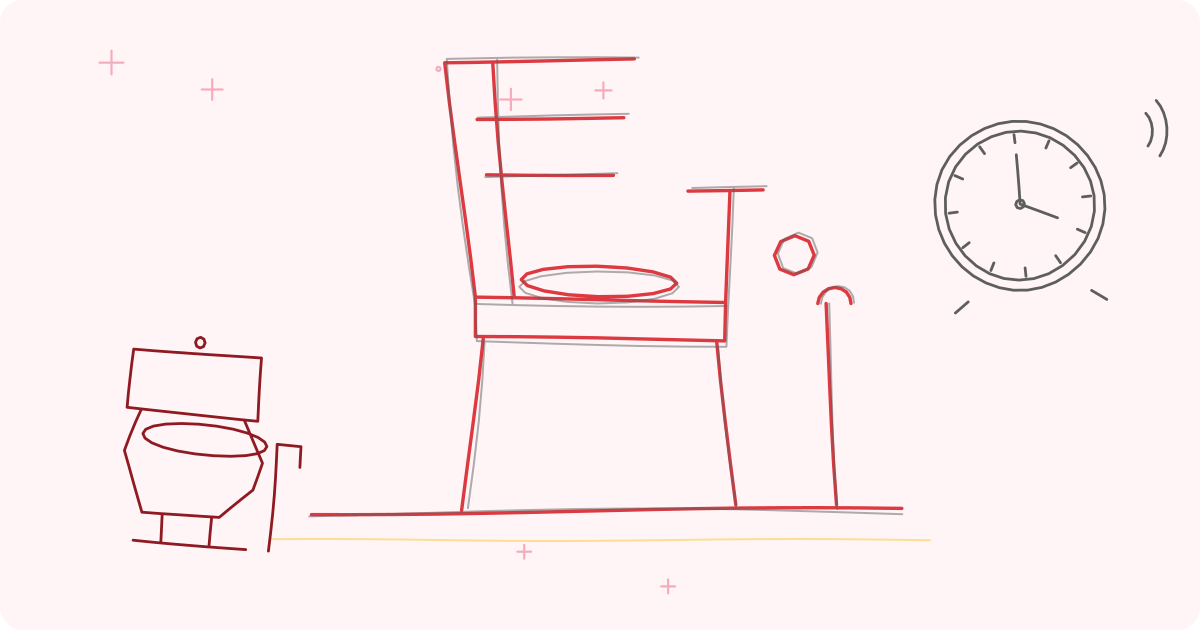
Toilet position
The anorectal angle opens best in a squatting-like posture. On a Western toilet or commode:
- Put the feet on a small stool, so that the knees are higher than the hips.
- Lean forward slightly, with a straight back and forearms resting on the thighs.
- Relax the belly, breathe slowly and avoid holding the breath.
- Do not use a bed pan unless necessary; see bed pans: types and how to use them.
Indian-style (squat) toilets are naturally good for the position but hard for older knees and balance; see Indian-style toilet to western conversion.
Diet, fluids and activity
- Fluids: aim for about 1.5 to 2 litres a day, spread through the day, unless restricted by the doctor. Warm drinks in the morning can stimulate the bowel.
- Fibre: gradually increase fibre from fruit (papaya, banana, guava, prunes), vegetables, whole grains (whole wheat, oats, ragi, jowar, bajra), pulses and lentils, nuts and seeds. Increase slowly and with plenty of fluids; a sudden rise in fibre without fluids can worsen constipation, bloating and gas. Dietary fibre of about 25 to 30 grams a day is a general target for healthy adults, but older adults with small appetites may need to build up gradually, with a dietician's help.
- Soluble fibre supplements such as psyllium can help some people; see psyllium husk guide, but they must be taken with enough water and are not suitable for everyone (for example in swallowing difficulty or intestinal narrowing). Ask the doctor.
- Limit foods that constipate a particular person, such as excess rice, processed foods, white bread and too much tea.
- Movement: walking, chair exercises and changing position; see chair exercises for seniors and walking programme for older adults. Even small amounts help.
Laxatives and other medicines
Laxatives are a medical decision in older adults. They differ:
- Bulk-forming (fibre) agents, taken with water.
- Osmotic laxatives that draw water into the stool (such as lactulose or macrogols), commonly used and generally safe when prescribed.
- Stimulant laxatives that trigger the bowel.
- Stool softeners.
- Suppositories and enemas, which act in the rectum.
Do not start, change, double or stop laxatives, suppositories or enemas on your own. Overuse can cause diarrhoea, dehydration, electrolyte problems, dependence and leakage. Enemas can be dangerous in some people. Ask the doctor or pharmacist, and tell them about all medicines. Do not use mineral oil or herbal laxatives (such as senna products, castor oil or others) without advice, as some are harmful in older adults or interact with medicines. If your parent takes a medicine that constipates, ask the doctor whether alternatives exist; do not stop it yourself.
Managing leakage and protecting skin
- Offer the toilet at regular times, especially after meals.
- Use pads or pull-ups as a safeguard; see pull-ups or briefs: choosing the right product and choosing incontinence products by situation.
- Clean gently and promptly after every leak, from front to back, with warm water or alcohol-free wipes; see wipes and perineal hygiene done gently.
- Protect skin with a thin barrier cream; see barrier creams and skin care under pads and incontinence-associated skin damage: prevention and care. Stool is the most damaging substance for skin.
- Change bedding and clothes quickly, and control odour; see disposal, laundry and odour control.
- Treat haemorrhoids and anal soreness as the doctor advises.
- Pelvic floor and sphincter exercises may help selected people with weak sphincters, taught by a physiotherapist; see pelvic floor exercises for older adults. Biofeedback is available in some centres.
Red flags: see a doctor promptly
- Blood in the stool, black tarry stool, or blood on the paper.
- A change in bowel habit lasting more than a few weeks, especially in someone over fifty, such as new constipation, alternating diarrhoea and constipation, or thin stools.
- Unexplained weight loss, loss of appetite or tiredness.
- Severe or persistent abdominal pain, swelling or vomiting.
- No bowel movement and no gas passed for several days, with a swollen, painful abdomen or vomiting (possible obstruction): call 112.
- Persistent diarrhoea lasting more than a few days, or with fever, blood or dehydration; see diarrhoea and dehydration in seniors.
- Sudden loss of bowel and bladder control with weakness or numbness in the legs or the groin area: an emergency (possible spinal cord or nerve compression); call 112.
- Pain on passing stool, or a lump at the anus.
- Confusion or agitation with constipation.
- New bowel incontinence after a fall or stroke.
When to ask a professional
Ask the doctor to assess constipation or bowel leakage, review medicines, examine for impaction and recommend a safe regimen. Ask a dietician for fibre and fluid advice suited to your parent. Ask a continence nurse or physiotherapist for routines, exercises and products. Ask a pharmacist about laxative safety. Seek urgent help for blood in the stool, severe pain, vomiting, a swollen abdomen, no stool or gas, or sudden loss of bowel and bladder control with leg weakness or numbness; call 112 if severe.
Equipment mentioned in this guide
Frequently asked questions
Why does my mother leak liquid stool when she is constipated?
Hard stool can block the rectum, and liquid stool seeps around it (overflow). See a doctor; do not give anti-diarrhoea medicines.
How much fibre and fluid does an older adult need?
Roughly 1.5 to 2 litres of fluid and gradually increased fibre, about 25 to 30 grams a day for many adults, unless the doctor limits fluids or advises otherwise. Increase slowly.
Is it safe to give laxatives at home?
Only those advised by a doctor or pharmacist. Misuse can cause dehydration, diarrhoea and leakage.
What is the best toilet position?
Feet on a small stool, knees above the hips, leaning forward with a relaxed belly, and no straining.
When is bowel change serious?
Blood in stool, weight loss, persistent change in habit, severe pain or vomiting need prompt medical review.
Sources and further reading
- National Institute for Health and Care Excellence, CG49 Faecal incontinence in adults: management
- National Institute for Health and Care Excellence, Clinical Knowledge Summary: Constipation
- World Gastroenterology Organisation, global guideline on constipation
- World Health Organization, World report on ageing and health (2015)
Tags: bowel incontinenceconstipationfaecal impactionoverflow diarrhoeabowel routinestool leakagetoilet positionIncontinence and hygieneBathroom and toilet safetyHealthy ageing
This article is for general education and is not medical advice. Speak to your doctor before changing your exercise, diet or medicines.