Why people miss doses
- Memory changes, both normal ageing and dementia; see memory and brain health.
- Complex regimes. Many medicines at different times, with different rules.
- No routine. Doses tied to nothing in the day.
- Feeling well. People stop medicines for blood pressure, cholesterol or sugar because they do not feel ill.
- Side effects, real or feared.
- Cost, supply and running out.
- Poor eyesight or hands, making labels hard to read and packets hard to open.
- Confusion after hospital, when medicines have changed.
- Depression and low motivation.
- Beliefs about medicines, including worries about dependence or "chemicals".
Look for the real reason before you choose a fix. If your parent is skipping doses because of a side effect, no alarm will help; the doctor needs to know.
Start with the simplest regime
The fewer doses a day, the fewer to forget. Ask the doctor or pharmacist whether:
- any medicines can be taken together at the same time;
- long-acting versions are available to reduce doses;
- any medicine is no longer needed; see polypharmacy and deprescribing; and
- the timing can match meals and routines.
Never change timing or stop a medicine without asking. A simpler regime is the most powerful reminder of all.
Build on routines
Doses stick when they are attached to something that happens every day without fail.
- Morning: after brushing teeth, with the first cup of tea or breakfast.
- Midday: with lunch, or after the prayer or the news.
- Evening: with dinner or a favourite programme.
- Bedtime: after the last cup of water, or when turning off the lamp.
Place the medicine box where that activity happens: next to the kettle, on the dining table or by the bed. A visible box is a cue. Keep a glass of water with it.
Tools that help
### A pill organiser
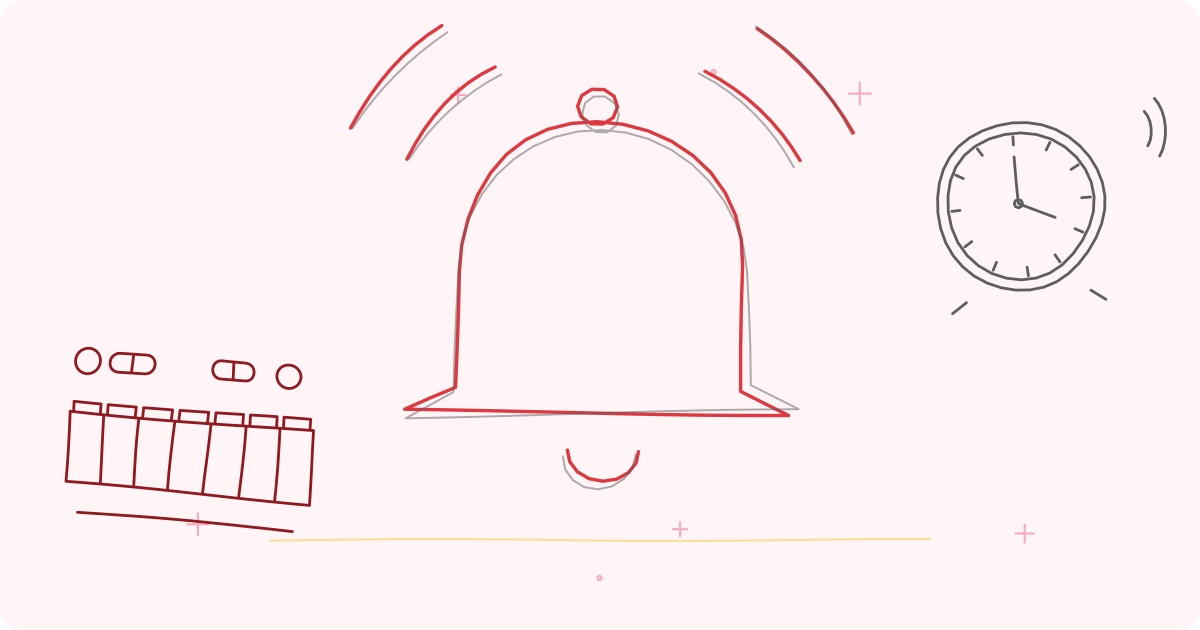
Fill weekly; see pill organisers and setting up a weekly medicine box. The empty compartment shows what has been taken.
### Alarms and timers
- Alarm pill boxes that beep or flash at set times.
- Phone alarms with a label, such as "Blood pressure tablet".
- Talking clocks and reminder clocks that announce times and messages; see talking clocks for low vision and dementia.
- Smart speakers that can announce reminders by voice.
- Kitchen timers, simple and loud.
Keep the alarm simple, loud enough and not easily switched off by mistake. Too many alarms are ignored.
### Charts and checklists
A large tick chart on the fridge or beside the box, with days and times, gives a visible record. Use a pen on a hook. A family member can look at it on each visit.
### Phone calls and messages
A short daily call at medicine time from a son, daughter or friend is one of the most effective reminders, and it keeps contact too. Video calls let you see the pill box. A message group can share the job among siblings. For a parent abroad or in another city, see caring for parents from afar and long-distance caregiving for NRIs.
### Neighbours, helpers and attendants
A trusted helper can prompt, watch and report. Give them a written list of the doses and the instructions, and agree what to do about a missed dose. See hiring a home attendant: a checklist.
### Smart and locked dispensers
Automatic dispensers release the right dose at the right time and lock the rest. Some alert a family member if a dose is missed. They suit people with dementia who might take extra doses, but they need setting up, reliable power and a carer to fill them.
### Pharmacy packs
Some pharmacies prepare multi-dose packs with each dose labelled by day and time. Ask whether this is available.
Large print and clear labels
- Ask the pharmacist for large-print labels.
- Write the purpose beside the name, for example "blood pressure" or "sugar".
- Use colour codes or symbols for morning, noon, evening and night, such as a sun and a moon.
- Keep a medicine list in large print.
- Open packets and loosen caps for people with arthritis; see jar openers and kitchen aids.
- Good lighting; see reading lamps.
What to do about a missed dose
A missed dose is not an emergency, but it needs a plan. Because the right action depends on the medicine, ask the pharmacist or doctor for a rule for each important medicine, and write it down. As a general principle:
- Do not double up unless told to.
- Do not take a missed dose very close to the next one.
- For some medicines, such as insulin, anticoagulants and Parkinson's medicines, timing is critical; ask in advance what to do.
- Tell the doctor if doses are missed often.
Check the pill box for the missed dose, and record it.
Preventing double dosing
Forgetful people sometimes take a dose, forget and take it again. To prevent this:
- Use a weekly organiser, so empty compartments are visible.
- Use a chart to tick each dose.
- Keep the box out of reach between dose times, if there is a risk.
- Use a locked dispenser if the risk is high.
- Have a carer hand out the doses.
Call the pharmacist or doctor at once if you think a double dose has been taken, and call 112 for serious symptoms.
Check that medicines are working
Reminders ensure doses are taken; checks show whether they work. Keep simple records of blood pressure, sugar or weight, as the doctor advises, and bring them to appointments; see blood pressure monitors and keeping a health record at home. Report side effects such as dizziness, falls, confusion, bleeding or stomach upset.
When reminders are not enough
If your parent cannot manage, even with reminders, a carer must give the doses. Signs include repeated missed or double doses, confusion about what each tablet is, refusal, inability to open packages or to read labels, hoarding of tablets and medicines in odd places. Options:
- a family member or attendant giving each dose;
- a nurse visit to set up and check; or
- a care arrangement with daily support.
See giving medicines safely at home and dementia and medicines at home. Respect and involve your parent as far as possible.
Safety
- Keep medicines out of reach of children and visitors.
- Store in a cool, dry place away from sun, not in the bathroom.
- Check expiry dates monthly, and dispose of old medicines through a pharmacy.
- Remove stopped medicines from the house.
- Never share medicines.
- Do not crush or split tablets unless the pharmacist says it is safe.
- Keep a list of medicines and allergies in the wallet or phone.
When to ask a professional
Ask the pharmacist to review the regime and the reminder system. Ask the doctor for a medicines review at least yearly and after any hospital stay, and tell them if doses are being missed. A nurse can visit to set up the system. A memory assessment is wise if forgetfulness is growing; see mild cognitive impairment. Our care advisors can arrange daily support and reminder calls.
Equipment mentioned in this guide
Frequently asked questions
How can I remind my forgetful parent to take medicines?
Tie doses to daily routines, use a weekly pill box, add an alarm or a daily phone call, and keep a tick chart. Simplify the regime with the doctor.
What if my parent takes medicines twice by mistake?
Call the pharmacist or doctor straight away, and call 112 for serious symptoms. Use a weekly box, a chart or a carer to prevent it.
Should I just give the medicines myself?
If reminders fail, a carer should give them. Involve your parent as far as possible and keep their dignity.
What should I do if a dose is missed?
Do not double up. Ask the pharmacist or doctor for a rule for each important medicine and tell the doctor if it happens often.
Can technology help?
Yes: alarm pill boxes, phone alarms, smart speakers and locked dispensers help, but they need setting up and checking.
Sources and further reading
- World Health Organization, Adherence to long-term therapies: evidence for action (2003)
- NICE guideline NG5, Medicines optimisation: the safe and effective use of medicines
- Royal Pharmaceutical Society (UK), guidance on medicines adherence and compliance aids
- Alzheimer's Society, information on managing medicines in dementia
Tags: medicine remindersforgetful parent medicinesmedication adherencepill reminder alarmmemory loss medicinescaregiver medicine routineDaily living aidsWeekly pill organiser with alarmSafety and alert devicesHealth monitoring devices
This article is for general education and is not medical advice. Speak to your doctor before changing your exercise, diet or medicines.