What a door sensor does
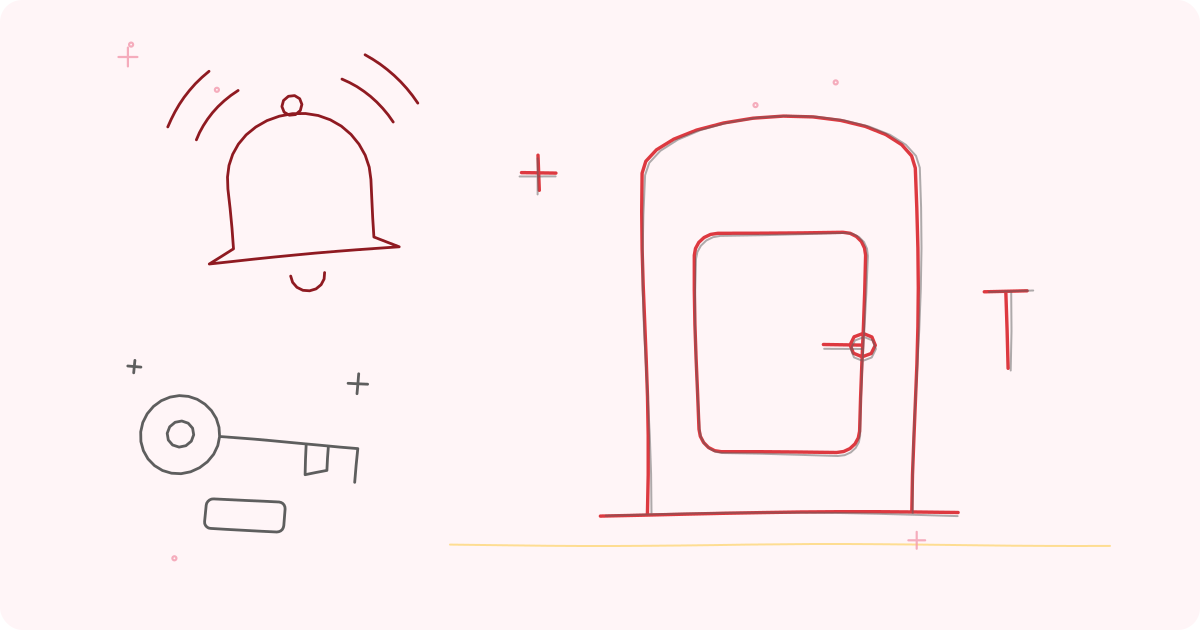
Most door sensors have two parts: a small magnet on the door and a sensor on the frame. When the door opens and the parts separate, the sensor sends a signal. Depending on the model it may:
- sound a chime or alarm on the sensor or a separate receiver in another room;
- send a notification to a phone through an app, over wifi or a mobile network;
- turn on a light or other device;
- log the time of each opening, which helps show patterns.
Other related devices include motion sensors that detect movement in a room or corridor, bed and chair sensors that detect when a person gets up, pressure mats by the bed or door, and smart plugs and lights that work with them. For a broader view, see night safety for a parent alone and wandering and dementia safety.
Who may benefit
- A person with dementia who wanders, exits at night or is at risk of getting lost.
- A person with confusion or delirium after illness or surgery.
- Someone at risk of falls at night, where an alert when they get up allows a carer to help; see night-time toilet trips and falls.
- A person who lives alone and whose family wants to know that the door has been opened in the morning as a sign of normal routine, with consent.
- A person with epilepsy or fainting spells who may be at risk outdoors.
- A household where children may also leave unsafely.
- A person who needs reminders to close the balcony or terrace door.
Types of door sensor and alert
Chime sensors. A sensor that sounds a tone on the spot or at a plug-in receiver when the door opens. Low cost and simple. The tone alerts someone in the next room. Good for a joint family or a carer sleeping nearby.
Wireless sensor with a receiver. The sensor sends a radio signal to a receiver that can be placed in the carer's bedroom or kitchen, with a louder tone or a light. A range of tens of metres is common; check the range through walls.
Wifi sensors with phone alerts. Send a message to one or more phones. Useful for family members who live elsewhere, but depend on wifi, a working router and power. In a power cut or router failure, there may be no alert. Check for battery backup.
SIM-based sensors and hubs. Use the mobile network rather than home wifi. More robust, but need a SIM and credit.
Smart home systems. Sensors linked to a hub, with scenes and schedules. They can be powerful but complex, and may be too confusing for some families.
Door alarms with an audible siren. A loud alarm that sounds when the door opens, scaring off an intruder and alerting the household. A loud siren may frighten a confused person; use with care.
Magnetic contact sensors for windows and balcony doors. The same device on a different opening.
Motion sensors and bed sensors. Useful when the aim is to know that the person is up, before they reach the door. A bed sensor alerts a carer when the person leaves the bed; see bed safety for restless sleepers.
GPS trackers and wearable alarms work outdoors and complement door sensors; see GPS trackers for seniors.
What to look for
- Reliable detection on your type of door: wooden, steel, grille or sliding. Check the gap between magnet and sensor, which should be a few millimetres to a couple of centimetres.
- Easy installation with adhesive pads, or screws if fixed. Adhesive may fail on rough, humid or dusty surfaces; clean the surface well.
- Loud, clear chime or alert, adjustable volume, and a different tone for different doors.
- Delay and arm/disarm controls. A delay before sounding lets a family member enter without an alarm. A schedule that is active only at night can reduce false alarms.
- Battery life and clear low-battery warning; see safety device batteries and checks.
- Backup during power cuts: battery-powered sensors and receivers keep working. Wifi hubs do not unless backed up.
- Range and signal strength, especially in apartments with thick walls.
- Tamper detection, if a confused person may remove the sensor.
- Privacy features: check what data the app stores and who can see it.
- Quality and support. See spotting fake or poor quality care products.
Where to place sensors
Think like the person who might wander.
- Front door, the main exit.
- Back door, kitchen door and balcony or terrace doors. Many wanderers use the door nearest the bedroom, or the one with a familiar view.
- Bedroom door, to know when the person gets up at night.
- Bathroom door, if you want to know about long stays, with great care about privacy; see below.
- Gate or stairwell door in a house or apartment block.
- Windows on upper floors if climbing is a risk.
- Medicine cabinet or kitchen cabinet if access is dangerous.
Place the sensor high on the door frame, out of the person's usual sight line, or disguise it. A visible, blinking device may draw attention.
Setting up the response
A sensor is only useful if someone responds.
1. Decide who responds, and where the receiver sounds: next to the carer's bed, in the kitchen, or on phones. 2. Set up more than one recipient if possible, so the alert is not missed. 3. Agree on the action: go to the door, speak gently, guide the person back or on their errand, and check for safety; see responding to an alert: who does what. 4. Prepare for exit at night: a coat, slippers, a torch, a way to guide the person calmly. Do not argue or scold. Join them, walk with them and gently redirect. 5. Plan for no response: if you cannot find the person, search nearby quickly, alert neighbours and security, and call 112. See wandering and dementia safety. 6. Use a GPS tracker or ID bracelet in case the person leaves; see GPS trackers for seniors. 7. Test weekly by opening the door and confirming the alert sounds and is heard.
Managing false alarms
A sensor that sounds every time a family member walks in becomes a nuisance.
- Use arm and disarm features or schedules (for example active from 10 pm to 6 am).
- Use a short delay so that known people can disarm.
- Reposition if the door moves in wind or the magnet is misaligned.
- Use a chime on the door only for the person at risk, not for the whole household.
- Keep the sensor clean and dry, and replace weak batteries.
- Explain to the household how it works.
- Keep a log of alerts and review.
Fire safety and locks: critical
Never use a door sensor as a reason to lock a person in, and never block a fire exit. Doors must be able to be opened quickly from inside in a fire or emergency by everyone in the household. Locks, bolts and keys should not trap anyone. If you must use extra locks, such as a high bolt, make sure a responsible adult is always present, that the household knows the location of keys and that you follow fire safety advice; see lock and door safety for seniors and smoke and gas safety for older adults. Deliberately confining a person is a form of restraint and has ethical and legal implications; discuss with the doctor.
Privacy, dignity and consent
A door sensor records when a person comes and goes. For someone with capacity, this is personal information. Respect their rights.
- Talk with your parent and explain the purpose: safety, not control. Obtain consent where they can give it.
- Be open about what is recorded and who sees it.
- Limit access to those who need it, and do not share data casually.
- Avoid sensors in bathrooms and bedrooms unless there is a clear safety need, and discuss it first.
- Use the least intrusive option that does the job. A chime in the carer's room may be enough; a phone log of every door opening may not be needed.
- For a person lacking capacity, decisions should be made in their best interests, involving the doctor and family, and reviewed regularly.
- Review when circumstances change; remove sensors when no longer needed.
What a door sensor cannot do
It cannot stop someone leaving, cannot find them when they have gone, and cannot work without power or battery, a signal and a responder. A person can leave through a window or a door without a sensor. It does not treat the reason for wandering, which may be pain, boredom, fear, a need for the toilet, or a routine from the past. Combine with a good daily routine, activity and medical review; see dementia daily routines, dementia sundowning and dementia home setup. No device removes the need for supervision where supervision is needed.
When to ask a professional
Ask a doctor or memory clinic if your parent is wandering, newly confused or restless at night, since causes such as infection, pain or medicines can be treated. An occupational therapist can advise on home safety and equipment. Dementia support organisations offer advice for families. For information on services for senior citizens, call Elderline 14567. If someone is missing or in danger, call 112.
Equipment mentioned in this guide
Frequently asked questions
Can a door sensor stop my father leaving the house?
No. It alerts you when a door opens, so that you can respond. It is not a lock, and doors should never be locked in a way that traps a person.
Will it work in a power cut?
Battery-powered sensors and receivers usually do. Wifi-based ones need a working router and power, unless backed up. Check how your system behaves.
Where should the alert sound?
Where a responsible person will hear it: the carer's bedroom or phone. A loud siren in the patient's room may frighten them.
Is it right to use a sensor without telling my mother?
Not usually. Open discussion and consent respect her dignity and build trust. If she lacks capacity, involve the doctor and decide in her best interests, with the least intrusive method.
Sources and further reading
- NICE guideline NG97, Dementia: assessment, management and support for people living with dementia and their carers
- Alzheimer's Society (UK), guidance on walking about and assistive technology for people with dementia
- Alzheimer's and Related Disorders Society of India, information for families caring for people with dementia
- Ministry of Social Justice and Empowerment, Government of India, information on Elderline, the national helpline for senior citizens (14567)
Tags: door sensordoor alarmwandering alertnight wanderingdoor chimedementia door safetySafety and alert devicesDoor and motion sensorBathroom and toilet safetyHealthy ageing
This article is for general education and is not medical advice. Speak to your doctor before changing your exercise, diet or medicines.