
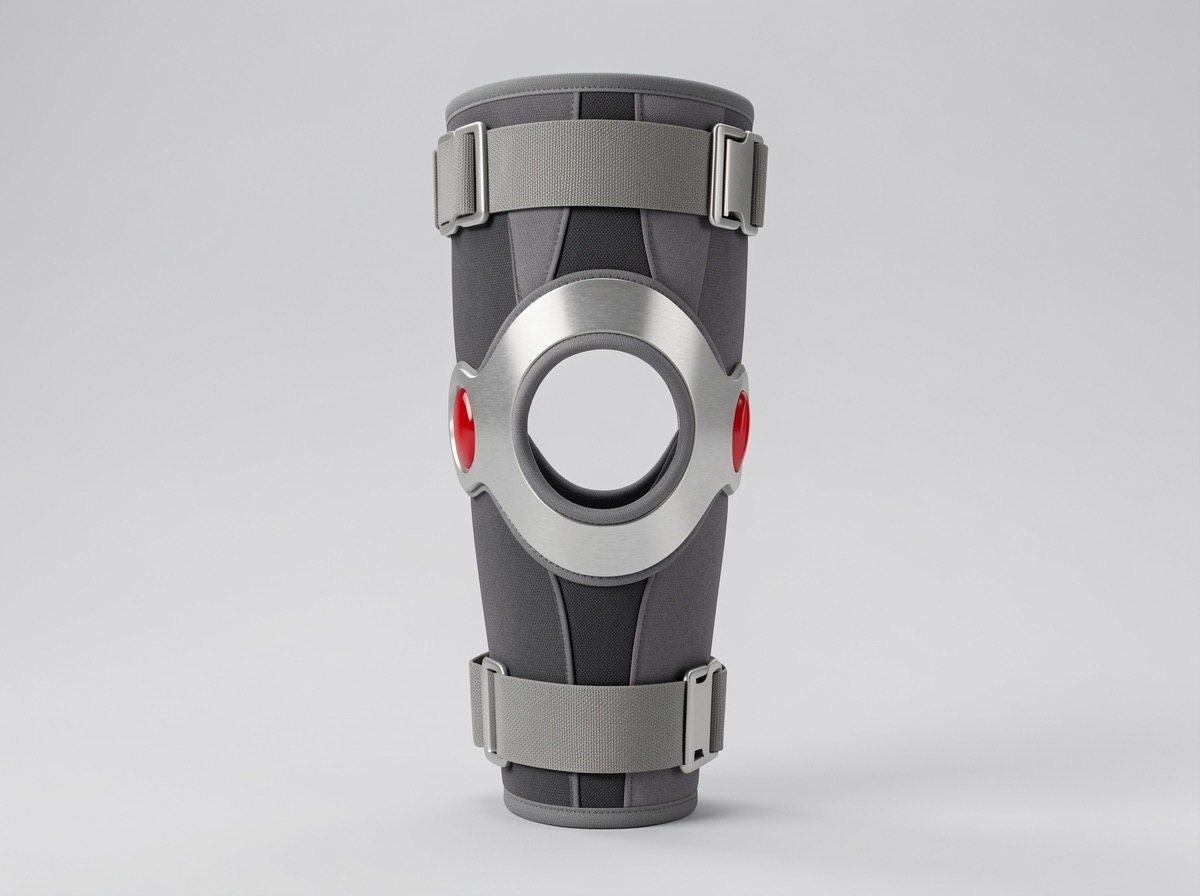
Illustrative picture. We confirm the exact model with your price.
Hinged knee brace
A firmer brace with side hinges that limits sideways movement of an unstable knee.
Good forKnee instability after injury or with advanced arthritis
- Price and delivery confirmed first
- A nurse can advise before you buy
- Set-up help when it is needed
What it is, and who it helps
A hinged knee brace is a firmer support than a simple sleeve. It has metal or plastic hinges on each side that guide the knee and limit sideways movement, which helps people whose knee feels unstable or gives way, for example after an injury or with advanced arthritis.
It should be fitted properly, ideally on the advice of a doctor or physiotherapist, because the wrong brace or the wrong fit can do more harm than good.
How to choose
- Measure the thigh and calf as the maker instructs, and choose the size to match, since a wrong size slips or digs in.
- Ask a clinician whether a hinged brace is needed, or a lighter sleeve will do.
- Look for breathable padding, adjustable straps and hinges that are easy to align.
- Check that your parent can put it on and take it off by themselves.
Using it safely
- Align the hinges with the knee joint, and fasten snugly but not tightly.
- Take it off if you notice numbness, tingling, swelling below the knee or skin marks.
- Keep up gentle exercises as advised, because a brace should not replace muscle strength.
Before you buy
Can my parent wear it all day?
Only if a clinician has said so. Many braces are for activity, and long wear can weaken muscles.
Does a brace repair the knee?
No. It supports the joint and may ease symptoms, but treatment and exercise are still needed.
More in Joint and pain support · Care plans · Services · Strength training after 50
General information, not medical advice. Ask a doctor, nurse or physiotherapist what is right for your parent.
Often chosen together
Not sure this is the right one?
A nurse can suggest the right choice, arrange delivery and show how to use it.