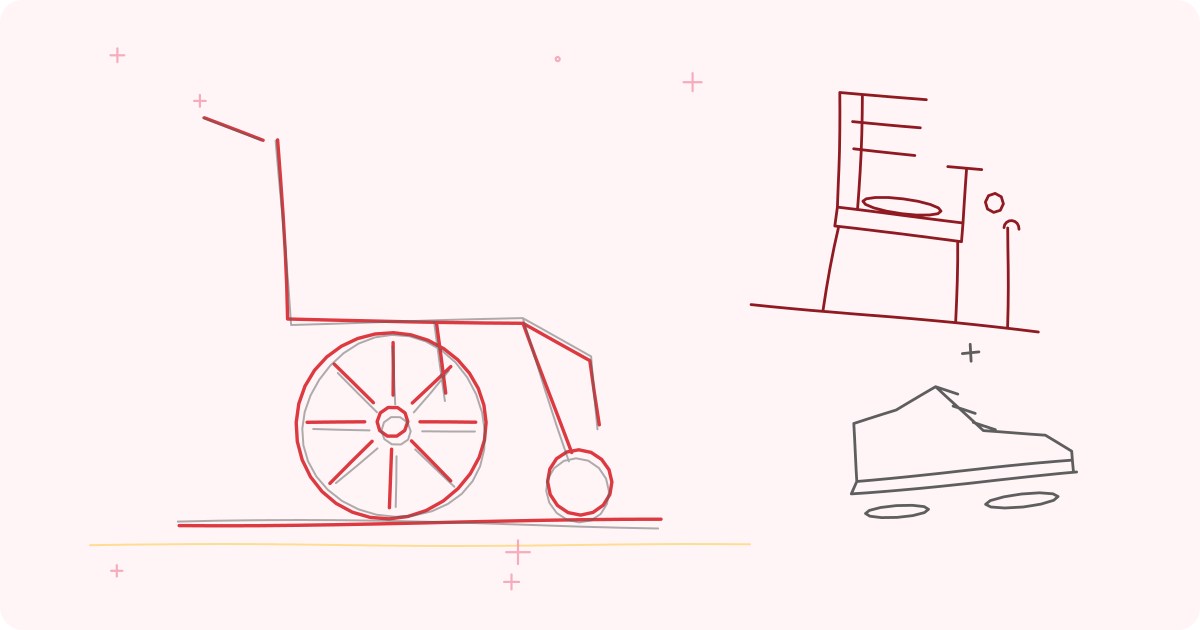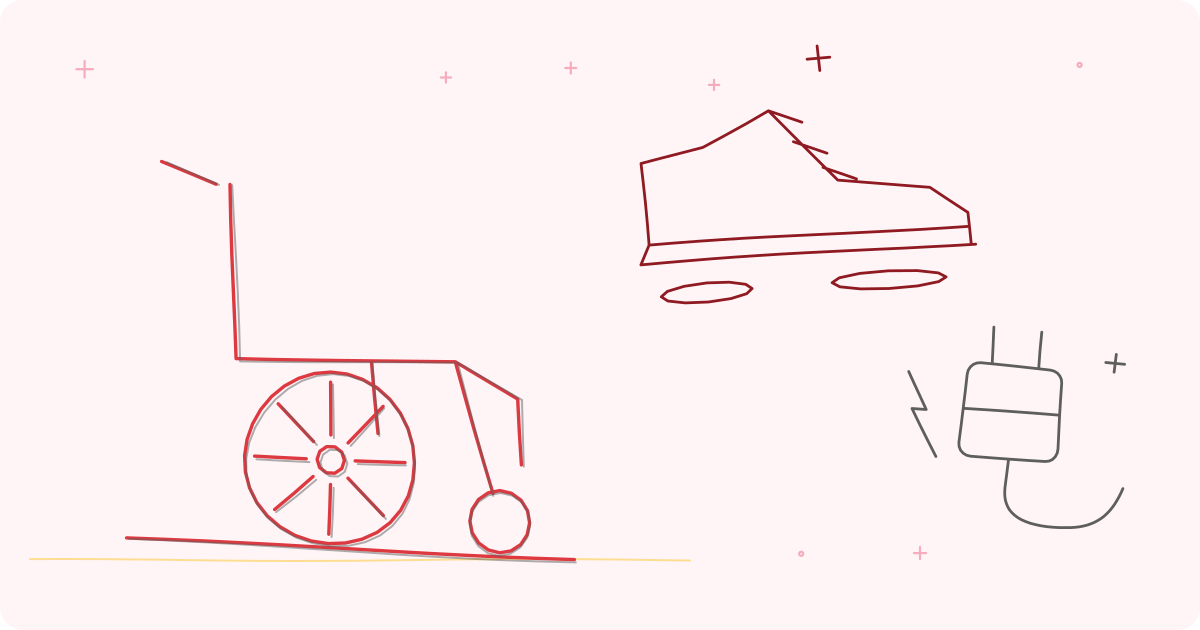
First question: who will use it, and for what?
Start with the use, not the product. Ask:
- How long each day? A few hours for outings, or much of the day?
- Who propels it? The user themselves, a carer pushing, or neither because it is a powered chair?
- Where? Indoors on smooth floors, or outdoors on pavements and roads, or in a car?
- How long will it be needed? A short recovery or the long term?
- Can the user stand or walk a few steps? This affects transfers and the choice of footrests.
A chair used for two hours of outings is very different from one used for ten hours a day. A person who sits in a chair for most of the day needs a better seat, a cushion and pressure care. See pressure care in a wheelchair.
The main types
### Standard manual wheelchair (self-propelled)
Large rear wheels with hand rims, which the user pushes, small front castors, hand brakes, footrests and armrests. It suits people with enough arm strength and stamina to push themselves, and a carer can push from behind. It is the usual choice for daily use.
### Transit (attendant-propelled) wheelchair
Small rear wheels, no hand rims, lighter and more compact. It must be pushed by someone else. It folds small and is easy to lift into a car, which makes it ideal for appointments and outings. It is not suitable for someone who needs to move themselves. See transit wheelchair or standard wheelchair.
### Lightweight or ultralight wheelchair
Made from aluminium or titanium, weighing less than standard steel chairs, easier to lift and push. A good choice for people who travel often or for carers with back problems.
### Reclining or tilt-in-space wheelchair
For people who cannot sit upright for long, or who need pressure relief by changing position. They are heavier and more expensive, and need a clinical assessment.
### Powered (electric) wheelchair
Battery-driven with a joystick, for people who cannot push themselves. They are heavy, need a charging socket and need space, and they should be recommended by a therapist. See powered wheelchair guide.
### Commode wheelchair
A wheelchair with a toilet seat opening and a removable pan, for those who cannot easily transfer to a toilet. Useful for night care and for carers, but not for general outdoor use.
Measurements that matter
A wheelchair must fit its user. A poor fit causes pain, pressure sores, poor posture and loss of independence. Measure with your parent seated in a firm chair, wearing normal clothes and shoes.
- Seat width. Measure across the widest point of the hips or thighs and add about 2.5 cm (an inch) on each side for clothes. Common widths are 16, 18 and 20 inches (about 40, 45 and 50 cm). Too narrow squeezes; too wide leaves the user unsupported and makes hand-propelling hard.
- Seat depth. Measure from the back of the buttocks to the back of the knee and subtract about 2.5 to 5 cm so the front edge does not press behind the knee.
- Seat height. Height from the floor to the seat, which affects transfers. About 45 to 50 cm is typical.
- Back height. From the seat to the lower shoulder blades for active users; higher for those who need more support.
- Footrest length. From the back of the knee to the sole of the foot, so the thighs rest on the cushion and feet are supported.
- Armrest height. About 22 to 25 cm above the seat, so the shoulders are relaxed.
See wheelchair measurements for a step-by-step method.
Weight and capacity
Check the user weight limit; standard chairs usually carry 100 to 120 kg, and heavy-duty models more. Also check the weight of the chair itself, since a steel chair can weigh 15 to 20 kg and a lightweight chair 8 to 12 kg. A heavy chair is hard to lift into a car and hard to push uphill.
Brakes, wheels and tyres
Brakes. Wheel locks on both rear wheels, easy to apply and strong enough to hold the chair on a slope. Carers' brakes (hand brakes on the push handles) are useful on transit chairs.
Rear wheels. Large (24 inch) wheels roll better on rough surfaces. Solid tyres never puncture and are low maintenance, but ride hard; pneumatic tyres are smoother but can go flat. Check for spare parts availability.
Front castors. Small castors can catch on cracks and kerbs. Larger castors (6 to 8 inches) handle rough ground better.
The seat and cushion
The seat is the most important part for anyone sitting for hours. A sling seat sags and tilts the pelvis; a firm, flat base with a good cushion supports posture and spreads pressure. For long-term sitting, a pressure-relieving cushion is essential; see gel cushions for pressure relief and cushions for wheelchair users. Never use a bare sling seat for someone at risk of pressure sores, such as those with limited movement, diabetes or poor skin.
Footrests, armrests and extras
- Footrests. Swing-away or removable footrests make transfers easier; elevating leg rests suit those with swollen legs or leg injuries.
- Armrests. Flip-back or removable arms help side transfers.
- Anti-tippers. Small wheels at the back that prevent the chair from tipping over backwards. Useful for safety, especially for carers.
- Seat belt. For people with weak trunk control.
- Tray or table. For meals and activities.
- Bag or pouch. For personal items.
Folding and transport
Most manual chairs fold sideways. Check that the folded chair fits your car's boot, and that you can lift it. Quick-release rear wheels make lifting easier. See wheelchair and car travel.
Indian conditions
Indian roads, pavements, kerbs, ramps and crowded places are tough on wheelchairs. Keep these in mind.
- Rough surfaces. Choose large rear wheels, robust castors and strong frames.
- Kerbs. Anti-tippers and a carer's tilt skills matter; a strong carer or two helpers may be needed.
- Narrow doors. Measure the chair's width against your bathroom and room doors. Standard chairs are 60 to 65 cm wide, and some bathrooms are narrower.
- Heat and humidity. Choose breathable upholstery and rust-resistant finishes.
- Lift and stairs. Many buildings lack ramps or lifts; plan access before you buy.
- Servicing. Check that spare parts and a service centre are accessible in your city.
Cost drivers
Prices rise with weight capacity, lightweight materials, adjustability, special cushions, brakes and powered motors. A basic steel manual chair is the least expensive; an ultralight or powered chair costs far more. Think about the cost of ownership, including cushions, tyres, repairs and servicing. Consider renting for a short recovery; see renting or buying a wheelchair. Ask about GST and warranty in writing; and avoid chairs with no brand, no label and no weight rating.
Checks before you pay
- Does the seat width, depth and height match your parent's measurements?
- Is the weight rating well above their weight?
- Do both brakes lock firmly?
- Does it fold and unfold easily, and lock safely?
- Does it fit through your doorways and into your car?
- Are the tyres in good condition, and are spare parts available?
- Is the cushion suitable, and is the seat flat and firm?
- Are the footrests and armrests secure, adjustable and removable?
- Is there a warranty and a service contact?
- Can your parent sit in it for ten minutes without discomfort?
Safe use and training
Teach brakes on, footrests clear, before transfers. A physiotherapist or occupational therapist can teach the user and the carer how to transfer, push, tilt and handle kerbs. Always lock the brakes when stopping; never leave a person unattended on a slope; use seat belts where advised. For carers, see pushing a wheelchair safely.
When to ask a professional
A physiotherapist or occupational therapist should assess anyone who will use a wheelchair for long periods, or who has pressure sore risk, posture problems, stroke or neurological conditions. They can recommend the right type, size, cushion and accessories. Ask a doctor if there are skin changes, pain, numbness or new swelling.
Equipment mentioned in this guide
Frequently asked questions
What size wheelchair should I buy?
Measure across the hips or thighs and add about 2.5 cm on each side; measure seat depth from the back of the buttocks to the back of the knee and subtract about 2.5 to 5 cm. Common seat widths are 16, 18 and 20 inches. A therapist can confirm the fit.
Is a transit wheelchair enough for daily use?
Not for someone who moves themselves, because it has no hand rims. It is ideal for outings and for people who are always pushed. For all-day use, a standard chair with a good cushion is better.
Do I need a special cushion?
If your parent sits for hours, has limited movement or is at risk of pressure sores, yes. A gel or foam pressure-relieving cushion is a necessity, not a luxury.
Can I buy a wheelchair online?
You can, but measure carefully, check the weight rating, return policy and service, and try to sit in a similar model first.
How long does a wheelchair last?
With proper care, a good chair lasts many years, but tyres, brakes and upholstery need regular checks and replacement.
Sources and further reading
- World Health Organization, Guidelines on the provision of manual wheelchairs in less resourced settings (2008)
- NICE guidance and Chartered Society of Physiotherapy patient information on wheelchairs
- National Institute for the Empowerment of Persons with Multiple Disabilities (India), information on mobility aids
- World Health Organization, World report on ageing and health (2015)
Tags: wheelchair for elderlyhow to buy a wheelchairmanual wheelchairtransit wheelchairwheelchair indiamobility aidWalking and mobility aidsMobility and walking aidsCushions, pillows and comfortHealthy ageing
This article is for general education and is not medical advice. Speak to your doctor before changing your exercise, diet or medicines.