The basic difference
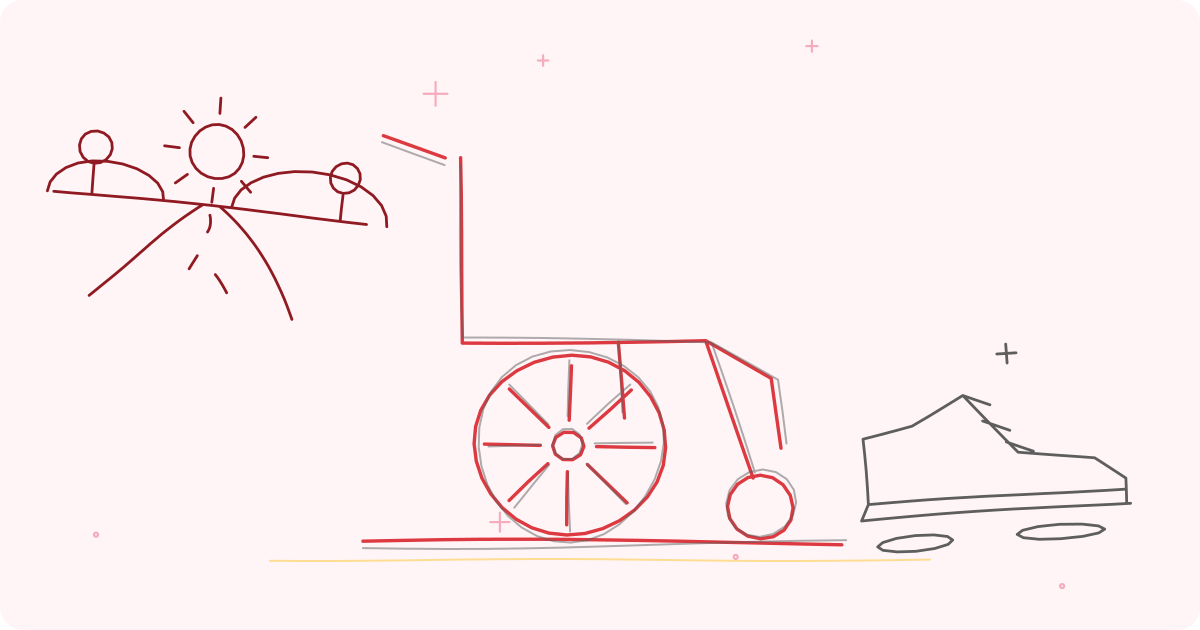
A standard wheelchair has two large rear wheels, usually 24 inches (about 60 cm), each with a hand rim, and two small front castors. The user can propel themselves by pushing the hand rims, and a carer can push from behind using the handles. It has brakes on the rear wheels.
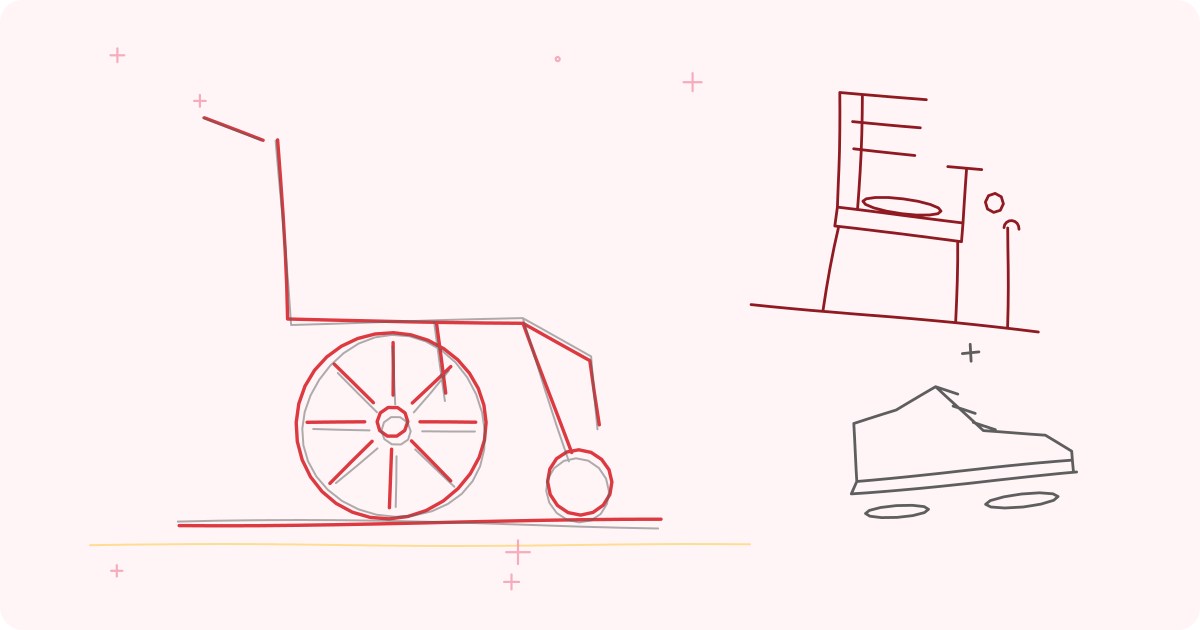
A transit wheelchair, also called an attendant-propelled or companion chair, has four small wheels, typically 8 to 12 inches (20 to 30 cm), and no hand rims. It can only be pushed by someone else. It is lighter, folds smaller and usually costs less. It has hand brakes on the push handles, which the pusher operates.
Side-by-side comparison
- Who propels it. Standard: the user or an attendant. Transit: the attendant only.
- Weight. Standard: about 12 to 20 kg for steel, 8 to 12 kg for lightweight. Transit: about 8 to 12 kg, sometimes less.
- Folded size. Standard: wider and bulkier. Transit: compact, often fits easily in a small car boot.
- Rolling over rough ground. Standard: large rear wheels roll over kerbs and cracks better. Transit: small wheels catch and need more effort.
- Independence. Standard: allows self-propulsion. Transit: none.
- Comfort for long sitting. Standard: usually more supportive, with larger seat options. Transit: often a thinner, slung seat, less suited to hours of sitting.
- Stability. Standard: wider, steadier base. Transit: narrower and lighter, a little less stable on slopes.
- Brakes. Standard: wheel locks for the user plus, in some models, attendant brakes. Transit: attendant brakes and wheel locks.
- Price. Transit usually costs less.
- Lifting into a car. Transit is easier because it is lighter; some standard chairs have quick-release wheels to help.
When a transit chair is the better choice
- Short outings, such as hospital visits, clinic appointments, shopping or temple visits, where a helper is always present.
- Travel, including flights, trains and car journeys, since it folds small and is easy to lift.
- Occasional use, for someone who walks at home but cannot manage long distances.
- A user who cannot propel themselves, for instance because of weak arms or hands.
- A carer with limited strength, who finds a lighter chair easier to push and lift.
- A tight budget, or a short rental.
A transit chair is a good second chair for a family that already has a standard one.
When a standard chair is the better choice
- Daily use for several hours, when comfort, posture and pressure care are important.
- A user who can and wants to propel themselves, to keep independence and shoulder strength.
- Outdoor use over rough ground, where large wheels perform better.
- Long-term use, when a good fit, a pressure cushion and adjustability matter.
- Heavy or tall users, where a stronger frame and wider seat are needed.
If your parent will spend most of the day in the chair, a transit chair with a thin seat is a poor choice, and a lightweight standard chair with a proper cushion is better. See buying a wheelchair in India for more.
Other types you may meet
- Lightweight or ultralight chairs. Standard-style chairs made from aluminium or titanium, much easier to lift and push, but more expensive.
- Reclining and tilt-in-space chairs. For people who cannot sit upright for long, or need pressure relief. They are heavy and need assessment.
- Powered chairs. For people who cannot push themselves; see powered wheelchair guide.
- Commode chairs. With a toilet opening, used for toileting; see commode chair guide.

Check these on either type
- User weight limit, well above your parent's weight.
- Seat width and depth that fit; see wheelchair measurements.
- Brakes that grip firmly and are easy to apply.
- Footrests that swing away or lift, and adjust for length.
- Armrests that are padded, and flip back or detach for transfers.
- Folding and locking that is smooth and secure.
- Tyres, with solid tyres being low maintenance.
- Seat belt, if balance is poor.
- Frame quality, with no bent tubes and strong welds.
- Warranty and service availability.
Cushions and comfort
Most chairs, especially transit ones, come with a thin, unsupportive seat. For short outings that is acceptable, but for anything over an hour, a cushion helps comfort and skin protection. For people with fragile skin, diabetes or poor mobility, a pressure-relieving cushion is essential, whatever the chair. See gel cushions for pressure relief and pressure care in a wheelchair.
Using each type safely
Transit chair.
- Apply both brakes before the user gets in or out.
- Lift the footrests out of the way for transfers, then replace them.
- Push smoothly, avoid sudden stops, and tilt back slightly to roll the front wheels over kerbs, if trained.
- Be careful on slopes; go down backwards on a steep slope for control, if the user is stable and trained.
- Never leave the user alone on a slope.
Standard chair.
- Lock both wheels before transfers.
- Teach the user to push with long strokes, and to lock the brakes before standing.
- Use anti-tippers if advised.
- Check hand rims and tyres.
For both, see pushing a wheelchair safely.
Hiring, renting or buying
For a short period, such as a few weeks after surgery, renting either type may be sensible. For a family that needs a chair only for travel, a transit chair is often best bought, since it is inexpensive and compact. For long-term daily use, buy a standard chair set to your parent's size. See renting or buying a wheelchair.
Indian conditions
Small wheels struggle on broken pavements, so plan routes and expect to tilt or lift over obstacles. Hospital and airport corridors are smooth and ideal for transit chairs. Check that your chair fits the door of your car and your home, and that ramps and lifts exist at your destinations. In humid cities, look for rust-resistant frames and breathable upholstery. For car travel, see wheelchair and car travel.
A quick way to decide
Ask four questions. First, will your parent spend more than two hours at a time in the chair? If yes, lean towards a standard chair with a proper cushion. Second, does your parent want or need to move themselves? If yes, a standard chair. Third, will a helper always be there, and will the chair be lifted into a car often? If yes, a transit or lightweight chair is kinder to the helper. Fourth, how rough are the places you will go? Smooth hospital corridors and malls suit small wheels; broken pavements and gardens favour large ones. If your answers point both ways, many families buy a lightweight standard chair and rent a transit chair only for trips, or the reverse. Whichever you choose, try the chair with your parent sitting in it, push it through your own front door and fold it into your own car before paying.
When to ask a professional
Ask an occupational therapist or physiotherapist to recommend a chair if your parent will spend long hours in it, has pressure sore risk, posture problems or a complex condition. For short outings, a simple transit chair is usually fine without assessment. Seek medical advice if your parent has pain, skin changes or breathlessness during use.
Equipment mentioned in this guide
Frequently asked questions
Can my parent push a transit wheelchair themselves?
No. It has no hand rims and small wheels, so it must be pushed by someone else. For self-propulsion choose a standard chair.
Is a transit wheelchair comfortable for long periods?
Usually not, as the seat is thin and unsupportive. For long sitting, choose a standard chair with a proper cushion.
Which is easier to put in a car?
A transit chair, because it is lighter and folds smaller. Lightweight standard chairs with quick-release wheels are also easy.
Which is cheaper?
Transit chairs generally cost less than standard chairs, and lightweight or powered chairs cost more.
Do I need both a transit and a standard chair?
Some families do: a standard chair for daily use and a transit chair for travel. It is not necessary for everyone.
Sources and further reading
- World Health Organization, Guidelines on the provision of manual wheelchairs in less resourced settings (2008)
- Chartered Society of Physiotherapy and College of Occupational Therapists, guidance on wheelchair provision
- NICE guidance and NHS wheelchair service information on wheelchair types
- National Institute for the Empowerment of Persons with Multiple Disabilities (India), information on mobility aids
Tags: transit wheelchairstandard wheelchairlightweight wheelchairwheelchair for outingsattendant propelled wheelchairmobility aidWalking and mobility aidsLightweight transit wheelchairMobility and walking aidsCushions, pillows and comfort
This article is for general education and is not medical advice. Speak to your doctor before changing your exercise, diet or medicines.