What both devices do
Both deliver medicine directly to the airways, where it acts quickly and with fewer whole-body side effects than tablets. The medicines are of two broad types:
- Relievers (bronchodilators): open the airways quickly to ease breathlessness and wheeze.
- Preventers (such as inhaled steroids) and long-acting medicines: taken regularly to reduce inflammation and keep airways open.
Many people use a combination inhaler that contains more than one medicine. Which medicine, which dose and how often is for the doctor to decide. See COPD at home guide and asthma in older adults.
Types of inhaler
Metered-dose inhaler (MDI, "puffer"). A small canister that releases a measured spray when pressed. It needs coordination: pressing and breathing in at the same moment. A spacer (a plastic chamber) solves much of this; see below.
Dry powder inhaler (DPI). Delivers powder, which the person must inhale quickly and deeply to draw it in. Many designs exist, including capsule-based devices and pre-loaded ones. They need a strong, fast breath, which some frail older adults cannot manage.
Soft mist inhaler. Produces a slow-moving mist that is easier to inhale for some.
Breath-actuated inhalers. Release the dose when the person breathes in, solving coordination issues, but may need adequate breath strength.
Each device is used differently, so a change of device means new training. See inhaler technique and spacers for older adults.
The role of a spacer
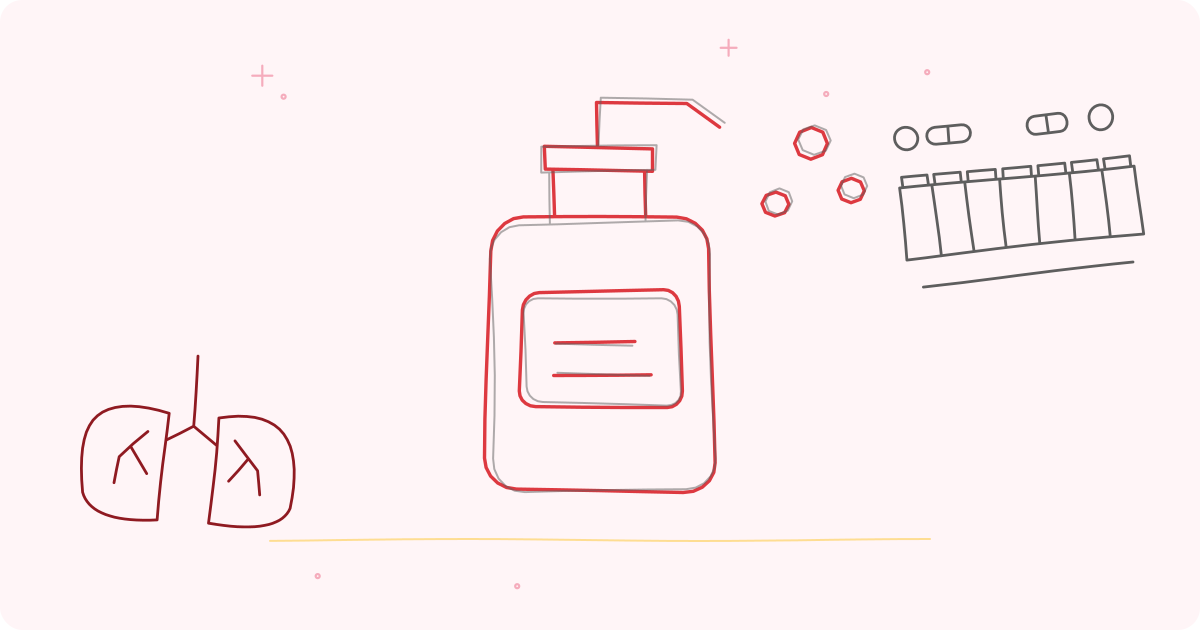
A spacer is a tube or chamber attached to a metered-dose inhaler. The puff goes into the chamber, and the person breathes in slowly and steadily or takes several breaths. Benefits:
- It removes the need to coordinate pressing and breathing.
- More medicine reaches the lungs and less lands in the mouth and throat.
- It reduces side effects such as a sore throat or thrush with steroid inhalers.
- With a mask, it can be used by people who cannot seal their lips on a mouthpiece.
Studies, including in acute asthma, have found that an inhaler with a spacer can be as effective as a nebuliser for many people. Spacers are small, portable, need no power and are inexpensive compared with a nebuliser.
What a nebuliser offers
A nebuliser converts liquid medicine into a mist breathed in through a mask or mouthpiece over several minutes. See nebulisers: types, use and cleaning and how to use a nebuliser step by step. Its strengths:
- No coordination needed: the person just breathes normally.
- Suitable for very breathless, weak, exhausted or confused patients who cannot hold a breath or use an inhaler properly.
- Larger dose over a longer time, which may help during a bad flare-up, as directed by the doctor.
- Some medicines are only available in nebuliser form, particularly certain specialist treatments.
- Mask use for those who cannot manage a mouthpiece.
Its limits:
- Slower: several minutes against seconds.
- Needs power, set-up and cleaning, and a noisy compressor with some models.
- Less portable than an inhaler.
- Higher risk of infection if parts are not cleaned.
- Costlier, with ongoing replacement of parts.
- Not stronger by default. A nebuliser dose is not automatically "more" effective for each person.
- Can give a false sense of security, leading to delay in seeking help when breathing worsens.
- More potential for medicine side effects, such as tremor and fast heartbeat from large reliever doses.
Which is better for whom?
An inhaler with a spacer is usually first choice for:
- Everyday reliever and preventer use in asthma and COPD.
- Emergency relief for many people, if the technique is good.
- People who travel, who need quick, portable relief.
A nebuliser may be chosen for:
- Patients who cannot use an inhaler or spacer despite training, due to severe weakness, tremor, cognitive impairment or arthritis.
- Some severe or frequent flare-ups, as a doctor advises.
- Specific medicines delivered only by nebuliser.
- Palliative care in advanced lung disease, where easier breathing and comfort matter.
The choice depends on the person's strength, hand function, thinking and breathing, the medicine and what the doctor finds works in practice. A short trial of different devices under supervision, or a review by a nurse or pharmacist, can show what works.
Common myths
- "A nebuliser is stronger." The medicine dose and type matter more than the device.
- "If it is serious, we need the nebuliser." In a severe attack, call for emergency help; 112 is the right step, not a long wait with repeated home treatments.
- "Inhalers are only for mild cases." Many people with severe disease use inhalers all their lives.
- "Steam is as good as medicine." It is not; see steam inhalation: benefits, burns and safer habits.
- "Inhalers are addictive." Inhaled medicines prescribed for airway disease are not addictive. Using a reliever more often than usual is a sign that the disease is not controlled, and the doctor should know.
- "I can top up with extra puffs." Do not exceed prescribed doses.
Technique matters more than the device
Studies repeatedly show that many people use their inhalers wrongly. The medicine then lands in the throat. Older adults may have weak breath, poor grip, arthritic fingers, poor sight or memory problems. Ask a doctor, nurse, pharmacist or physiotherapist to check your parent's technique at each review, and ask for a spacer if a pressurised inhaler is used. A device that is easy to handle and understood is better than a theoretically superior one used badly. A label on the device with simple steps helps.
Cost, supply and practicalities in India
- Inhalers and spacers are widely available and cost far less to run than a nebuliser, though prices vary by medicine and device.
- A nebuliser has a one-time device cost and recurring costs for medicine vials, masks and tubing, plus electricity.
- Humidity and heat affect both. Store inhalers in a cool, dry place away from heat; do not leave pressurised canisters in hot cars or in direct sun.
- Rental of nebulisers is possible for short illness; see renting breathing equipment: costs, checks and return.
- Quality and licensing: buy from a reliable pharmacist; see medical device licences and safe buying.
- Power cuts: an inhaler and spacer work without electricity, which is a reason to keep one at home even if you have a nebuliser. See oxygen at home and power cuts: a backup plan for ideas on backup planning.
If oxygen is also in use
Do not combine devices or connect a nebuliser to oxygen without the doctor's instruction. If your parent is on oxygen, keep all flames and smoking away and follow the prescribed flow. See oxygen flow rates and prescriptions: what families should know and using an oxygen concentrator safely at home.
Signs that the current plan is not enough
Call the doctor the same day if:
- The reliever is needed more often than usual or lasts a shorter time.
- Night-time cough or breathlessness increases.
- Sputum changes colour or volume.
- Your parent has fever.
- The usual dose does not help.
Call 112 if your parent:
- Is severely breathless, cannot talk in full sentences, is exhausted or confused.
- Has blue or grey lips.
- Has chest pain or collapses.
- Does not improve after the reliever as set out in the action plan.
See when breathlessness is an emergency and building a COPD action plan with your doctor.
When to ask a professional
Ask the doctor which devices suit your parent and why. Ask a nurse, pharmacist or respiratory physiotherapist to demonstrate each device and watch your parent do it. Ask for a written plan with names of medicines, doses, when to use relievers and when to seek help. Ask whether a spacer or mask would help. Never change medicines or doses on your own. Call 112 for severe breathlessness.
Equipment mentioned in this guide
Frequently asked questions
Is a nebuliser better than an inhaler?
Not by default. Many people do as well with an inhaler and spacer. A nebuliser suits those who cannot use inhalers, or certain medicines, as decided by the doctor.
Can I use a nebuliser instead of a spacer at home?
Only if your doctor says so. A spacer is cheaper, faster and portable, and it works without power.
Why does my parent get a sore throat from the inhaler?
Medicine landing in the throat can irritate it, particularly steroid inhalers. A spacer and mouth rinsing help. Tell the doctor.
Are inhalers addictive?
No. If your parent needs the reliever more often, the disease may be less controlled and the doctor should review treatment.
What should I do if the inhaler does not seem to work?
Check technique, expiry date and whether it is empty (many have a dose counter), and call the doctor. If your parent is severely breathless, call 112.
Sources and further reading
- Global Initiative for Chronic Obstructive Lung Disease (GOLD), report on diagnosis, management and prevention of COPD
- Global Initiative for Asthma (GINA), global strategy for asthma management and prevention
- National Institute for Health and Care Excellence, NG115 Chronic obstructive pulmonary disease in over 16s
- British Thoracic Society and Scottish Intercollegiate Guidelines Network, British guideline on the management of asthma
Tags: nebuliser vs inhalerinhaler with spacercopd inhalerasthma inhaler elderlynebuliser or inhalerdry powder inhalerspacerBreathing supportHealth monitoring devicesHealthy ageing
This article is for general education and is not medical advice. Speak to your doctor before changing your exercise, diet or medicines.