
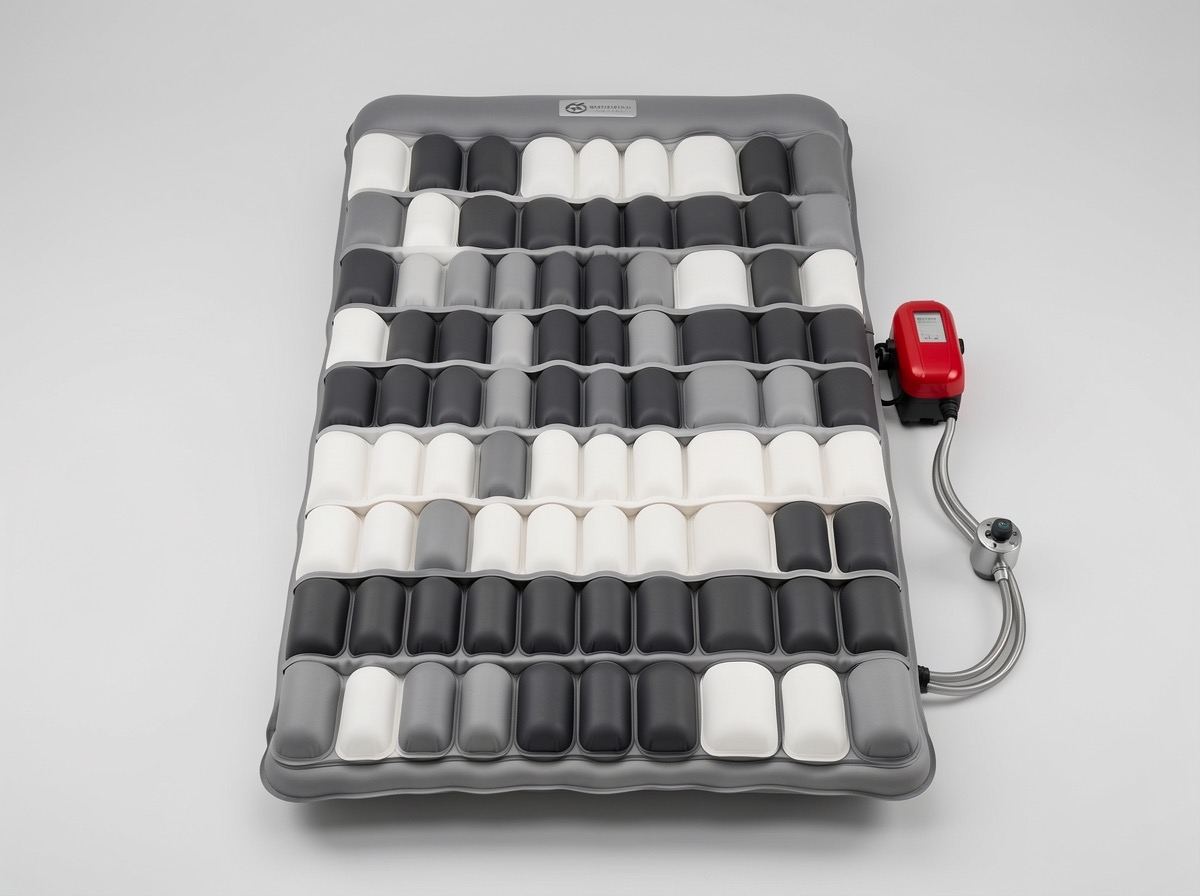
Illustrative picture. We confirm the exact model with your price.
Pressure-relief air mattress
Alternating-pressure mattress with a pump, to reduce pressure sore risk.
Good forPeople who cannot change position
- Price and delivery confirmed first
- A nurse can advise before you buy
- Set-up help when it is needed
What it is, and who it helps
A pressure-relief air mattress has air cells that inflate and deflate in turn, shifting where the body's weight rests. This lowers the risk of pressure sores, which develop in people who cannot move enough and can be painful and slow to heal.
It is placed over or in place of a normal mattress and powered by a small pump. It is not a substitute for turning and skin care, but a very useful part of them.
How to choose
- Match the type to the risk: alternating air for high risk, foam for lower risk. A nurse can assess.
- Check the pump noise, the weight limit and the alarm for power failure.
- Make sure it fits your bed, particularly a hospital bed, and has a waterproof, wipeable cover.
- Ask whether setup and servicing are included, if renting.
Using it safely
- Check the pump is on and the mattress is inflated every day.
- Keep skin dry and check heels, hips and the base of the spine for redness.
- Do not use sharp objects, pins or hot items near the mattress.
Before you buy
Will an air mattress stop all sores?
No. It reduces pressure, but turning, nutrition, hydration and skin checks are still essential.
More in Beds, mattresses and rest · Care plans · Services · Medical equipment at home · Caring for geriatric patients
General information, not medical advice. Ask a doctor, nurse or physiotherapist what is right for your parent.
Not sure this is the right one?
A nurse can suggest the right choice, arrange delivery and show how to use it.