How a wrist monitor works
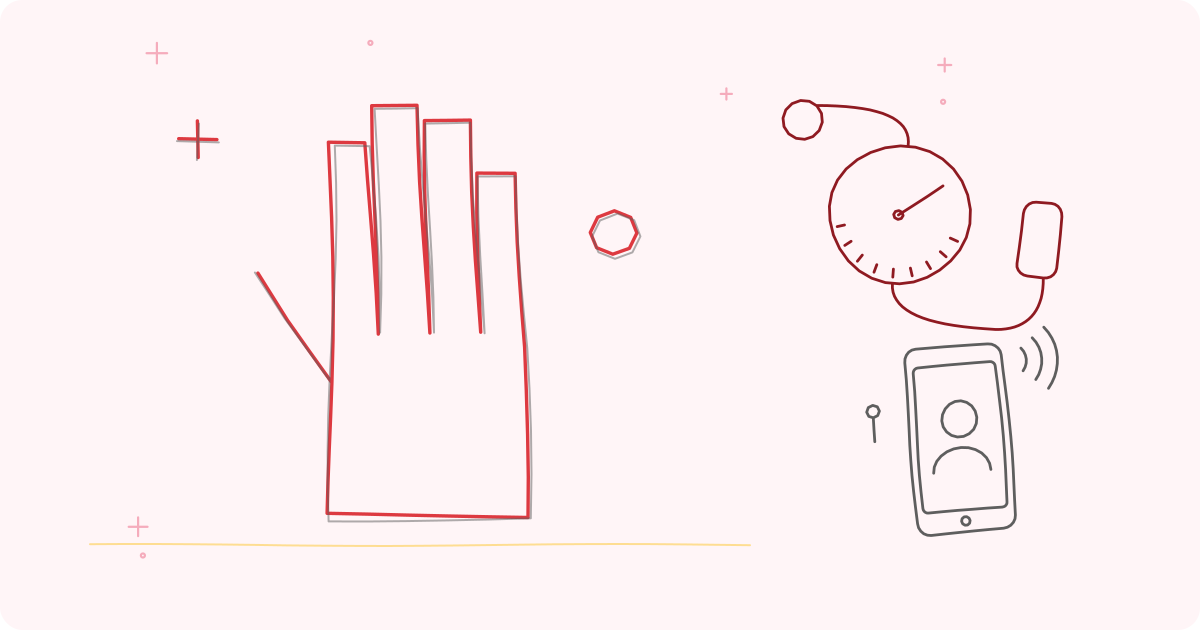
Like upper-arm models, a wrist monitor uses the oscillometric method. A small cuff around the wrist inflates and then releases, and the device senses pulsations in the radial artery. The built-in program turns these into estimates of systolic and diastolic pressure and the pulse. The principle is the same, but the artery is smaller, lies close to bone and moves with the position of the hand, so the reading depends heavily on how the wrist is held.
Advantages
- Compact and portable. It fits in a bag, which is handy for travel, for people who need checks at work or at a relative's house.
- Easy to put on with one hand, helpful after a stroke, with shoulder arthritis or a stiff elbow.
- No sleeve problem. The wrist is easily bare, and there is no need to remove thick clothing.
- Fits very large arms. For an upper arm that is too large for common cuffs, a wrist cuff may be an option when large upper-arm cuffs are unavailable. See cuff size and blood pressure accuracy.
- Less uncomfortable for people with fragile or bruising upper-arm skin.
Disadvantages
- Position sensitivity. If the wrist is above or below heart level, the reading will be off. This is the biggest error, and it is easy to make without noticing.
- Artery stiffness and narrowing. Hardened arteries in older adults, and conditions such as diabetes, can make wrist readings less consistent.
- Less validation evidence. Fewer wrist models have been independently validated than upper-arm ones. Guidelines usually recommend upper-arm monitors for most people.
- Movement and tremor. A small tremor or even gentle movement can disturb readings.
- Hard to read small displays. Many wrist monitors have tiny screens, which can be difficult for older eyes.
- Cuff on thick wrists or lax skin. The device may not sit properly if the wrist is thin or has loose skin.
Who might use one
- A person who cannot manage an upper-arm cuff and whose doctor agrees to a wrist model.
- Someone with a very large arm where a suitable upper-arm cuff is not available.
- A traveller who wants a second, portable device.
- A person with a stiff shoulder, provided the technique is learned and the result is checked against an upper-arm reading.
Who should be cautious or avoid wrist monitors
- People with irregular pulse such as atrial fibrillation, since all home monitors can struggle, and wrist models more so.
- People with very stiff arteries, peripheral arterial disease or poor circulation in the hands.
- Those with tremor or arthritis that makes it hard to keep the wrist still.
- People with swollen hands or wrists, or a dialysis fistula in the arm used.
- Anyone for whom precise numbers affect treatment decisions, unless a clinician has confirmed the wrist model against an upper-arm monitor.
Most older adults are better served by an upper-arm monitor; see the blood pressure monitor buying guide.

Choosing a wrist monitor
Look for:
- A model with independent validation for accuracy; ask the seller for evidence and ask your doctor.
- A position sensor or indicator that tells you when the wrist is at heart level. Many modern models beep or show a symbol only when the position is right.
- A large display with good contrast, or a talking model; see talking blood pressure monitors for low vision.
- A cuff size that fits the wrist circumference range printed on the box.
- A warranty and service center nearby.
- Easy battery replacement.
Step-by-step technique
1. Rest first. Sit upright for five minutes in a quiet chair, back supported, feet flat, no tea, smoking or exercise in the last 30 minutes. 2. Choose the wrist. Use the same wrist each time. Many people use the left wrist; follow your doctor's advice. 3. Bare the wrist and remove watches and bracelets. Roll up the sleeve so it does not squeeze the forearm. 4. Fit the cuff about 1 cm above the wrist crease, with the display on the palm side if the instructions say so. It should be snug but not tight. 5. Bring the wrist to heart level. Bend the elbow and rest it on a table or the other hand so that the wrist is level with the middle of the chest. The palm should face the chest and the fingers should be relaxed, with the hand lightly curled and not clenched. Some models need the hand held against the opposite shoulder. 6. Hold still. Do not speak or move. Wait for the position indicator, if there is one. 7. Press start. Keep the position until the reading appears and the cuff has deflated fully. 8. Read and record. Write down systolic, diastolic, pulse, the date, time and wrist used. 9. Repeat after a minute, and record the second reading.
The full routine of preparation and logging is in how to measure blood pressure at home accurately.
Checking against an upper-arm reading
A good practice is to check the wrist monitor against a validated upper-arm monitor, ideally at the clinic. Ask the nurse to take readings with the upper-arm device, and then use your wrist monitor, in the same sitting, a minute apart. Repeat a few times. If the readings agree within about 10 points, the wrist device may be acceptable for follow-up. If they differ a lot, or if the wrist is consistently higher or lower, tell the doctor and consider switching to an upper-arm model. Repeat the check every year or if the device is dropped.
Common mistakes
- Taking the reading with the wrist resting on the lap, far below heart level.
- Holding the wrist up in the air, far above heart level, without resting the elbow.
- Talking, moving or tapping fingers during the reading.
- Using a cuff that is loose or placed over the wrist bone.
- Taking readings straight after walking or after the arm hung down for a long time.
- Using a wrist model as the sole basis for deciding treatment.
Care and storage
Clean the cuff with a lightly damp cloth, and avoid soaking. Keep the device in its case, away from heat, humidity and dust; Indian summers and monsoon damp can damage electronics. Change batteries when the low-battery symbol appears, and keep a spare set. Note that wrist cuffs are small and lighter than arm cuffs, so the cuff should be replaced if the Velcro slips or the device gives repeated error codes. See calibration, batteries and replacement of home health devices.
What the readings mean
Treat wrist readings as an estimate. Compare patterns rather than single numbers. General guidance suggests home averages below about 130/80 are considered in range for many adults, while averages of 135/85 or above merit a discussion with the doctor, but your parent's doctor sets the individual target. For further interpretation see white-coat and masked hypertension and normal ranges for older adults.
When to ask a professional
Ask a doctor, nurse or pharmacist to confirm your wrist monitor against an upper-arm reading and to watch your parent's technique. Ask for advice if readings are inconsistent, if the pulse is irregular, or if the numbers do not match how your parent feels. Call 112 right away for chest pain, severe headache, sudden weakness on one side, difficulty speaking or severe breathlessness, whatever the monitor says.
Equipment mentioned in this guide
Frequently asked questions
Are wrist blood pressure monitors accurate?
They can be, when a validated model is used with the wrist at heart level and the person sitting still. They are more error-prone than upper-arm monitors, so many doctors prefer the upper arm for older adults.
Which wrist should I use?
Pick one wrist and use it every time. Your doctor may suggest the wrist on the side that gave the higher reading on an upper-arm check.
Can I use a wrist monitor if the pulse is irregular?
Home monitors in general can be less reliable with an irregular rhythm, wrist models especially. Tell the doctor and ask which monitor to use.
How do I know if the wrist is at the right height?
The wrist should be level with the middle of the chest, with the elbow supported. Many models have a sensor that signals when the height is right.
Is a wrist monitor better for travel?
It is easier to carry, but the same technique rules apply. Use it seated, rested and at heart level wherever you are.
Sources and further reading
- British and Irish Hypertension Society, validated blood pressure monitors list
- NICE guideline NG136, Hypertension in adults: diagnosis and management
- American Heart Association, recommendations for blood pressure measurement
- World Health Organization, World report on ageing and health (2015)
Tags: wrist bp monitorwrist blood pressurewrist cuff techniquebp monitor for elderlyhome blood pressureheart levelHealth monitoring devicesWrist blood pressure monitorHealthy ageingElder care
This article is for general education and is not medical advice. Speak to your doctor before changing your exercise, diet or medicines.