Why the ear hurts: the causes
The NHS page on earache groups the causes by what else is going on. This is useful because it shows how much ear pain is not an ear infection.
- Ear pain with fever: an ear infection, flu or a cold.
- Ear pain with hearing change: glue ear, a build-up of earwax, an object in the ear, or a perforated eardrum, often after a loud noise or an injury.
- Ear pain with pain on swallowing: a sore throat, tonsillitis or quinsy, a complication of tonsillitis.
- Ear pain with toothache: a dental abscess in adults, or teething in children.
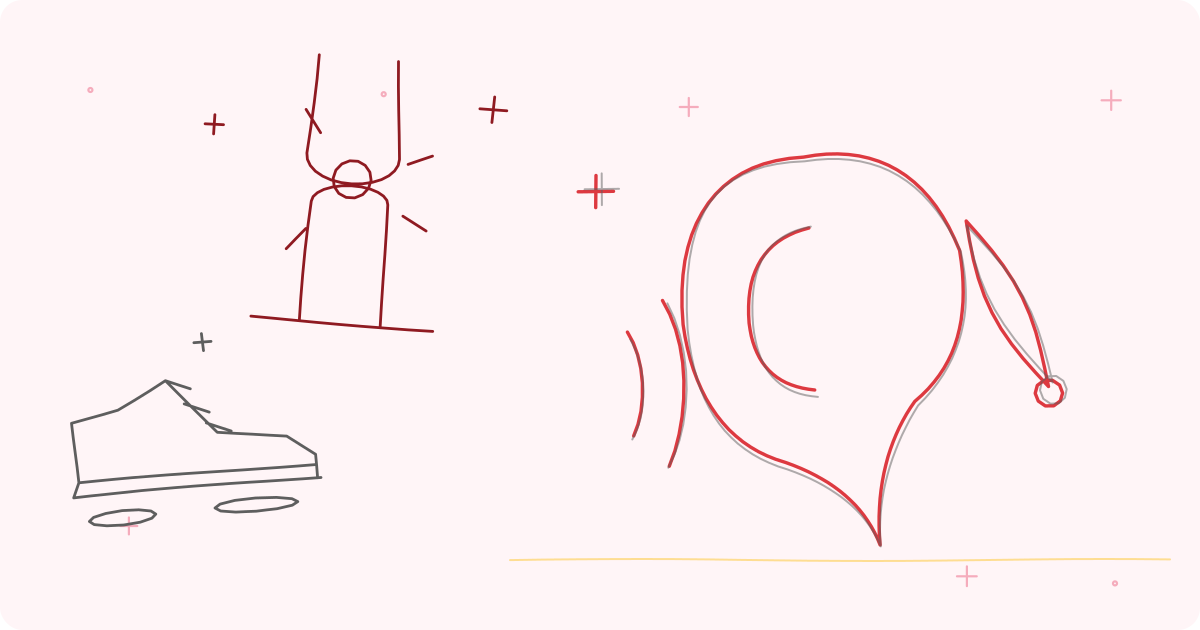
In older adults, the pain can also be referred from the jaw joint or from the neck, and sometimes from the teeth, so the ear itself may look completely normal. That is part of why the NHS tells people not to guess. A doctor looks into the ear with an otoscope, a small lit instrument, and sometimes uses a puff of air to check how the eardrum moves.
The three kinds of ear infection
According to the NHS page on ear infections, an infection can affect three parts of the ear.
- Outer ear (otitis externa): the ear canal itself. It is caused by irritation from eczema, water or earplugs, or by a fungal or bacterial infection. The NHS lists itching, irritation and scaly skin in and around the ear as symptoms.
- Middle ear (otitis media): behind the eardrum. It mostly affects children and is usually caused by viruses such as colds and flu.
- Inner ear: a viral or bacterial infection that can lead to labyrinthitis, which brings dizziness along with the ear symptoms.
The NHS says most ear infections clear up on their own within about 3 days, although symptoms can last up to a week. The common symptoms are earache, a high temperature, difficulty hearing, discharge from the ear and a feeling of pressure or fullness. The ear-infection guide for this library, ear infection in older adults, looks at the older-adult picture in more depth.
What the guidance describes as safe comfort measures
The NHS advice on both earache and ear infections is short and consistent.
- Painkillers. The NHS names paracetamol or ibuprofen. It adds that children under 16 should not take aspirin, and that some painkillers are not suitable for everyone, so the leaflet or a pharmacist should be consulted. For older adults this caveat matters: ibuprofen and similar medicines can be a problem for people with stomach ulcers, kidney disease, heart failure or those on blood thinners. The library guide on painkillers and older adults explains why. A doctor or pharmacist who knows the person's medicines is the right person to ask.
- A warm flannel. The NHS lists holding a warm flannel on the ear as a comfort measure. It is applied to the outside of the ear, not the inside, and warm means warm, not hot, because older skin burns easily.
- Wiping discharge. If fluid is coming from the ear, the NHS says it can be gently wiped away with cotton wool. Discharge itself is a reason to be seen, not a reason to wait.
- Rest at home. The NHS says to stay at home and avoid other people if there is a high temperature or the person feels too unwell for normal activities.
Ear pain from a cold or from changes in air pressure is often eased by swallowing, yawning or chewing, but the NHS pages above do not make claims about these, so they are mentioned here only as common observations, not as guideline advice.
What the guidance says not to do
This is the more important list.
- Do not put anything in the ear. The NHS says not to put anything inside the ear, such as cotton buds, and not to try to remove earwax. On ear infections it adds that this includes fingers.
- Do not let water or shampoo into the ear during an infection, and the NHS says not to swim.
- Do not use decongestants or antihistamines for an ear infection. The NHS says there is no evidence they help.
- Do not use drops if there may be a hole in the eardrum. This is the NHS's statement on oil drops for earwax: "Do not use drops if you have a hole in your eardrum."
The reasoning is simple. If the eardrum has a hole, which is common after an infection, a loud blast or an injury, anything poured into the canal can pass into the middle ear. Oils are difficult to clear from there, and substances such as onion juice or garlic can irritate or infect. A person cannot tell at home whether there is a hole. A sudden relief of pain followed by fluid or blood from the ear, for example, can be a sign of a burst eardrum, and the correct response is an examination.
Garlic, onion juice, tea tree oil and other remedies
Garlic oil, onion juice, tea tree oil, basil oil, mustard oil and warm coconut oil are the usual household suggestions in India and elsewhere, and an earlier version of this page listed several of them. None is recommended in the NHS pages used for this guide. The reasons for caution are practical rather than theoretical.
- The ear canal skin is thin and easily irritated. Essential oils such as tea tree oil can cause contact dermatitis in the canal, and a person with otitis externa already has inflamed skin.
- Heated oil can scald. Oil that is "warm enough to feel soothing" on a finger can still be too hot for the canal.
- Liquids in the ear can trap moisture, and moisture is what fungi and bacteria prefer.
- None of these remedies has been shown in the guidance cited here to treat an infection. Painkilling eardrops, antibiotic drops and antifungal drops exist because the cause has to be matched to the treatment.
Eating garlic or onion in food is a different matter and is harmless for most people, but it is not an ear treatment. Neck stretches and heat packs on a tense neck can help when the pain is coming from the neck or jaw muscles, which a doctor can tell apart from an ear problem.
Earwax: the one place oil is mentioned
Blocked earwax is a common cause of a full, painful, muffled ear in older adults, especially in people who wear hearing aids. The NHS page on earwax build-up lists hearing loss, earache or a blocked feeling, ringing in the ears (tinnitus) and vertigo as symptoms. For self-care it describes lying on one side with the affected ear up, putting in 2 to 3 drops of olive or almond oil, staying on the side for 5 to 10 minutes, and repeating 3 to 4 times a day for 3 to 5 days, with the wax loosening over about 2 weeks. Almond oil is not for people allergic to almonds.
The same NHS page says that ear candles and ear vacuums have no proven benefit, that cotton buds and fingers can make a blockage worse, that people with a perforated eardrum should not use drops, and that anyone whose wax symptoms have not cleared after 5 days, or whose ear is so blocked they cannot hear anything, should see a GP surgery nurse. More detail is in the library guide on earwax and hearing.
Ear pain in children
An earlier version of this page suggested breast milk drops and similar household treatments for children. Neither the NHS nor the United States Centers for Disease Control and Prevention recommends them. What the CDC does say is this.
- Many middle ear infections improve without antibiotics, but severe ones, or ones lasting more than 2 to 3 days, generally need prompt treatment.
- For mild cases, a clinician may use "watchful waiting", monitoring for 2 to 3 days, or "delayed prescribing", giving a prescription to be filled only if the child is not improving.
- Pain relief is acetaminophen (paracetamol) alone under 6 months, and acetaminophen or ibuprofen from 6 months. Aspirin is never given to children because of the risk of Reye's syndrome.
- A fever of 102.2°F (39°C) or higher, or middle ear symptoms lasting more than 2 to 3 days, call for medical care. A fever of 100.4°F (38°C) or higher in a baby under 3 months needs a provider straight away.
The NHS adds that a child under 12 months who may have an ear infection should see a GP, and that earache in both ears in a baby under 12 months needs urgent advice. For children aged 1 to 17 it says a pharmacist can offer the same treatments as a GP.
How ear infections are treated by professionals
The NHS says treatment depends on the cause and the part of the ear involved. Options include antibiotic tablets or drops, antifungal or steroid drops, painkilling drops, and draining a spot or boil in the ear with a needle. It notes that eardrops may fail if not used correctly. Its instructions: remove discharge or wax first, lie on the side with the affected ear up, gently work the drops in, and stay lying down for 5 minutes. A person who has hearing aids should discuss with the clinician when they can be worn again, and the NHS lists treating an allergy to hearing aids among the ways of preventing ear problems.
Preventing ear problems
The NHS prevention list for ear infections is short: keep routine vaccinations up to date, avoid smoke around children, avoid cotton buds and fingers in the ears, wear earplugs or a swimming hat when swimming, keep water out of the ears when showering or bathing, and treat related problems such as eczema or a hearing-aid allergy. For older adults, regular cleaning of hearing aids and ear moulds and a professional check of the ears when hearing worsens are sensible additions; the library guides on hearing aid care and hearing loss cover these.
When to see a doctor
This guide is general information, not medical advice. It does not replace a doctor, nurse or pharmacist who knows your situation.
Urgent, the same day
The NHS says to seek an urgent GP appointment or call a health helpline if earache comes with any of the following:
- Feeling generally unwell, a very high temperature, or feeling hot, cold or shivery.
- Swelling around the ear.
- Fluid coming from the ear.
- Any change in hearing or new hearing loss.
- Nausea, vomiting, dizziness or a severe sore throat.
- Diabetes, a heart, lung, kidney or neurological condition, or a weakened immune system, such as after chemotherapy.
- Something stuck in the ear.
If an older person becomes drowsy, confused, has severe headache, a stiff neck, facial weakness, or the ear pain is severe and does not respond to simple painkillers, call 112 or go to an emergency department. These are signs that infection or another problem may have spread beyond the ear, and they are not things to treat at home.
Soon, within a few days
- Earache that lasts longer than 2 to 3 days, which the NHS gives as the point to seek help.
- Ear infections that keep coming back.
- Earwax symptoms that have not cleared after 5 days.
- Ear pain that returns with every meal, which a doctor may link to the jaw or teeth.
Equipment mentioned in this guide
Frequently asked questions
Can I put warm oil or garlic oil in my ear for pain?
None of the NHS pages on earache and ear infections recommends it, and the NHS says not to put anything inside the ear. The NHS mentions olive or almond oil drops only for earwax, and says not to use drops if there is a hole in the eardrum. Because a person cannot check the eardrum at home, a doctor or pharmacist should be asked first.
How long can earache be left before seeing someone?
The NHS says most earaches improve on their own within 2 to 3 days and advises an urgent appointment if earache lasts beyond that, or comes with fever, swelling, discharge or hearing change.
Is it safe to use ibuprofen for ear pain in an older adult?
The NHS names paracetamol or ibuprofen for earache but warns some painkillers are not suitable for everyone. Ibuprofen can be a problem with kidney, stomach, heart or blood-thinner issues, so a doctor or pharmacist who knows the person's medicines should be asked what is suitable.
Can ear pain come from teeth or the throat?
Yes. The NHS lists a dental abscess and sore throat or tonsillitis among causes of ear pain, which is why the ear can look normal and the cause lie elsewhere.
Do ear candles or ear vacuums remove wax?
The NHS says there is no evidence that ear candles or ear vacuums get rid of earwax.
Are home remedies for a child's earache safe?
The CDC and NHS describe pain relief with age-appropriate medicines and medical review for fever or symptoms lasting beyond 2 to 3 days. Neither recommends putting drops of milk, oil or juice in a child's ear.
Sources and further reading
Tags: ear painearache home remediesear pain reliefear infection adultsearwaxear drops safetyJoint and pain supportDigital thermometerHealth monitoring devicesHealthy ageing
This article is for general education and is not medical advice. Ask a doctor or pharmacist about your own situation before changing any exercise, diet or medicine.